CAS 149-74-6
:Diclorometilfenilsilano
Descripción:
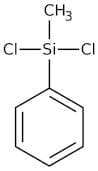
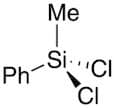
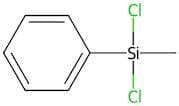
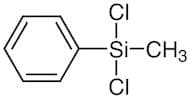
Diclorometilfenilsilano, con el número CAS 149-74-6, es un compuesto organosilícico caracterizado por la presencia de un átomo de silicio unido a un grupo fenilo, un grupo metilo y dos átomos de cloro. Este compuesto típicamente aparece como un líquido incoloro a amarillo pálido y es conocido por su reactividad, particularmente en reacciones de sustitución nucleofílica debido a la presencia de los grupos funcionales clorados. A menudo se utiliza como un agente de acoplamiento de silano, mejorando la adhesión entre materiales inorgánicos y polímeros orgánicos. Además, Diclorometilfenilsilano puede servir como un intermedio en la síntesis de varios compuestos que contienen silicio. Sus propiedades químicas incluyen un punto de ebullición relativamente bajo y una solubilidad moderada en disolventes orgánicos, lo que lo hace adecuado para diversas aplicaciones en ciencia de materiales y síntesis orgánica. Sin embargo, debe manejarse con cuidado debido a su potencial toxicidad y reactividad, particularmente en presencia de humedad, lo que puede llevar a la hidrólisis y la liberación de ácido clorhídrico. Se deben seguir medidas y protocolos de seguridad adecuados al trabajar con este compuesto.
Fórmula:C7H8Cl2Si
InChI:InChI=1S/C7H8Cl2Si/c1-10(8,9)7-5-3-2-4-6-7/h2-6H,1H3
Clave InChI:InChIKey=GNEPOXWQWFSSOU-UHFFFAOYSA-N
SMILES:[Si](C)(Cl)(Cl)C1=CC=CC=C1
Sinónimos:- (Dichloromethylsilyl)benzene
- Benzene, (dichloromethylsilyl)-
- Benzyl(Dichloro)Silane
- Dichlor(methyl)(phenyl)silan
- Dichloro(methyl)(phenyl)silane
- Dichlorophenylmethylsilane
- Dicloro(Fenil)(Metil)Silano
- Ls 1490
- Methylphenyldichlorosilane
- Nsc 96621
- Phenyldichloro(methyl)silane
- Phenylmethyldichlorosilane
- Silane, Methylphenyldichloro-
- Silane, dichloromethylphenyl-
- Tsl 8067
- [(Dichloro)methylsilyl]benzene
- Ver más sinónimos
Ordenar por
Pureza (%)
0
100
|
0
|
50
|
90
|
95
|
100
Se han encontrado 4 productos.
Dichloromethylphenylsilane, 98%
CAS:Dichloromethylphenylsilane is used as a monomer (‘building block’) in the production of silicone polymers or silicone resins. Silicone polymers may be oils, greases and rubbers. It is also used as an intermediate (starting material) in the production of other organosilicon substances. It is a bifuncFórmula:C7H8Cl2SiPureza:98%Forma y color:Liquid, Clear colorless to pale pinkPeso molecular:191.13Methylphenyldichlorosilane, min. 97%
CAS:Methylphenyldichlorosilane, min. 97%
Fórmula:(CH3)(C6H5)SiCl2Pureza:min. 97%Forma y color:colorless liq.Peso molecular:191.11Dichloro(methyl)phenylsilane
CAS:Fórmula:C7H8Cl2SiPureza:>98.0%(GC)Forma y color:Colorless to Almost colorless clear liquidPeso molecular:191.13