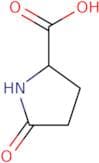
CAS 149-87-1
:DL-Ácido piroglutámico
Descripción:
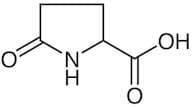
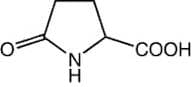
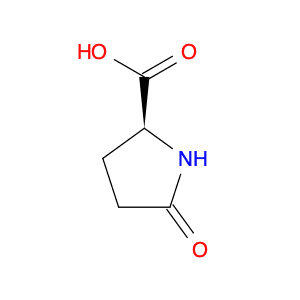
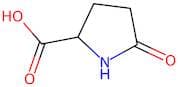
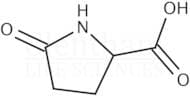
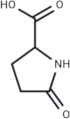
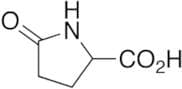
DL-Ácido piroglutámico, también conocido como 5-oxoprolina, es un derivado cíclico del aminoácido ácido glutámico. Se caracteriza por su apariencia cristalina blanca y es soluble en agua, lo que lo hace fácilmente disponible para diversas aplicaciones bioquímicas. El compuesto presenta un anillo de lactama de cinco miembros, que contribuye a sus propiedades y reactividad únicas. DL-Ácido piroglutámico juega un papel significativo en la síntesis de proteínas y está involucrado en diversas vías metabólicas, particularmente en el contexto del metabolismo de aminoácidos. A menudo se utiliza en las industrias farmacéutica y cosmética debido a sus potenciales propiedades antioxidantes y su papel como precursor en la síntesis de otros compuestos biológicamente activos. Además, se ha estudiado por sus efectos neuroprotectores y su posible papel en la función cognitiva. Al igual que con muchas sustancias químicas, se deben observar precauciones de seguridad y manejo, ya que puede causar irritación al contacto con la piel o los ojos.
Fórmula:C5H7NO3
InChI:InChI=1/C5H7NO3/c7-4-2-1-3(6-4)5(8)9/h3H,1-2H2,(H,6,7)(H,8,9)/t3-/m0/s1
Clave InChI:InChIKey=ODHCTXKNWHHXJC-UHFFFAOYSA-N
SMILES:C(O)(=O)C1NC(=O)CC1
Sinónimos:- (+/-)-2-Pyrrolidinone-5-Carboxylic Acid
- (+/-)-2-Pyrrolidone-5-Carboxylic Acid
- (±)-Pyroglutamic acid
- 5-Oxo-<span class="text-smallcaps">DL</span>-proline
- 5-Oxo-Dl-Proline
- 5-Oxoproline
- 5-Oxopyrrolidine-2-carboxylic acid
- 5-oxo-L-proline
- <span class="text-smallcaps">DL</span>-2-Pyrrolidinone-5-carboxylic acid
- <span class="text-smallcaps">DL</span>-2-Pyrrolidone-5-carboxylic acid
- <span class="text-smallcaps">DL</span>-Proline, 5-oxo-
- <span class="text-smallcaps">DL</span>-Pyroglutamate
- <span class="text-smallcaps">DL</span>-Pyroglutamic acid
- <span class="text-smallcaps">DL</span>-Pyrrolidonecarboxylic acid
- DL-2-Pyrrolidone-5-Carboxylic Acid
- Dl-5-Oxoproline
- Dl-A-Pyroglutamic Acid
- Dl-Glutamic Acid Lactam
- Dl-Proline, 5-Oxo-
- H-Dl-Pyr-Oh
- NSC 40887
- Proline, 5-oxo-
- Proline, 5-oxo-, <span class="text-smallcaps">DL</span>-
- DL-Pyrrolidonecarboxylic acid
- Proline, 5-oxo-, DL-
- DL-pGlu-OH
- DL-2-PYRROLIDINONE-5-CARBOXYLIC ACID
- Pyroglutamic acid and esters
- D,L-2-PYRROLIDONE-5-CARBOXYLIC ACID
- (n)-2-pyrrolidinone-5-carboxylic acid
- DL-5-OXO-2-PYRROLIDINECARBOXYLIC ACID
- DL-5-PYRROLIDONE-2-CARBOXYLIC ACID
- LABOTEST-BB LT00005913
- 5-OXO-PYRROLIDINE-2-CARBOXYLIC ACID
- DL-Pyroglutamic
- Ver más sinónimos
Ordenar por
Pureza (%)
0
100
|
0
|
50
|
90
|
95
|
100
Encontrado 12 productos.
DL-Pyroglutamic Acid
CAS:Fórmula:C5H7NO3Pureza:>99.0%(T)Forma y color:White powder to crystalPeso molecular:129.12(+/-)-2-Pyrrolidinone-5-carboxylic acid, 99%
CAS:It is an important raw material and intermediate used in organic synthesis, pharmaceuticals, agrochemicals and dyestuffs. This Thermo Scientific Chemicals brand product was originally part of the Alfa Aesar product portfolio. Some documentation and label information may refer to the legacy brand. ThFórmula:C5H7NO3Pureza:99%Forma y color:Pale cream, Crystals or powder or crystalline powderPeso molecular:129.12DL-Pyroglutamic acid, 10mM (in DMSO)
CAS:DL-Pyroglutamic acid, 10mM (in DMSO)Pureza:≥98%Peso molecular:129.11g/mol2-Pyrrolidone-5-carboxylic acid
CAS:Fórmula:C5H7NO3Pureza:≥ 98.0%Forma y color:White to off-white powderPeso molecular:129.12DL-Pyroglutamic acid
CAS:DL-Pyroglutamic acid exhibited a strong inactivating effect on hepatitis B surface antigen.Fórmula:C5H7NO3Pureza:99.88%Forma y color:White PowderPeso molecular:129.115-Oxopyrrolidine-2-carboxylic acid
CAS:Fórmula:C5H7NO3Pureza:98%Forma y color:SolidPeso molecular:129.115DL-2-Pyrrolidone-5-carboxylic Acid
CAS:Producto controladoApplications DL-2-Pyrrolidone-5-carboxylic Acid is used in the preparation of AZT steroid conjugates as potent anti-HIV agents.
References You, Z. et al.: Nucleos. Nucleot. Nucl. Acids, 25, 37 (2006);Fórmula:C5H7NO3Forma y color:NeatPeso molecular:129.11DL-Pyroglutamic acid
CAS:DL-Pyroglutamic acid is an antibiotic that has been shown to inhibit the growth of bacteria by binding to a bacterial pyrophosphate-binding site. It also inhibits the production of cyclase and its activity in mice with bowel disease. DL-Pyroglutamic acid has been shown to be effective against a variety of bacterial types, including Gram-positive and Gram-negative bacteria. The compound binds to ferrous iron (Fe2+) with high affinity and forms stable metal complexes that are insoluble in water. This property makes it a useful tool for chromatographic analysis. DL-Pyroglutamic acid has also been shown to have anti-tumor activity in mouse models, although it is not effective at treating human cancer cells.Fórmula:C5H7NO3Pureza:Min. 95%Forma y color:White PowderPeso molecular:129.11 g/mol