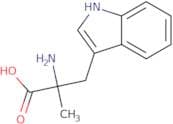
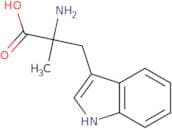
CAS 153-91-3
:A-metil-dl-triptófano
Descripción:
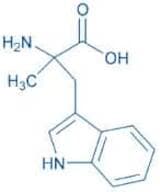
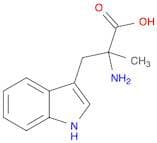
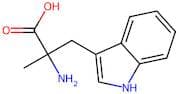
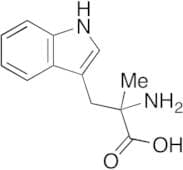
A-metil-dl-triptófano, con el número CAS 153-91-3, es un derivado de aminoácido que está estructuralmente relacionado con el aminoácido esencial triptófano. Presenta un grupo metilo unido al carbono alfa, lo que altera sus propiedades bioquímicas en comparación con su compuesto original. Este compuesto se utiliza a menudo en investigaciones bioquímicas, particularmente en estudios que involucran la síntesis de proteínas y el metabolismo, ya que puede actuar como un análogo del triptófano. Se sabe que A-metil-dl-triptófano inhibe la actividad de ciertas enzimas involucradas en el metabolismo del triptófano, lo que lo convierte en una herramienta valiosa para estudiar las vías metabólicas. Típicamente es un sólido cristalino blanco a blanco sucio y es soluble en disolventes polares. La estructura única del compuesto le permite interactuar con varios sistemas biológicos, influyendo en procesos como la síntesis de neurotransmisores y el plegamiento de proteínas. Al igual que con muchos derivados de aminoácidos, es importante manejar A-metil-dl-triptófano con cuidado en entornos de laboratorio, cumpliendo con los protocolos de seguridad para mitigar cualquier peligro potencial.
Fórmula:C12H14N2O2
Sinónimos:- Alpha-Methyl-DL-Tryptophan
- H-.alpha.-Me-DL-Trp-OH
- A-Methyl-L-Tryptophan
Ordenar por
Pureza (%)
0
100
|
0
|
50
|
90
|
95
|
100
Encontrado 7 productos.
H-α-Me-DL-Trp-OH
CAS:Bachem ID: 4008387.
Fórmula:C12H14N2O2Pureza:> 99%Forma y color:White PowderPeso molecular:218.26α-Methyl-DL-tryptophan
CAS:Applications α-methyl-DL-tryptophan is used as a blocker of ATBo, an amino acid transporter whose expression is upregulated in cancer. It is also a substrate or non-transported inhibitor of the amino acid transporter PAT2 (slc36a2).
References Karunakaran, J., et al.: J. Biochem., 414, 343 (2008); Edwards, N., et al.: Biochimica et Biophysica Acta, Biomembranes, 1808, 260 (2011)Fórmula:C12H14N2O2Forma y color:Off White SolidPeso molecular:218.25DL-α-Methyltryptophan
CAS:DL-alpha-Methyltryptophan is a metabolite of the amino acid tryptophan. It is a monoamine neurotransmitter that has been implicated in brain function and inflammatory lesions. DL-alpha-Methyltryptophan can be used as a potential drug target for the treatment of Parkinson's disease, depression, and anxiety disorders. The hydroxyl group on the indole ring of DL-alpha-Methyltryptophan gives it an increased reactivity with oxygen, which allows it to be oxidized by monoamine oxidase B (MAO B) to 3-hydroxyanthranilic acid. This reaction can be inhibited by MAO A inhibitors such as clorgyline or selegiline. The oxidation of DL-alpha-Methyltryptophan leads to increased concentrations of serotonin in the brain and increased activity of aminotransferases.Fórmula:C12H14N2O2Pureza:Min. 98 Area-%Forma y color:PowderPeso molecular:218.25 g/mol2-Amino-3-(1H-indol-3-yl)-2-methylpropanoic acid
CAS:Fórmula:C12H14N2O2Pureza:98%Forma y color:SolidPeso molecular:218.256α-Methyl-DL-tryptophan
CAS:Alpha-methyl-DL-tryptophan is a useful building block that is used as a reaction component in the synthesis of other compounds. It is a versatile building block that can be used to synthesize complex compounds and as a necessary intermediate in the synthesis of other compounds. Alpha-methyl-DL-tryptophan is an important reagent for research purposes, and is also a speciality chemical. This compound has been shown to have beneficial effects on the central nervous system and may have potential therapeutic uses for neurological disorders (e.g., Parkinson's disease). Alpha-methyl-DL-tryptophan has been shown to be safe with minimal side effects when given at appropriate doses, but it should not be used by pregnant women or patients with epilepsy or depression.Fórmula:C12H14N2O2Pureza:Min. 97.0 Area-%Peso molecular:218.26 g/molRef: 3D-M-5098
5gA consultar10gA consultar25gA consultar50gA consultar2500mgA consultar-Unit-ggA consultar