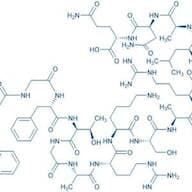
CAS 170713-75-4
:nociceptina
- Orphanin Fq
- H-Phe-Gly-Gly-Phe-Thr-Gly-Ala-Arg-Lys-Ser-Ala-Arg-Lys-Leu-Ala-Asn-Gln-OH
Nociceptin
CAS:Nociceptin (Orphanin FQ) is a 17-amino-acid polypeptide that is structurally related to the opioid peptide dynorphin A.Fórmula:C79H129N27O22Pureza:99.35%Forma y color:SolidPeso molecular:1809.04Nociceptin (Human)
CAS:Nociceptin is a peptide that binds to the NOP receptor and activates it, which inhibits neuronal activity. It has been shown to inhibit protein interactions by acting as an inhibitor of the enzyme proteasome. Nociceptin activates the Ligand-gated ion channels, which are involved in pain perception. Nociceptin also has been used as a research tool for investigating protein interactions and antibody production.
Fórmula:C79H129N27O22Pureza:Min. 95%Peso molecular:1,809 g/molNociceptin
CAS:Nociceptin is an endogenous agonist of the opioid receptor-like ORL1 receptor.Fórmula:C79H129N27O22Forma y color:White PowderPeso molecular:1809.06Nociceptin trifluoroacetate salt
CAS:Nociceptin trifluoroacetate salt is an opioid with low potency that is used in the treatment of pain. It has been shown to bind to the protein and inhibit protease, which has been proposed as a possible mechanism for its analgesic effects. Nociceptin trifluoroacetate salt may also have indirect effects on brain functions by regulating levels of nociceptin, a neuropeptide that interacts with nociceptive neurons in the brain. This drug has been shown to have nootropic effects in mice, including increased locomotor activity and improved memory retention. Nociceptin trifluoroacetate salt inhibits kappa-opioid receptors and is therefore used as a pharmacological tool for research into opioid receptor function.
Fórmula:C79H129N27O22Pureza:Min. 95%Peso molecular:1,809.04 g/molRef: 3D-FN108853
Producto descatalogado