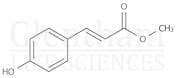
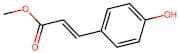
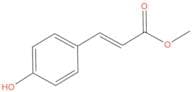
CAS 19367-38-5
:Ácido 2-propenoico, 3-(4-hidroxifenil)-, éster metílico, (E)-
Descripción:
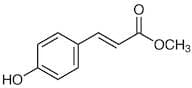
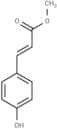
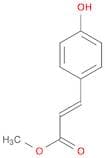
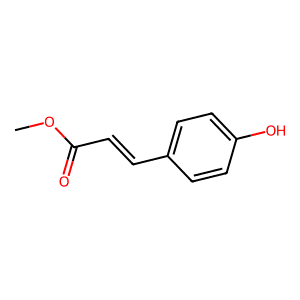
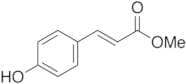
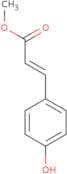
Ácido 2-propenoico, 3-(4-hidroxifenil)-, éster metílico, (E)-, comúnmente conocido como metilo 4-hidroxicinamato, es un compuesto orgánico caracterizado por su grupo funcional éster y un sistema de enlaces dobles conjugados. Este compuesto presenta un grupo metoxi unido a una estructura fenólica, lo que contribuye a sus potenciales propiedades antioxidantes. Típicamente es un líquido incoloro a amarillo pálido con un aroma agradable, lo que lo hace útil en aplicaciones cosméticas y de fragancias. La configuración (E) indica que los sustituyentes alrededor del doble enlace están en lados opuestos, lo que puede influir en su reactividad e interacciones con sistemas biológicos. El metilo 4-hidroxicinamato es soluble en disolventes orgánicos y exhibe una solubilidad moderada en agua. Su estructura química le permite participar en varias reacciones químicas, incluida la polimerización y la esterificación. Además, se ha estudiado por sus posibles beneficios para la salud, incluidas actividades antiinflamatorias y antimicrobianas. Al igual que con muchos compuestos orgánicos, el manejo adecuado y las precauciones de seguridad son esenciales debido a su potencial reactividad y efectos.
Fórmula:C10H10O3
Sinónimos:- methyl (2E)-3-(4-hydroxyphenyl)prop-2-enoate
- Methyl 4-hydroxyphenylacrylate
Ordenar por
Pureza (%)
0
100
|
0
|
50
|
90
|
95
|
100
Encontrado 13 productos.
Methyl trans-p-Coumarate
CAS:Fórmula:C10H10O3Pureza:>98.0%(GC)Forma y color:White to Light yellow to Light orange powder to crystalPeso molecular:178.19(E)-Methyl 4-coumarate
CAS:(E)-Methyl 4-coumarate (OMpCA) is a predicted metabolite generated by BioTransformer1 that is produced by the metabolism of methyl 3-phenylprop-2-enoate.Fórmula:C10H10O3Pureza:99.68% - 99.97%Forma y color:White Crystal PowderPeso molecular:178.182-Propenoic acid, 3-(4-hydroxyphenyl)-, methyl ester, (2E)-
CAS:Fórmula:C10H10O3Pureza:98%Forma y color:SolidPeso molecular:178.1846Methyl 4-Hydroxy Cinnamate
CAS:Producto controladoApplications Cinnamic acid derivative used in structure-antifungal activity relationship study against Aspergillus flavus, Aspergillus terreus, and Aspergillus niger. An antifungal agent.
References Bisagno, F., et al.: J. Agric. Food Chem., 55, 10645 (2007),Fórmula:C10H10O3Forma y color:NeatPeso molecular:178.18Methyl 4-hydroxycinnamate
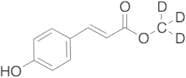
CAS:Methyl 4-hydroxycinnamate is a protocatechuic acid that can be produced by the reaction of hydrochloric acid and b16 mouse melanoma. This chemical has been shown to have an anti-inflammatory effect in rats with inflammatory bowel disease. Methyl 4-hydroxycinnamate is also a natural compound found in plants, such as celery, cinnamon, and apples. The mechanism of this chemical's action is unknown but it has been shown to inhibit the activity of rat liver microsomes. It is theorized that methyl 4-hydroxycinnamate may inhibit the production of proinflammatory substances by altering the membrane composition or activity of enzymes.br>br> br>br> Methyl 4-hydoxycinnamate may be synthesized from anhydrous sodium acetate and an acid complex in a model system using reaction solution. The product is then purified using column chromatography before being reacted with methylamine and sulfurFórmula:C10H10O3Pureza:Min. 95%Forma y color:PowderPeso molecular:178.18 g/mol(Methyl-d3) 4-Hydroxy Cinnamate
CAS:Producto controladoFórmula:C10D3H7O3Forma y color:NeatPeso molecular:181.203