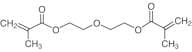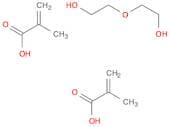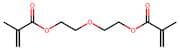
CAS 2358-84-1
:Dietilenglicol, dimetacrilato
- 2,2′-Oxybisethanol dimethacrylate
- 2,2′-Oxydiethyl dimethacrylate
- 2-Propenoic Acid, 2-Methyl-, Oxydi-2,1-Ethanediyl Ester
- 2-Propenoic acid, 2-methyl-, 1,1′-(oxydi-2,1-ethanediyl) ester
- 2-[2-(2-Methylprop-2-enoyloxy)ethoxy]ethyl 2-methylprop-2-enoate
- Bisomer DEGDMA HI
- Blemmer PDE 100
- Dgm 2
- Diethyene Glycol Dimethacrylate
- Diethylene glycol bis(methacrylate)
- Em 329
- Light Ester 2EG
- Methacrylic acid, diester with diethylene glycol
- Methacrylic acid, oxydiethylene ester
- NK Ester 2G
- Oxydi-2,1-ethanediyl bis(2-methylacrylate)
- Oxydiethane-2,1-Diyl Bis(2-Methylprop-2-Enoate)
- Oxydiethane-2,1-diyl bis(2-methylacrylate)
- Oxydiethylene methacrylate
- Pde 100
- Sartomer SR 231
- Sr 231
- Sr 231E
- Tgm 2
- Ver más sinónimos
Diethylene Glycol Dimethacrylate (stabilized with MEHQ)
CAS:Fórmula:C12H18O5Pureza:>97.0%(GC)Forma y color:Colorless to Almost colorless clear liquidPeso molecular:242.272-Propenoic acid, 2-methyl-, 1,1'-(oxydi-2,1-ethanediyl) ester
CAS:Fórmula:C12H18O5Pureza:97%Forma y color:LiquidPeso molecular:242.2683Diethylene glycol dimethacrylate
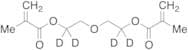
CAS:Diethylene glycol dimethacrylatePureza:98%Peso molecular:242.27g/molDiethylene Glycol Dimethacrylate-d4
CAS:Producto controladoApplications Isotope labelled Diethylene Glycol Dimethacrylate (D444350) is an ester of acrylic acid and methacrylic acid, more commonly known as acrylates and methacrylates, are key raw materials in the coatings and printing industry, and in food packaging.
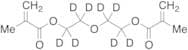
References Moore, M., et al.: Mutagenesis, 6, 77 (1991), McCarthy, K., et al.: Food Chem. Toxicol., 30, 505 (1992),Fórmula:C12D4H14O5Forma y color:NeatPeso molecular:246.293Diethylene Glycol Dimethacrylate-d8
CAS:Producto controladoApplications Isotope labelled Diethylene Glycol Dimethacrylate (D444350) is an ester of acrylic acid and methacrylic acid, more commonly known as acrylates and methacrylates, are key raw materials in the coatings and printing industry, and in food packaging.
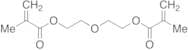
References Moore, M., et al.: Mutagenesis, 6, 77 (1991), McCarthy, K., et al.: Food Chem. Toxicol., 30, 505 (1992),Fórmula:C12D8H10O5Forma y color:NeatPeso molecular:250.318Diethylene Glycol Dimethacrylate
CAS:Producto controladoStability Light Sensitive
Applications Esters of acrylic acid and methacrylic acid, more commonly known as acrylates and methacrylates are key raw materials in the coatings and printing industry, and in food packaging. Dipropyleneglycol Dimethylacrylate is a resin compound for three-dimensional printing. It may also be used as a copolymer of crosslinkable monomers in electrochemical devices.
References Moore, M., et al.: Mutagenesis, 6, 77 (1991), McCarthy, K., et al.: Food Chem. Toxicol., 30, 505 (1992); Frank, C. et al.: Eur. Pat. Appl. 28 pp. (2020); Cho, M. D. et al.: PCT Int. Appl. 25 pp. (2020)Fórmula:C12H18O5Forma y color:NeatPeso molecular:242.27