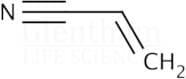
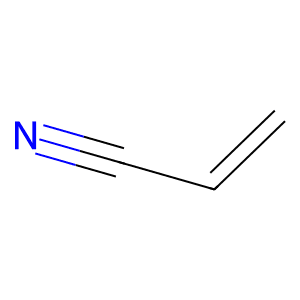
CAS 25014-41-9
:2-Propenonitrilo, homopolímero
- Acrylonitrilepolymer
- Aqpan
- Bulana
- Hv-Ii
- Nh4Hpan
- PAN
- PAN-CX<sub>2</sub>
- Pan-Cx2
- Polyacrylonitrile
- Solrox
- Poly(acrylonitrile), fibers
- ACL 1050
- Barex 1000
- Stork 3010
- PAN (polymer)
- SEPA RG 03
- T 75
- T 75 (acrylic polymer)
- CS ultrafilter
- High Toron BX
- 2-Propenenitrile, homopolymer
- ACP 1010
- PAN (polymer)
- Taftic B
- PAN (VAN)
- PAN 7A
- KCV 3010
- PAN 20CX2
- CMF-DY 040
- Taftic A 20
- 2-Propenenitrile, homopolymer
- Acrylonitrile, polymers
- Barex 3000N
- Biospal 1200S
- Polynac
- Taftic AM
- PAN 200
- Barex 2090
- Biospal 1800S
- CMF-DY 010
- Hypan HN 85
- Acrylonitrile homopolymer
- PAN 17DX
- Dralon T
- NSC 7763
- PAN 70
- Barex 210 Resin
- Acrylonitrile homopolymer
- MBR 500
- PAN 1514
- Microza KCV 3010
- Acrylonitrile, polymers
- Taftic CB
- Pan-A 425
- DP 10000
- Parex 4205
- Microsphere F 80E
- Stork 5010
- Acrylonitrile polymer
- Barex 1000S
- Romarcril FR
- Ver más sinónimos
Polyacrylonitrile, m.w. approx. 150,000
CAS:Fórmula:(C3H3N)xForma y color:White to off-white or pale yellow powderPolyacrylonitrile - average Mw 200,000 (typical)
CAS:average Mw 200,000 (typical)
Fórmula:(C3H3N)xPureza:Min. 99.00%Forma y color:PowderPeso molecular:53.06 g/molPolyacrylonitrile - average Mw 150,000 (typical)
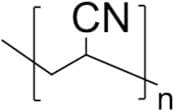
CAS:Polyacrylonitrile (PAN) is a polymer that is used in wastewater treatment. It is made from the monomer, acrylonitrile, and has a molecular weight of about 150,000. PAN has been shown to have high nitrogen content and can be used for hydrogen bonding interactions with other polymers. The reaction mechanism of PAN involves intramolecular hydrogen bonding. This process can be optimized using surface methodology. Polyacrylonitrile also has a constant pressure coefficient of thermal expansion and a process optimization parameter that is close to 1.5. The nitrogen atoms in polyacrylonitrile are responsible for its water permeability and methyl ethyl groupings that allow it to interact with other polymers. Polyacrylonitrile also has redox potentials that range from -0.8 to -1.2 volts depending on its environment, which means it can act as an electron donor or electron acceptor during oxidation and reduction reactions respectively
Fórmula:(C3H3N)xForma y color:White PowderPolyacrylonitrile
CAS:Producto controladoApplications Polyacrylonitrile - average Mw 150,000 (Typical) (cas# 25014-41-9) is a useful research chemical.
Fórmula:(C3H3N)xForma y color:NeatPeso molecular:53.06Polyacrylonitrile~Mw avarage 1,000,000
CAS:Please enquire for more information about Polyacrylonitrile~Mw avarage 1,000,000 including the price, delivery time and more detailed product information at the technical inquiry form on this page
Fórmula:(C3H3N)x