CAS 251293-28-4
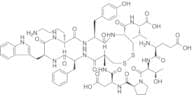
:L-Valina, L-a-glutamil-L-treonil-L-prolil-L-a-aspartil-L-cisteinil-L-fenilalanil-L-triptofil-L-lisil-L-tirosil-L-cisteinil-,cíclico (5®10)-disulfuro
Descripción:
L-Valina, L-a-glutamil-L-treonil-L-prolil-L-a-aspartil-L-cisteinil-L-fenilalanina-L-triptófano-L-lisina-L-tirosina-L-cisteinil-, cíclico (5®10)-disulfuro, identificado por el número CAS 251293-28-4, es un péptido cíclico compuesto por múltiples aminoácidos. Este compuesto presenta una estructura cíclica formada por un enlace disulfuro entre dos residuos de cisteína, lo que contribuye a su estabilidad y propiedades únicas. La presencia de varios aminoácidos, incluyendo valina, glutamato, treonina, prolina, aspartato, cisteína, fenilalanina, triptófano, lisina y tirosina, sugiere que puede exhibir diversas actividades biológicas, potencialmente influyendo en interacciones proteicas y funciones celulares. La naturaleza cíclica del péptido puede aumentar su resistencia a la degradación enzimática, haciéndolo un candidato para aplicaciones terapéuticas. Además, la disposición específica de los aminoácidos puede conferir características conformacionales únicas, afectando su solubilidad, afinidad de unión y actividad biológica general. Se necesitarían más estudios para elucidar sus funciones precisas y posibles usos en bioquímica o medicina.
Fórmula:C64H85N13O18S2
Sinónimos:- 1:PN: JP2002087982 PAGE: 2 claimed protein
- 47: PN: WO0031265 SEQID: 3 claimedprotein
- Human urotensin II
- Urotensin II (human)
- H-Glu-Thr-Pro-Asp-Cys-Phe-Trp-Lys-Tyr-Cys-Val-OH (Disulfide bond)
Ordenar por
Pureza (%)
0
100
|
0
|
50
|
90
|
95
|
100
Encontrado 3 productos.
Urotensin II (human)
CAS:Urotensin II is a vasoactive somatostatin-like cyclic peptide, which has long been regarded as a peptide exclusively produced by the urophysis of teleost fish. U-II has also been cloned from man. It was found to be the most potent mammalian vasoconstrictor identified so far. Furthermore, as urotensin II immunoreactivity was also found within central nervous system and endocrine tissues, it may have additional activities.Fórmula:C64H85N13O18S2Pureza:≥ 95%Forma y color:White PowderPeso molecular:1388.59Urotensin II (114-124), human
CAS:Human Urotensin II (114-124) is an 11-amino acid peptide with vasoconstrictor properties and agonizes GPR14.Fórmula:C64H85N13O18S2Pureza:98%Forma y color:SolidPeso molecular:1388.57Urotensin II (Human)
CAS:A potent vasoconstrictor, available in the hydrochloride form with disulfide bonds between Cys5-Cys10 and as a 0.5mg vial. Urotensin II (UT-II) is a peptide that is found in humans and other vertebrates and is involved in biological systems such as the nervous, endocrine, cardiovascular and renal. Like that of urotensin II-related peptide, urotensin II contains the hexapeptide -CYS-TYR-LYS-TRP-PHE-CYS- known as the core and this is crucial to its biological function. Urotensin II can also increase the concentration of intercellular calcium through binding to its G protein coupled receptor: urotensin-II receptor which causes the activation of Protein kinase C followed by the activation of Phospholipase C. UT-II is widely distributed throughout the body, with highest concentrations found in the cardiovascular system, particularly in the heart and blood vessels. UT-II has been shown to have a wide range of physiological effects in humans, including vasoconstriction, modulation of blood pressure, and stimulation of the release of aldosterone and vasopressin. In addition to its physiological effects, UT-II has also been implicated in the pathogenesis of various cardiovascular and metabolic disorders, including hypertension, heart failure, and diabetes. Inhibition of UT-II signaling has been suggested as a potential therapeutic target for these conditions.Fórmula:C64H85N13O18S2Pureza:Min. 95%Peso molecular:1,388.6 g/mol