CAS 25322-68-3
:Polietilenglicol
Descripción:
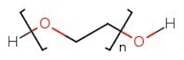
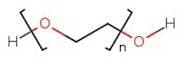
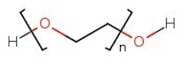
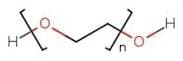
Polietilenglicol (PEG), con el número CAS 25322-68-3, es un polímero versátil conocido por sus propiedades hidrofílicas y biocompatibilidad. Está compuesto por unidades repetitivas de óxido de etileno, lo que resulta en una estructura que puede variar en peso molecular, lo que influye en sus características físicas y químicas. El PEG es típicamente un líquido incoloro, inodoro y viscoso o un sólido ceroso, dependiendo de su peso molecular. Es soluble en agua y muchos disolventes orgánicos, lo que lo hace útil en una amplia gama de aplicaciones, incluyendo productos farmacéuticos, cosméticos y alimentarios. El PEG sirve como lubricante, humectante y emulsionante, y a menudo se utiliza en formulaciones de medicamentos para mejorar la solubilidad y la biodisponibilidad. Además, su naturaleza no tóxica y su capacidad para formar hidrogeles lo hacen valioso en aplicaciones biomédicas, como sistemas de liberación de fármacos e ingeniería de tejidos. Sin embargo, las propiedades específicas del PEG pueden variar significativamente con su peso molecular y formulación, lo que debe tenerse en cuenta al seleccionarlo para aplicaciones particulares.
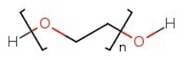
Fórmula:(C2H4O)nH2O
InChI:InChI=1S/C2H6O2/c3-1-2-4/h3-4H,1-2H2
Clave InChI:InChIKey=LYCAIKOWRPUZTN-UHFFFAOYSA-N
SMILES:C(CO[H])O
Sinónimos:- 1660O
- 1660S
- 3,6,9,12,15,18,21,24,27,30,33,36,39-Tridecaoxahentetracontane-1,41-diol
- 400Dab8
- Alkox
- Aquaffin
- Badimol
- Carbowachs
- Carbowax
- Colonsoft
- Db-Wax
- Duraseal
- FPR
- Forlax
- GlycoLax
- IW
- Isocolan
- KleanPrep
- Macrogol
- MiraLax
- Modopeg
- Muvinlax
- Nosilen
- Nycoline
- OEG
- PEB
- PEG
- PEG-(OH)<sub>2</sub>
- PEG-diol
- PEO
- PER
- Pegorion
- Peo-Pf
- Peo-Pfz
- Peo-Pfzr
- Peopo-A
- Polikol
- Poly(Oxy-1,2-Ethanediyl),A-Hydro-W-Hydroxy
- Poly(oxy-1,2-ethanediyl)
- Polyaethylenglykol
- Polyethox
- Polyethyleneglycol
- Polyetox
- Polygol
- Polyhydroxyethylene
- Polyosm
- Polyox
- Polyoxydin
- Polyoxyethylenediol
- Postonal
- Sed-Fix
- Slovapeg
- Solbase
- SpaceOAR
- Superox
- Ucarfloc
- α-Hydro-ω-hydroxypoly(oxy-1,2-ethanediyl)
- α-Hydro-ω-hydroxypoly(oxyethylene)
- PEG 6000
- Polyethylene glycol
- Polyethylene Glycol
- PEG 6000, MB Grade (1.12033)
- Poly(oxy-1,2-ethanediyl), α-hydro-ω-hydroxy-
- PEG 200
- Poly(ethylene oxide)
- Poly(ethylene glycol)
- Polyethyleneoxidemonomethacryloxymonotrimethylsiloxyterminated
- Poly ethylene glycol
- O-Methacryloxy(polyethyleneoxy)trimethylsilane
- poly(oxyethylene)
- Polyethylene glygcol
- PEG 200-8000
- Polyethylene glycol
- Ethylene oxide, homopolymer
- Polyethylene Glycol 5000000
- PolyethyleneoxideMW
- Aquacide III
- Polyethylene glycol series
- Tri-(2,3-Dibromopropyl) Phosphate
- Glycols, polyethylene
- Polyethylene glycol PEG
- Polyethylene glycol - 6000 grade
- Carmowax
- PEG 8000
- PEG 1000
- Ethylene glycol 8000 polymer
- PEG-400
- polyethylene oxide standard 511000
- Oxide Wax AN
- PEG 400
- Polyethylene Oxide
- PEG 600
- Ver más sinónimos
Ordenar por
Pureza (%)
0
100
|
0
|
50
|
90
|
95
|
100
Polyethylene glycol 10,000
CAS:<p>Polyethylene glycol is used to modify therapeutic proteins and peptides to increase their solubility. In gas chromatography, it is used as a polar stationary phase. It is also useful in preserving objects obtained from the ocean. As a dispersant, it is used in toothpastes. It finds application in bl</p>Fórmula:(C2H4O)nForma y color:White, Powder or crystals or flakesPolyethylene glycol 12,000
CAS:<p>Polyethylene glycol is used to modify therapeutic proteins and peptides to increase their solubility. In gas chromatography, it is used as a polar stationary phase. It is also useful in preserving objects obtained from the ocean. As a dispersant, it is used in toothpastes. It finds application in bl</p>Fórmula:(C2H4O)nForma y color:white to off-white, Powder or flakesPolyethylene glycol 20,000
CAS:<p>Substance is listed in TSCA inventory</p>Fórmula:(C2H4O)nForma y color:White, Powder or flakePolyethylene glycol 600
CAS:<p>Polyethylene glycol is used as a humectant in inks and adhesives. It acts as a solvent in soldering flux and as a dye carrier in inks. It is also useful as a modifier and binder in latex paint. It is used as an additive in synthetic lubricants, cutting oil and hydraulic fluids. It plays an important</p>Fórmula:(C2H4O)nForma y color:Liquid as melt or white low-melting solid, ColorlessPolyethylene oxide, M.W. >5,000,000
CAS:<p>It is used as a thickening agent and gel binder in the pharmaceutical industry. It is used as a analytical reagents, substrates, flocculants, dispersants, lubricants, emulsifiers, moisturizers, food additives. This Thermo Scientific Chemicals brand product was originally part of the Alfa Aesar produ</p>Fórmula:(C2H4O)nForma y color:White, Powder/flakePolyethylene glycol 8,000
CAS:<p>Polyethylene glycol is used in the modification of therapeutic proteins and peptides to enhance its solubility. It is also used in the fabrication of bioactive and immuno isolating barriers for encapsulation of cells. In gas chromatography, it is used as a polar stationary phase. It is used as mold </p>Fórmula:(C2H4O)nForma y color:PowderPolyethylene glycol 1,000
CAS:<p>Polyethylene glycol is used as an excipent in pharmaceutical products. It is used in the precipitation of proteins as well as in the separation and purification of biomolecules and in the induction of cell hybridization. It acts as a fusing agent to enhance the effect of macrophages on hybridoma; as</p>Fórmula:(C2H4O)nForma y color:Waxy solid, WhitePolyethylene oxide, M.W. 300,000
CAS:<p>Polyethylene oxide, M.W. 300,000 is used to impart viscosity to and modify flow of aqueous solutions. This Thermo Scientific Chemicals brand product was originally part of the Alfa Aesar product portfolio. Some documentation and label information may refer to the legacy brand. The original Alfa Aesa</p>Fórmula:(C2H4O)nForma y color:White to pale cream, PowderHIGH-MOLECULAR-MASS MACROGOL CRS
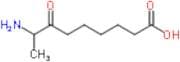
CAS:<p>HIGH-MOLECULAR-MASS MACROGOL CRS</p>Fórmula:C9H17NO3Peso molecular:187.2362Polyethylene Glycol 3350
CAS:Polyethers, nesoiFórmula:HOCH2CH2nOHForma y color:White SolidPeso molecular:3015 - 3685Polyethylene Glycol 3000
CAS:Polyethers, nesoiFórmula:HOCH2CH2nOHForma y color:Colorless FlakesPeso molecular:187.2362Polyethylene Glycol 8000
CAS:Polyethers, nesoiFórmula:HOCH2CH2nOHForma y color:White GranularPeso molecular:7000 - 9000Polyethylene Glycol 200
CAS:Polyethers, nesoiFórmula:HOCH2CH2OnHForma y color:Colorless Clear LiquidPeso molecular:About 200 (44.05 monomer)Polyethylene Glycol 600
CAS:Polyethers, nesoiFórmula:HOCH2CH2nOHForma y color:LiquidPeso molecular:570 - 630Polyethylene Glycol 4000
CAS:Polyethers, nesoiFórmula:HOCH2CH2nOHForma y color:White Off-White Waxy Solid FlakesPeso molecular:3600 - 4400Polyethylene Glycol 6000
CAS:Polyethers, nesoiFórmula:HOC2H4nOHForma y color:Colorless FlakesPeso molecular:5400 - 6600Polyethylene Glycol 1000
CAS:Polyethers, nesoiFórmula:HOCH2CH2nOHForma y color:White Waxy SolidPeso molecular:950 - 1050Polyethylene Glycol 400
CAS:Polyethers, nesoiFórmula:HOCH2CH2nOHForma y color:Colorless Clear LiquidPeso molecular:380 - 420Polyethylene Oxide
CAS:Polyethers, nesoiFórmula:(CH2CH2O)nForma y color:White Off-White PowderPeso molecular:5000000Polyethylene Glycol 300
CAS:Polyethers, nesoiFórmula:HOCH2CH2nOHForma y color:LiquidPeso molecular:285 - 315