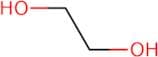
CAS 25322-68-3
:Polietilenglicol
Descripción:
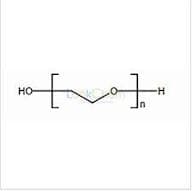
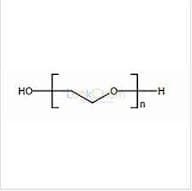
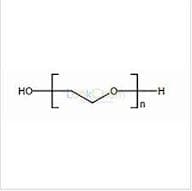
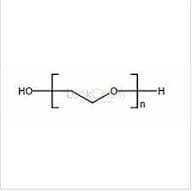
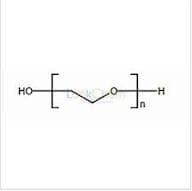
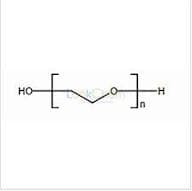
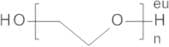
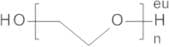
Polietilenglicol (PEG), con el número CAS 25322-68-3, es un polímero versátil conocido por sus propiedades hidrofílicas y biocompatibilidad. Está compuesto por unidades repetitivas de óxido de etileno, lo que resulta en una estructura que puede variar en peso molecular, lo que influye en sus características físicas y químicas. El PEG es típicamente un líquido incoloro, inodoro y viscoso o un sólido ceroso, dependiendo de su peso molecular. Es soluble en agua y muchos disolventes orgánicos, lo que lo hace útil en una amplia gama de aplicaciones, incluyendo productos farmacéuticos, cosméticos y alimentarios. El PEG sirve como lubricante, humectante y emulsionante, y a menudo se utiliza en formulaciones de medicamentos para mejorar la solubilidad y la biodisponibilidad. Además, su naturaleza no tóxica y su capacidad para formar hidrogeles lo hacen valioso en aplicaciones biomédicas, como sistemas de liberación de fármacos e ingeniería de tejidos. Sin embargo, las propiedades específicas del PEG pueden variar significativamente con su peso molecular y formulación, lo que debe tenerse en cuenta al seleccionarlo para aplicaciones particulares.
Fórmula:(C2H4O)nH2O
InChI:InChI=1S/C2H6O2/c3-1-2-4/h3-4H,1-2H2
Clave InChI:InChIKey=LYCAIKOWRPUZTN-UHFFFAOYSA-N
SMILES:C(CO[H])O
Sinónimos:- 1660O
- 1660S
- 3,6,9,12,15,18,21,24,27,30,33,36,39-Tridecaoxahentetracontane-1,41-diol
- 400Dab8
- Alkox
- Aquaffin
- Badimol
- Carbowachs
- Carbowax
- Colonsoft
- Db-Wax
- Duraseal
- FPR
- Forlax
- GlycoLax
- IW
- Isocolan
- KleanPrep
- Macrogol
- MiraLax
- Modopeg
- Muvinlax
- Nosilen
- Nycoline
- OEG
- PEB
- PEG
- PEG-(OH)<sub>2</sub>
- PEG-diol
- PEO
- PER
- Pegorion
- Peo-Pf
- Peo-Pfz
- Peo-Pfzr
- Peopo-A
- Polikol
- Poly(Oxy-1,2-Ethanediyl),A-Hydro-W-Hydroxy
- Poly(oxy-1,2-ethanediyl)
- Polyaethylenglykol
- Polyethox
- Polyethyleneglycol
- Polyetox
- Polygol
- Polyhydroxyethylene
- Polyosm
- Polyox
- Polyoxydin
- Polyoxyethylenediol
- Postonal
- Sed-Fix
- Slovapeg
- Solbase
- SpaceOAR
- Superox
- Ucarfloc
- α-Hydro-ω-hydroxypoly(oxy-1,2-ethanediyl)
- α-Hydro-ω-hydroxypoly(oxyethylene)
- PEG 6000
- Polyethylene glycol
- Polyethylene Glycol
- PEG 6000, MB Grade (1.12033)
- Poly(oxy-1,2-ethanediyl), α-hydro-ω-hydroxy-
- PEG 200
- Poly(ethylene oxide)
- Poly(ethylene glycol)
- Polyethyleneoxidemonomethacryloxymonotrimethylsiloxyterminated
- Poly ethylene glycol
- O-Methacryloxy(polyethyleneoxy)trimethylsilane
- poly(oxyethylene)
- Polyethylene glygcol
- PEG 200-8000
- Polyethylene glycol
- Ethylene oxide, homopolymer
- Polyethylene Glycol 5000000
- PolyethyleneoxideMW
- Aquacide III
- Polyethylene glycol series
- Tri-(2,3-Dibromopropyl) Phosphate
- Glycols, polyethylene
- Polyethylene glycol PEG
- Polyethylene glycol - 6000 grade
- Carmowax
- PEG 8000
- PEG 1000
- Ethylene glycol 8000 polymer
- PEG-400
- polyethylene oxide standard 511000
- Oxide Wax AN
- PEG 400
- Polyethylene Oxide
- PEG 600
- Ver más sinónimos
Ordenar por
Pureza (%)
0
100
|
0
|
50
|
90
|
95
|
100
Polyethylene Glycol 1000 (PEG 1000)
CAS:Forma y color:White to almost white, Waxy solid, Clear, ColourlessPolyethylene Glycol 9000 Flakes (PEG 9000)
CAS:Forma y color:White, Crystalline powder/flakes, Clear, ColourlessPolyethylene Glycol 3350 Flakes (PEG 3350) ExiPlus, Multi-Compendial
CAS:Forma y color:White, Crystalline flake, Clear, ColourlessPeso molecular:3000-3500Polyethylene Glycol 400 (PEG 400)
CAS:Forma y color:Clear, Colourless, Viscous liquidPeso molecular:380 -420Polyethylene Glycol 20000 Flakes (PEG 20000) ExiPlus, Multi-Compendial
CAS:Forma y color:White, Powder/Flakes, Clear, ColourlessPolyethylene Glycol 8000 Flakes (PEG 8000) ExiPlus, Multi-Compendial
CAS:Forma y color:White, Flakes/Powder, Clear, ColourlessPeso molecular:~8000Polyethylene Glycol 20000 Flakes (PEG 20000)
CAS:Forma y color:White, Hard Flakes/Powder, Clear, ColourlessPolyethylene Glycol 6000 Flakes (PEG 6000) ExiPlus, Multi-Compendial
CAS:Forma y color:White, Flakes/Powder, Clear, ColourlessPeso molecular:5000-7000Polyethylene Glycol 4000 Flakes (PEG 4000) Flakes ExiPlus, Multi-Compendial
CAS:Forma y color:White, Waxy solid /Flakes, Clear, ColourlessPeso molecular:3500 - 4500Polyethylene glycol 600
CAS:Fórmula:(C2H4O)nH2OForma y color:Solid, Low Melting SolidPeso molecular:600Poly(ethylene Glycol) ~40,000
CAS:<p>Applications Poly(ethylene Glycol) molecules of an average molecular mass of 40,000. Poly(ethylene Glycol) is used in various applications from industrial chemistry to biological chemistry. Recent research has shown PEG maintains the ability to aid the spinal cord injury recovery process, helping the nerve impulse conduction process in animals. In rats, it has been shown to aid in the repair of severed sciatic axons, helping with nerve damage recovery. It is industrially produced as a lubricating substance for various surfaces to reduce friction. PEG is also used in the preparation of vesicle transport systems in with application towards diagnostic procedures or drug delivery methods.<br>References Borgens, R. et al.: J. Neurosci. Res., 66, 1179 (2001); Stavisky, R. et al.: Neurosci. Lett., 376, 98 (2005); Nalam, P. et al.: Tribiol. Lett., 37, 541 (2010); Steinmetz, N. et al.: J. Am. Chem. Soc., 131, 17093 (2009); Li, X. et al.: J. Am. Chem. Soc., 133, 11147 (2011); Li, L. et al.: Int. J. Pharm., 447, 192 (2013);<br></p>Fórmula:H2O(C2H4O)nForma y color:White To Off-WhitePeso molecular:62.07Poly(ethylene Glycol) ~30,000
CAS:Producto controlado<p>Applications Poly(ethylene Glycol) molecules of an average molecular mass of 30,000. Poly(ethylene Glycol) is used in various applications from industrial chemistry to biological chemistry. Recent research has shown PEG maintains the ability to aid the spinal cord injury recovery process, helping the nerve impulse conduction process in animals. In rats, it has been shown to aid in the repair of severed sciatic axons, helping with nerve damage recovery. It is industrially produced as a lubricating substance for various surfaces to reduce friction. PEG is also used in the preparation of vesicle transport systems in with application towards diagnostic procedures or drug delivery methods.<br>References Borgens, R. et al.: J. Neurosci. Res., 66, 1179 (2001); Stavisky, R. et al.: Neurosci. Lett., 376, 98 (2005); Nalam, P. et al.: Tribiol. Lett., 37, 541 (2010); Steinmetz, N. et al.: J. Am. Chem. Soc., 131, 17093 (2009); Li, X. et al.: J. Am. Chem. Soc., 133, 11147 (2011); Li, L. et al.: Int. J. Pharm., 447, 192 (2013);<br></p>Fórmula:H2O(C2H4O)nForma y color:White To Off-WhitePeso molecular:62.07Bis-dPEG®5, Half Benzyl Half NHS Ester
CAS:<p>Bis-dPEG®5, Half Benzyl Half NHS Ester is a heterobifunctional cross-linking reagent, which is derived from discrete poly(ethylene glycol) chemistry. It features a benzyl group on one end and an N-hydroxysuccinimide (NHS) ester on the other. The NHS ester is a well-known active ester that facilitates the formation of stable amide bonds with primary amines, commonly found on proteins and peptides. By doing so, it enables the covalent attachment of biomolecules, enhancing solubility, stability, and overall bioavailability.</p>Fórmula:C24H50O13Pureza:Min. 95%Peso molecular:546.65 g/molPoly(ethylene oxide) - average Mv 200,000
CAS:Producto controlado<p>Polyethylene oxide is a linear polymer with an average molecular weight of 200,000. It has a viscosity of approximately 8,000-10,000 cps and is soluble in water. Polyethylene oxide can be used as an excipient for pharmaceutical products. This material is not toxic or carcinogenic and does not cause hypersensitivity reactions. It is metabolized by the liver and excreted in the bile. The polyethylene oxide molecule contains hydrophilic ethylene oxide (EO) and hydrophobic oxyethylene (OE) groups that are responsible for its solubility in water and its low toxicity. The EO groups are responsible for the high viscosity of polyethylene oxide, while the OE groups contribute to its low toxicity.</p>Fórmula:(C2H4O)n•H2OPureza:Min. 95%