CAS 2538-87-6
:p-Hidroxicinamaldehído
Descripción:
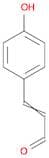
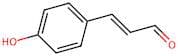
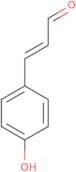
p-Hidroxicinamaldehído, también conocido como 4-hidroxicinamaldehído, es un compuesto orgánico con la fórmula molecular C9H8O2. Presenta un grupo hidroxilo fenólico y un grupo funcional aldehído, que contribuyen a su reactividad y actividad biológica. Este compuesto aparece típicamente como un sólido cristalino de color amarillo a marrón y tiene un olor aromático característico. Es soluble en disolventes orgánicos como el etanol y la acetona, pero tiene una solubilidad limitada en agua. p-Hidroxicinamaldehído es conocido por sus propiedades antioxidantes y se ha estudiado por sus posibles efectos terapéuticos, incluyendo actividades antiinflamatorias y antimicrobianas. A menudo se utiliza en las industrias alimentaria y cosmética como agente saborizante y fragancia, respectivamente. Además, sirve como un intermediario valioso en la síntesis orgánica, particularmente en la producción de varios fármacos y agroquímicos. Su estabilidad y reactividad lo convierten en un compuesto de interés tanto en la investigación como en aplicaciones industriales.
Fórmula:C9H8O2
InChI:InChI=1S/C9H8O2/c10-7-1-2-8-3-5-9(11)6-4-8/h1-7,11H
Clave InChI:InChIKey=CJXMVKYNVIGQBS-UHFFFAOYSA-N
SMILES:C(=CC=O)C1=CC=C(O)C=C1
Sinónimos:- (2E)-3-(4-Hydroxyphenyl)acrylaldehyd
- (2E)-3-(4-Hydroxyphenyl)acrylaldehyde
- 2-Propenal, 3-(4-hydroxyphenyl)-
- 2-propenal, 3-(4-hydroxyphenyl)-, (2E)-
- 3-(4-Hydroxyphenyl)-2-propenal
- 4-Hydroxycinnamaldehyde
- Cinnamaldehyde, p-hydroxy-
- p-Coumaraldehyde
- p-Coumaroyl aldehyde
- p-Hydroxycinnamaldehyde
- 3-(4-hydroxyphenyl)acrylaldehyde
- AT-51103
- Ver más sinónimos
Ordenar por
Pureza (%)
0
100
|
0
|
50
|
90
|
95
|
100
Encontrado 5 productos.
3-(4-Hydroxyphenyl)acrylaldehyde
CAS:Fórmula:C9H8O2Pureza:95%Forma y color:SolidPeso molecular:148.15863-(4-Hydroxyphenyl)Acrylaldehyde
CAS:3-(4-Hydroxyphenyl)AcrylaldehydePureza:99%Peso molecular:148.16g/molp-Coumaraldehyde
CAS:Producto controladoStability Light Sensitive
Applications p-Coumaraldehyde is a potential antitumor agents extracted from cucumbers. p-Coumaraldehyde was shown to significantly inhibit the cancer cell growth in a dose-dependent manner
References Varbanova. M., et al.: Plant. Physiol., 157, 1056 (2011); Wu, W.B., et al.: Bioorg. Med. Chem. Lett.,22, 1895 (2012);Fórmula:C9H8O2Forma y color:NeatPeso molecular:148.164-Hydroxycinnamaldehyde
CAS:4-Hydroxycinnamaldehyde (4HC) is a biofuel that is used as a precursor to 4-hydroxybenzoic acid, which is a precursor to the anti-inflammatory drug phenylbutazone. 4HC has been shown to inhibit prostate cancer cell growth by inducing apoptosis and cell cycle arrest. It has also been shown to be an effective inhibitor of glycoside derivatives that are responsible for autoimmune diseases. In addition, it has been shown to increase mitochondrial membrane potential and decrease reactive oxygen species production in rat liver mitochondria. The acetate extract of peels from citrus fruits show enzyme activities that are similar to those of 4HC, but at lower concentrations than 4HC.Fórmula:C9H8O2Pureza:Min. 98%Forma y color:PowderPeso molecular:148.16 g/mol