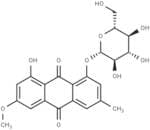
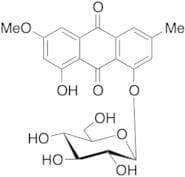
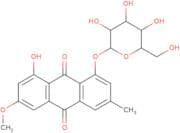
CAS 26296-54-8
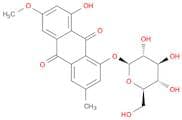
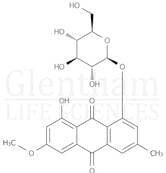
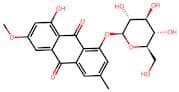
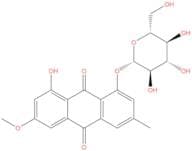
:9,10-Antracenediona,1-(b-D-glucopiranosiloxi)-8-hidroxi-6-metoxi-3-metil-
- 1-(β-<span class="text-smallcaps">D</span>-Glucopyranosyloxy)-8-hydroxy-6-methoxy-3-methyl-9,10-anthracenedione
- 3-Methyl-6-methoxy-1,8-dihydroxyanthraquinone 1-glucoside
- 9,10-Anthracenedione, 1-(β-<span class="text-smallcaps">D</span>-glucopyranosyloxy)-8-hydroxy-6-methoxy-3-methyl-
- Physcion 1-O-β-<span class="text-smallcaps">D</span>-glucopyranoside
- Physcion 1-O-β-<span class="text-smallcaps">D</span>-glucoside
- Physcion 1-b-D-glucopyranoside
- Physcion 1-β-<span class="text-smallcaps">D</span>-glucopyranoside
- Physcion1-O-b-D-glucoside
- Physcionin
- Physcionin(7CI,8CI)
- 9,10-Anthracenedione, 1-(β-D-glucopyranosyloxy)-8-hydroxy-6-methoxy-3-methyl-
- Ver más sinónimos
9,10-Anthracenedione, 1-(β-D-glucopyranosyloxy)-8-hydroxy-6-methoxy-3-methyl-
CAS:Fórmula:C22H22O10Pureza:95%Forma y color:SolidPeso molecular:446.4041Physion 8-O-β-D-glucoside
CAS:Physion 8-O-β-D-glucoside is a tumor cell growth inhibitor.Fórmula:C22H22O10Pureza:95.17% - 99.66%Forma y color:SolidPeso molecular:446.4Physcion 1-b-D-Glucopyranoside
CAS:Producto controladoApplications Physcion 1-β-D-Glucopyranoside is a by-product during the synthesis of Physcion 8-β-D-glucoside (P398100). Physcion 8-β-D-glucoside has been studied in research relating to the treatment of the glomerulonephritis. It is the glucoside of Physcion (P398000) which is a natural anthraquinone derivative, on the infection process of Blumeria graminis on wheat. Physcion is one of the important active ingredients of ethanol extract from the roots of Chinese rhubarb (Rheum officinale) for controlling powdery mildew.
References Kuo, Y.C. et al.: Life. Sci., 68, 1271 (2001); Thiericke, R., et al.: Nat. Prod. Rep.,10, 265 (1993); Lin, C., et al.: J. Nat. Prod., 58, 1934 (1995); Julia, S., et al.: J. Biotechnol., 124, 690 (2006); Wang, W., et al.: J. Antibiot., 60, 603 (2007);Fórmula:C22H22O10Forma y color:NeatPeso molecular:446.4Physcion-1-O-²-D-glucoside
CAS:Physcion-1-O-²-D-glucoside is a natural product that has been shown to have anti-cancer properties. It inhibits the growth of cancer cells by triggering apoptosis, or programmed cell death. Physcion-1-O-²-D-glucoside has also been shown to inhibit tumour growth in animal models and reduce the size of tumours in mice with implanted human xenografts. This compound is a potent inhibitor of paclitaxel resistance, which is an important factor in cancer chemotherapy. The mechanism of action for this compound has not yet been elucidated, but it has been suggested that it may interfere with the process of cell division through interference with microtubule formation or mitotic spindle function.
Fórmula:C22H22O10Pureza:Min. 95%Peso molecular:446.41 g/mol