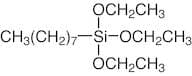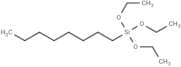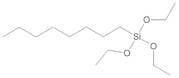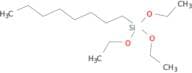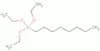
CAS 2943-75-1
:Octiltrietoxisilano
- (Octyl)-triethoxysilane
- 1-(Triethoxysilyl)octane
- A 137
- A 137 (coupling agent)
- Aes 3083
- Caprylyltriethoxysilane
- Db 8830
- Dynasylan OCTEO
- Elotex Seal 80
- Emi 1831
- Enviroseal 40
- Kbe 3083
- Kh 350
- Kh 832
- L 04407
- Lm-N 308
- Nsc 42964
- O 9835
- Octyl(triethoxy)silane
- Octyltriethoxysilane
- Ofs 6341
- Penta 818
- Prosil 9202
- Prosil 9234
- Si 208
- Si 208 (coupling agent)
- Silane, triethoxyoctyl-
- Silquest 06715.0
- Silquest A 137
- Silres BS 1601
- Sm 008
- Triethoxy(octyl)silane
- Triethoxycaprylylsilane
- Triethoxyoctyl silane
- Triethoxyoctylsilan
- Triethoxyoctylsilane
- Trietoxioctilsilano
- U 222
- VP-Si 208
- Xiameter OFS 6341
- Xiameter OFS 6595
- Y 9187
- Z 6341
- n-Octyl triethoxysilane
- n-Octyltriethoxysilane
- n-octyltriethoaysilane(30m3m)
- TRIETHOXY-N-OCTYLSILANE
- n-octyltriethoaysilane(30m3)
- prosil9234
- n-octyltriethoaysilane(32m18)
- TRIETHOXY-OCTYLSILANE
- prosil9202
- dynasylanocteo
- Triethoxy-n-octyltriethoxysilane
- silquesta137
- CO9835
- a137(couplingagent)
- n-octyltriethoaysilane(30m35)
- Ver más sinónimos
Triethoxy-n-octylsilane
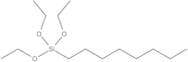
CAS:Fórmula:C14H32O3SiPureza:>97.0%(GC)Forma y color:Colorless to Almost colorless clear liquidPeso molecular:276.49n-Octyltriethoxysilane, 95%
CAS:This Thermo Scientific Chemicals brand product was originally part of the Alfa Aesar product portfolio. Some documentation and label information may refer to the legacy brand. The original Alfa Aesar product / item code or SKU reference has not changed as a part of the brand transition to Thermo SciFórmula:C14H32O3SiPureza:95%Forma y color:Clear colorless, LiquidPeso molecular:276.49Triethoxyoctylsilane
CAS:Triethoxyoctylsilane (NSC 42964), an organosilane, forms micelles; used in plastics.Fórmula:C14H32O3SiPureza:97.55%Forma y color:Colorless Transparent LiquidPeso molecular:276.49Triethoxy(octyl)silane
CAS:Producto controladoApplications Triethoxy(octyl)silane is a hydrophobization agent used to limit coalescence in solid-stabilized emulsions.
References Arditty, S., et al.: Eur. Phys. J. E, 11, 273 (2003);Fórmula:C14H32O3SiForma y color:NeatPeso molecular:276.49n-OCTYLTRIETHOXYSILANE, 98%
CAS:Alkyl Silane - Conventional Surface Bonding
Aliphatic, fluorinated aliphatic or substituted aromatic hydrocarbon substituents are the hydrophobic entities which enable silanes to induce surface hydrophobicity. The organic substitution of the silane must be non-polar. The hydrophobic effect of the organic substitution can be related to the free energy of transfer of hydrocarbon molecules from an aqueous phase to a homogeneous hydrocarbon phase. A successful hydrophobic coating must eliminate or mitigate hydrogen bonding and shield polar surfaces from interaction with water by creating a non-polar interphase. Although silane and silicone derived coatings are in general the most hydrophobic, they maintain a high degree of permeability to water vapor. This allows coatings to breathe and reduce deterioration at the coating interface associated with entrapped water. Since ions are not transported through non-polar silane and silicone coatings, they offer protection to composite structures ranging from pigmented coatings to rebar reinforced concrete. A selection guide for hydrophobic silanes can be found on pages 22-31 of the Hydrophobicity, Hydrophilicity and Silane Surface Modification brochure.
n-Octyltriethoxysilane; Triethoxysilyloctane
Viscosity: 1.9 cStVapor pressure, 75 °C: 1 mmWidely used in architectural hydrophobationSurface treatment for pigments in cosmetic vehicles and compositesMay be formulated to stable water emulsionsSuppresses nucleation behavior in ZnO-polylactic acid compositesTrialkoxy silaneFórmula:C14H32O3SiPureza:97.5%Forma y color:Straw LiquidPeso molecular:276.48n-Octyltriethoxysilane
CAS:S12775 - n-Octyltriethoxysilane
Fórmula:C14H32O3SiPureza:97%Forma y color:Liquid, ClearPeso molecular:276.492