CAS 29549-60-8
:2-(Etiltio)fenol
Descripción:
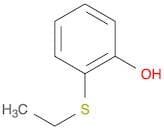
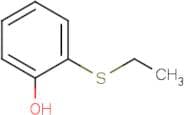
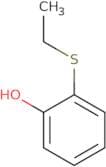
2-(Etiltio)fenol, con el número CAS 29549-60-8, es un compuesto orgánico caracterizado por la presencia de un grupo fenólico sustituido por un grupo etiltio en la posición orto. Este compuesto típicamente aparece como un líquido incoloro a amarillo pálido o sólido, dependiendo de su pureza y temperatura. Tiene un olor distintivo, que es común entre los tiofenoles debido a la presencia de azufre. El compuesto es soluble en disolventes orgánicos pero tiene una solubilidad limitada en agua, reflejando la naturaleza hidrofóbica del grupo etiltio. 2-(Etiltio)fenol exhibe propiedades fenólicas típicas, incluida la acidez, y puede participar en varias reacciones químicas como la sustitución electrofílica y la oxidación. También puede servir como un intermedio en la síntesis orgánica, particularmente en la producción de productos farmacéuticos, agroquímicos y otros productos químicos especiales. Las consideraciones de seguridad incluyen manejarlo en un área bien ventilada y usar el equipo de protección personal adecuado, ya que los tiofenoles pueden ser tóxicos e irritantes para la piel y el sistema respiratorio.
Fórmula:C8H10OS
InChI:InChI=1/C8H10OS/c1-2-10-8-6-4-3-5-7(8)9/h3-6,9H,2H2,1H3
Clave InChI:InChIKey=CSJBSYKCAKKLKG-UHFFFAOYSA-N
SMILES:S(CC)C1=C(O)C=CC=C1
Sinónimos:- 2-(Ethylsulfanyl)Phenol
- 2-Ethylsulfanylphenol
- Phenol, 2-(ethylthio)-
- Phenol, o-(ethylthio)-
- 2-(Ethylthio)phenol
- 2-(Ethylthio)phenol
Ordenar por
Pureza (%)
0
100
|
0
|
50
|
90
|
95
|
100
Encontrado 3 productos.
2-(Ethylsulfanyl)phenol
CAS:2-(Ethylsulfanyl)phenol is a hyphenated chemical compound that has been shown to be toxic to cells. It is a radical that can form in the body, and it has been found to have high potential for health risks. The reaction time for 2-(Ethylsulfanyl)phenol is an average of 130 seconds, which is much faster than most other chemicals. Kinetics for this compound are also rapid, with an average rate of 10-14 μmol/L per second. 2-(Ethylsulfanyl)phenol reacts with DNA at the scission site, which generates a free radical that damages the DNA strand and breaks it down into smaller fragments. This chemical has been shown to cause DNA damage at a rate of 0.1% per hour, which can lead to cell death and cancer development.Fórmula:C8H10OSPureza:Min. 95%Peso molecular:154.23 g/mol