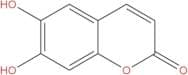
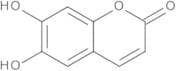
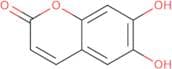
CAS 305-01-1
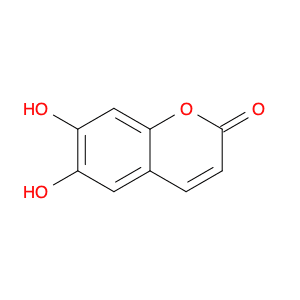
:Esculetin
- (2-Chlorophenyl)(Phenyl)Methanone
- 2H-1-Benzopyran-2-one, 6,7-dihydroxy-
- 6,7-Dihidroxi-2-Benzopirona
- 6,7-Dihydroxy-2-Benzopyrone
- 6,7-Dihydroxy-2-benzopyron
- 6,7-Dihydroxy-2H-1-benzopyran-2-one
- 6,7-Dihydroxycoumarin
- Aesculetin
- Asculetine
- Cichorigenin
- Cichoriin aglycon
- Coumarin, 6,7-dihydroxy-
- Esculetin
- Esculetol
- Esculin aglycon
- Ver más sinónimos
Esculetin
CAS:Fórmula:C9H6O4Pureza:>98.0%(T)(HPLC)Forma y color:Light yellow to Brown to Dark green powder to crystalPeso molecular:178.14Esculetin
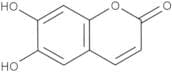
CAS:Esculetin analytical standard provided with chromatographic purity, to be used as reference material for qualitative determination.Fórmula:C9H6O4Pureza:(HPLC) ≥98%Forma y color:PowderPeso molecular:178.152H-1-Benzopyran-2-one, 6,7-dihydroxy-
CAS:Fórmula:C9H6O4Pureza:95%Forma y color:SolidPeso molecular:178.1415Esculetin
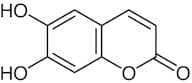
CAS:EsculetinFórmula:C9H6O4Pureza:> 95 % nmr (Typical Value in Batch COA)Forma y color: faint yellow powderPeso molecular:178.14g/molEsculetin [Matrix for MALDI-TOF/MS]
CAS:Fórmula:C9H6O4Pureza:>99.0%(T)(HPLC)Forma y color:White to Orange to Green powder to crystalPeso molecular:178.14Esculetin
CAS:Esculetin: a coumarin from plants with anti-edema, anti-inflammatory, anti-tumor properties; inhibits LOs.Fórmula:C9H6O4Pureza:98.03% - 99.76%Forma y color:Yellow Crystalline PowderPeso molecular:178.14Esculetin
CAS:Esculetin is a naturally occurring coumarin compound, which is predominantly derived from various plant sources, such as the bark and leaves of certain trees and shrubs. As a member of the coumarin family, it is characterized by its benzopyrone structure and is often isolated from botanicals through organic solvent extraction methods.
Its mode of action primarily involves its ability to scavenge free radicals and chelate metal ions, contributing to its notable antioxidant capacity. Furthermore, Esculetin exerts anti-inflammatory effects by inhibiting the activity of enzymes such as cyclooxygenase and lipoxygenase, which are integral to the inflammatory pathway.
Common applications of Esculetin are found in scientific research where it is utilized for its potential therapeutic properties. Studies have investigated its role in modulating oxidative stress, its protective effects in neurodegenerative disorders, and its capability to inhibit the proliferation of certain cancer cell lines. Additionally, it serves as a useful biochemical tool in elucidating the pathways of inflammation and oxidative stress within cellular models. Scientists continue to explore its potential as a lead compound in drug discovery and development.Fórmula:C9H6O4Pureza:Min. 98.0 Area-%Peso molecular:178.15 g/mol






![Esculetin [Matrix for MALDI-TOF/MS]](/_next/image/?url=https%3A%2Fstatic.cymitquimica.com%2Fproducts%2F3B%2Fthumb%2FE1287.jpg&w=3840&q=75)