CAS 31302-52-0
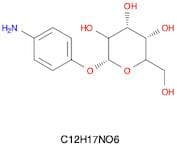
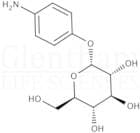
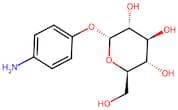
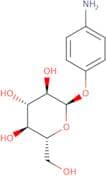
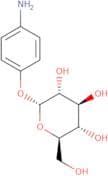
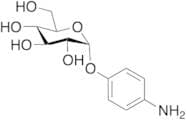
:4-aminofenil-alfa-D-glucopiranósido
Descripción:
4-aminofenil-alfa-D-glucopiranósido es un compuesto químico caracterizado por la presencia de un grupo amino y una parte de glucopiranósido. Presenta un anillo de fenilo sustituido con un grupo amino en la posición para, lo que contribuye a su potencial actividad biológica. La parte de glucopiranósido indica que es un glucósido, específicamente un alfa-D-glucopiranósido, lo que significa que la unidad de glucosa está en su forma de pirano y está unida al grupo fenilo a través de un enlace glucosídico. Este compuesto se estudia a menudo por sus aplicaciones en bioquímica y química medicinal, particularmente en el contexto del diseño y desarrollo de fármacos. Su solubilidad en agua y disolventes orgánicos puede variar, influyendo en su biodisponibilidad e interacción con sistemas biológicos. La presencia de componentes tanto hidrofílicos (glucosa) como hidrofóbicos (fenilo) permite diversas interacciones, convirtiéndolo en un tema de interés en la investigación relacionada con sustratos e inhibidores enzimáticos. En general, 4-aminofenil-alfa-D-glucopiranósido ejemplifica la intersección de la química de carbohidratos y compuestos aromáticos, mostrando la complejidad de las interacciones moleculares en sistemas biológicos.
Ordenar por
Pureza (%)
0
100
|
0
|
50
|
90
|
95
|
100
Encontrado 6 productos.
4-Aminophenyl α-D-glucopyranoside
CAS:4-Aminophenyl α-D-glucopyranosideForma y color:White SolidPeso molecular:271.27g/mol4-Aminophenyl-α-D-glucopyranoside
CAS:4-Aminophenyl-alpha-D-glucopyranoside is a natural product that has been found to be an antigen. The compound has been shown to have anticancer activity, which may be due to its ability to inhibit the growth of cells and induce apoptosis. 4-Aminophenyl-alpha-D-glucopyranoside also possesses magnetic properties. The chemical structure of this compound is characterized by an acrylate group, which is a small organic molecule with two carbon atoms and one oxygen atom. This compound is synthesized in a preparative manner using methoxy, ethyl bromoacetate, and mesitylene in the presence of irradiation. NMR spectroscopy can be used for the characterization of this compound as well as other compounds with similar structures that are catalytic in nature.Fórmula:C12H17NO6Pureza:Min. 98.0 Area-%Peso molecular:271.27 g/mol4-Aminophenyl a-D-glucopyranoside
CAS:4-Aminophenyl a-D-glucopyranoside is an alkoxycarbonyl analog that can be used in the preparation of antigens. It is a small, water-soluble molecule that can be used to induce antibody production and to identify antigenic determinants. 4-Aminophenyl a-D-glucopyranoside has been shown to react with glutamicum and corynebacterium cells in vitro. The compound binds to the bacterial cell surface by reacting with amino groups, inducing the production of acid molecules, which leads to bacterial death. 4-Aminophenyl a-D-glucopyranoside also reacts with methoxy residues on the ribosomal RNA molecule and corynebacterium DNA molecules. This allows it to be used as an expression vector for proteins and nucleic acids in Corynebacterium glutamicum (a bacterium commonly found in soil). SpectroscFórmula:C12H17NO6Pureza:Min. 95%Forma y color:PowderPeso molecular:271.27 g/mol4-Aminophenyl a-D-Glucopyranoside
CAS:Producto controladoApplications 4-Aminophenyl α-D-Glucopyranoside is a glycoside derivative of 4-Aminophenol (A618920); a nephrotoxic metabolite of Acetaminophen (A161220) and Phenacetin (P294580) (1).
References (1) Watanabe, et al.: Drug Metab. Dispos., 38, 1532 (2010)Fórmula:C12H17NO6Forma y color:NeatPeso molecular:271.27