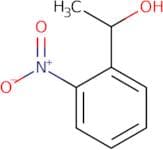
CAS 3205-25-2
:1-(2-nitrofenil)etanol
Descripción:
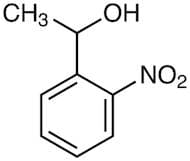
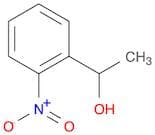
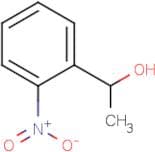
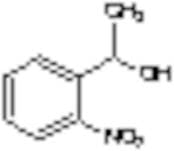
1-(2-nitrofenil)etanol, con el número CAS 3205-25-2, es un compuesto orgánico caracterizado por la presencia de un grupo nitrofenilo unido a una parte de etanol. Este compuesto presenta un grupo hidroxilo (-OH), que contribuye a su clasificación como un alcohol. El grupo nitro (-NO2) está posicionado en el segundo carbono del anillo fenílico, influyendo en la reactividad y polaridad del compuesto. Típicamente, 1-(2-nitrofenil)etanol aparece como un sólido o líquido, dependiendo de las condiciones específicas, y es conocido por sus posibles aplicaciones en la síntesis orgánica y como un intermedio en la producción de varios compuestos químicos. La presencia de ambos grupos, hidroxilo y nitro, puede conferir propiedades únicas, como una mayor solubilidad en disolventes polares y la capacidad de participar en enlaces de hidrógeno. Además, el compuesto puede exhibir propiedades electrónicas interesantes debido a la naturaleza atrayente de electrones del grupo nitro, lo que puede afectar su comportamiento en reacciones químicas. Se deben tomar precauciones de seguridad al manipular esta sustancia, ya que los compuestos nitro pueden ser peligrosos.
Fórmula:C8H9NO3
InChI:InChI=1/C8H9NO3/c1-6(10)7-4-2-3-5-8(7)9(11)12/h2-6,10H,1H3
SMILES:CC(c1ccccc1N(=O)=O)O
Sinónimos:- Benzenemethanol, alpha-methyl-2-nitro-
- Nitrophenylethanol
Ordenar por
Pureza (%)
0
100
|
0
|
50
|
90
|
95
|
100
Encontrado 6 productos.
1-(2-Nitrophenyl)ethanol
CAS:Fórmula:C8H9NO3Pureza:>98.0%(GC)Forma y color:Light yellow to Yellow to Orange clear liquidPeso molecular:167.16(R,S)-1-(2-Nitrophenyl)ethanol
CAS:Producto controladoApplications (R,S)-1-(2-Nitrophenyl)ethanol (cas# 3205-25-2) is a compound useful in organic synthesis.
Fórmula:C8H9NO3Forma y color:NeatPeso molecular:167.16c(R,S)-1-(2-Nitrophenyl)ethanol
CAS:1,2-Dichloroethane is an organic solvent that has a number of industrial uses. It is also used as an antigen for the detection of antibodies in biological studies. 1,2-Dichloroethane reacts with free amino groups on proteins to form antigen-binding sites. The cavity created by the reaction then binds to the antigen and induces a change in fluorescence. This process can be detected using fluorescence resonance energy transfer (FRET). Irradiation of 1,2-dichloroethane leads to the formation of reactive oxygen species (ROS) such as singlet oxygen, which can react with aspartyl groups in proteins to form diphosgene. This reaction can lead to protein denaturation and loss of function, which may be responsible for some of the toxic effects observed with this compound.Fórmula:C8H9NO3Pureza:Min. 95%Forma y color:PowderPeso molecular:167.16 g/mol