CAS 347396-82-1
:Ranibizumab
Descripción:
Ranibizumab es un fragmento de anticuerpo monoclonal humanizado recombinante que se dirige específicamente al factor de crecimiento endotelial vascular A (VEGF-A), una proteína clave involucrada en la angiogénesis y la permeabilidad vascular. Se utiliza principalmente en el tratamiento de diversas afecciones oculares, como la degeneración macular relacionada con la edad y el edema macular diabético, al inhibir el crecimiento anormal de vasos sanguíneos en la retina. Ranibizumab se caracteriza por su pequeño tamaño en comparación con los anticuerpos de longitud completa, lo que permite una mejor penetración en los tejidos. La sustancia se administra mediante inyección intravítrea, y su mecanismo de acción implica unirse a VEGF-A, impidiendo que interactúe con sus receptores en las células endoteliales, reduciendo así la fuga vascular y la neovascularización. El peso molecular de Ranibizumab es de aproximadamente 48 kDa, y se produce utilizando tecnología de ADN recombinante en un sistema de expresión celular de mamíferos. Las condiciones de estabilidad y almacenamiento son críticas para mantener su eficacia, ya que es sensible a la luz y a las variaciones de temperatura. En general, Ranibizumab representa un avance significativo en la terapia dirigida para enfermedades oculares.
Fórmula:C11H12N2O2
Sinónimos:- RanibizumabQ: What is
- Ranibizumab
- Ranibizumab USP/EP/BP
- Ranibizumab (anti-VEGF)
- Lucentis
- Research Grade Ranibizumab(DHD12601)
- Ranibizumab Q: What is the storage condition of
- Ranibizumab Q: What is the CAS Number of
- Unii-zl1R02vt79
- Ranibizumab - 25mg/ml solution in PBS
Ordenar por
Pureza (%)
0
100
|
0
|
50
|
90
|
95
|
100
Encontrado 4 productos.
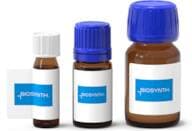
Ranibizumab
CAS:Ranibizumab is a humanized monoclonal antibody fragment designed to target and inhibit vascular endothelial growth factor (VEGF), including VEGF110, VEGF121,Pureza:98%Forma y color:LiquidPeso molecular:149.19KDRanibizumab - 10mM histidine - histidine HCL buffer
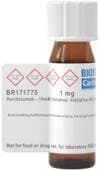
CAS:Ranibizumab is a recombinant monoclonal antibody that binds to the active site of vascular endothelial growth factor (VEGF) and neutralizes its biological activity. It is used as a research tool to study the function of VEGF and in pharmacology to inhibit angiogenesis. Ranibizumab is also used to treat age-related macular degeneration, diabetic retinopathy, and neovascular glaucoma.Pureza:Min. 95 Area-%Ranibizumab - 10mM histidine- histidine HCl buffer
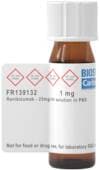
CAS:Ranibizumab is a humanized monoclonal antibody that binds to vascular endothelial growth factor (VEGF) and blocks its action. It is used in the treatment of age-related macular degeneration and other diseases characterized by neovascularization, such as diabetic retinopathy and retinopathy of prematurity. Intravitreal ranibizumab injections have been shown to be effective for neovascular age-related macular degeneration, with a reduction in choroidal neovascularization and visual acuity improvement demonstrated in clinical trials. This drug has also been shown to reduce the incidence of new lesions in the retina and choroid, as well as to reduce or delay the development of new vessels. Ranibizumab is administered by intravitreal injection, which means it is injected into the vitreous humor inside the eye. The medication can be given alone or with bevacizumab (another VEGPureza:Min. 95 Area-%Forma y color:Clear Liquid