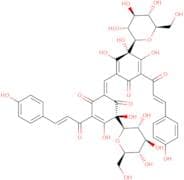
CAS 36338-96-2
:Cártamo
Descripción:
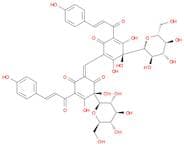
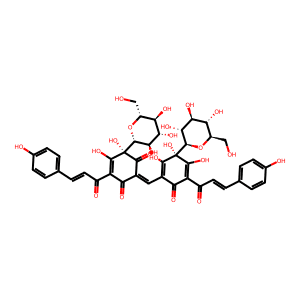
Cártamo, identificado por el número CAS 36338-96-2, se refiere a un compuesto químico derivado del cártamo (Cártamo tinctorius), conocido por su uso en la medicina tradicional y como tinte. Esta sustancia se caracteriza por sus potenciales propiedades antioxidantes y a menudo se estudia por sus aplicaciones en alimentos, cosméticos y productos farmacéuticos. El compuesto puede exhibir diversas actividades biológicas, incluidos efectos antiinflamatorios y cardioprotectores, lo que lo hace de interés en la investigación relacionada con la salud. Su estructura química típicamente incluye grupos funcionales que contribuyen a su reactividad e interacción con sistemas biológicos. Además, Cártamo es reconocido por su papel en la producción de aceite de cártamo, que es rico en ácidos grasos insaturados. Al igual que muchos productos naturales, las características específicas, como la solubilidad, estabilidad y reactividad, pueden variar según los métodos de extracción y purificación utilizados. En general, Cártamo representa un compuesto valioso con diversas aplicaciones en varios campos, particularmente en salud y nutrición.
Fórmula:C43H42O22
InChI:InChI=1S/C43H42O22/c44-14-24-30(52)32(54)34(56)40(64-24)42(62)36(58)20(28(50)26(38(42)60)22(48)11-5-16-1-7-18(46)8-2-16)13-21-29(51)27(23(49)12-6-17-3-9-19(47)10-4-17)39(61)43(63,37(21)59)41-35(57)33(55)31(53)25(15-45)65-41/h1-13,24-25,30-35,40-41,44-47,52-58,60-63H,14-15H2/b11-5+,12-6+,21-13-/t24-,25-,30-,31-,32+,33+,34-,35-,40-,41-,42+,43-/m1/s1
Clave InChI:InChIKey=WLYGSPLCNKYESI-RSUQVHIMSA-N
SMILES:O[C@@]1(C(=O)/C(=C\C2=C(O)[C@](O)(C(O)=C(C(/C=C/C3=CC=C(O)C=C3)=O)C2=O)[C@@]4(O[C@H](CO)[C@@H](O)[C@H](O)[C@H]4O)[H])/C(=O)C(C(/C=C/C5=CC=C(O)C=C5)=O)=C1O)[C@@]6(O[C@H](CO)[C@@H](O)[C@H](O)[C@H]6O)[H]
Sinónimos:- (2Z,6S)-6-β-<span class="text-smallcaps">D</smallcap>-Glucopyranosyl-2-[[(3S)-3-β-<smallcap>D</span>-glucopyranosyl-2,3,4-trihydroxy-5-[(2E)-3-(4-hydroxyphenyl)-1-oxo-2-propen-1-yl]-6-oxo-1,4-cyclohexadien-1-yl]methylene]-5,6-dihydroxy-4-[(2E)-3-(4-hydroxyphenyl)-1-oxo-2-propen-1-yl]-4-cyclohexene-1,3-dione
- 4-Cyclohexene-1,3-dione, 6-beta-D-glucopyranosyl-2-((3-beta-D-glucopyranosyl-2,3,4-trihydroxy-5-(3-(4-hydroxyphenyl)-1-oxo-2-propenyl)-6-oxo-1,4-cyclohexadien-1-yl)methylene)-5,6-dihydroxy-4-(3-(4-hydroxyphenyl)-1-oxo-2-propenyl)-
- 4-Cyclohexene-1,3-dione, 6-β-<span class="text-smallcaps">D</smallcap>-glucopyranosyl-2-[[(3S)-3-β-<smallcap>D</span>-glucopyranosyl-2,3,4-trihydroxy-5-[(2E)-3-(4-hydroxyphenyl)-1-oxo-2-propen-1-yl]-6-oxo-1,4-cyclohexadien-1-yl]methylene]-5,6-dihydroxy-4-[(2E)-3-(4-hydroxyphenyl)-1-oxo-2-propen-1-yl]-, (2Z,6S)-
- 4-Cyclohexene-1,3-dione, 6-β-<span class="text-smallcaps">D</smallcap>-glucopyranosyl-2-[[(3S)-3-β-<smallcap>D</span>-glucopyranosyl-2,3,4-trihydroxy-5-[(2E)-3-(4-hydroxyphenyl)-1-oxo-2-propenyl]-6-oxo-1,4-cyclohexadien-1-yl]methylene]-5,6-dihydroxy-4-[(2E)-3-(4-hydroxyphenyl)-1-oxo-2-propenyl]-, (2Z,6S)-
- 4-Cyclohexene-1,3-dione, 6-β-<span class="text-smallcaps">D</smallcap>-glucopyranosyl-2-[[3-β-<smallcap>D</span>-glucopyranosyl-2,3,4-trihydroxy-5-[3-(4-hydroxyphenyl)-1-oxo-2-propenyl]-6-oxo-1,4-cyclohexadien-1-yl]methylene]-5,6-dihydroxy-4-[3-(4-hydroxyphenyl)-1-oxo-2-propenyl]-, [S-(R*,R*)]-
- 5,6-dihydroxy-4-[3-(4-hydroxyphenyl)prop-2-enoyl]-6-[(2R,3R,4S,5S,6R)-3,4,5-trihydroxy-6-(hydroxymethyl)tetrahydropyran-2-yl]-2-[[2,3,4-trihydroxy-5-[3-(4-hydroxyphenyl)prop-2-enoyl]-6-oxo-3-[(2R,3R,4S,5S,6R)-3,4,5-trihydroxy-6-(hydroxymethyl)tetrahydropyran-2-yl]-1-cyclohexa-1,4-dienyl]methylene]cyclohex-4-ene-1,3-dione
- Carthamin
- Carthamin Yellow
- Carthamine
- Carthamus
- Carthamus (dye)
- Carthamus Red AP
- Liofresh Red CR
- Natural Red 26
- Safflower red
- 4-Cyclohexene-1,3-dione, 6-β-D-glucopyranosyl-2-[[(3S)-3-β-D-glucopyranosyl-2,3,4-trihydroxy-5-[(2E)-3-(4-hydroxyphenyl)-1-oxo-2-propen-1-yl]-6-oxo-1,4-cyclohexadien-1-yl]methylene]-5,6-dihydroxy-4-[(2E)-3-(4-hydroxyphenyl)-1-oxo-2-propen-1-yl]-, (2Z,6S)-
- 4-Cyclohexene-1,3-dione, 6-β-D-glucopyranosyl-2-[[(3S)-3-β-D-glucopyranosyl-2,3,4-trihydroxy-5-[(2E)-3-(4-hydroxyphenyl)-1-oxo-2-propenyl]-6-oxo-1,4-cyclohexadien-1-yl]methylene]-5,6-dihydroxy-4-[(2E)-3-(4-hydroxyphenyl)-1-oxo-2-propenyl]-, (2Z,6S)-
- 4-Cyclohexene-1,3-dione, 6-β-D-glucopyranosyl-2-[[3-β-D-glucopyranosyl-2,3,4-trihydroxy-5-[3-(4-hydroxyphenyl)-1-oxo-2-propenyl]-6-oxo-1,4-cyclohexadien-1-yl]methylene]-5,6-dihydroxy-4-[3-(4-hydroxyphenyl)-1-oxo-2-propenyl]-, [S-(R*,R*)]-
- Ver más sinónimos
Ordenar por
Pureza (%)
0
100
|
0
|
50
|
90
|
95
|
100
Encontrado 5 productos.
Safflower-yellow
CAS:Safflower yellow, from Carthamus tinctorius, is used in Chinese medicine for heart and brain vessel health.Fórmula:C43H42O22Pureza:98%Forma y color:SolidPeso molecular:910.78Ref: TM-T6263
5mg46,00€10mg59,00€1mL*10mM (DMSO)69,00€25mg95,00€50mg129,00€100mg177,00€200mg268,00€500mg420,00€Carthamus red
CAS:Carthamus red is a natural dye, which is obtained from the petals of the safflower plant, Carthamus tinctorius. This dye is known for its vibrant red hue and is extracted through a meticulous process involving the drying and steeping of safflower petals. The primary pigments responsible for its coloration are carthamin and carthamidin, which are anthocyanin derivatives.
Fórmula:C43H42O22Pureza:Min. 95 Area-%Forma y color:Red PowderPeso molecular:910.78 g/mol