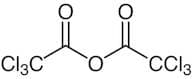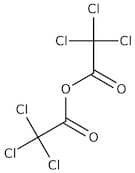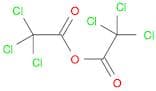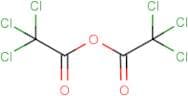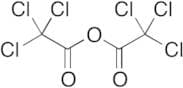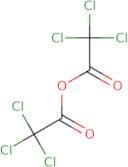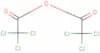
CAS 4124-31-6
:Anhídrido tricloracético
- (2,2,2-Trichloroacetyl) 2,2,2-trichloroacetate
- Acetic acid, 2,2,2-trichloro-, 1,1'-anhydride
- Acetic acid, trichloro-, anhydride
- Trichloracetic anhydride
- Trichloroacetic acid anhydride
- Trichloroacetic anhyride
- Trichloroacetic anhydride
Trichloroacetic Anhydride
CAS:Fórmula:C4Cl6O3Pureza:>97.0%(T)Forma y color:Colorless to Almost colorless clear liquidPeso molecular:308.74Trichloroacetic anhydride, 95%
CAS:Trichloroacetic anhydride is used as a derivatization reagent involved in the analysis of amphetamine,methamphetamine and 3,4-methylenedioxymethamphetamine. It is also used in the determination of the metabolites of l-alpha-acetylmethadol (LAAM), such as noracetylmethadol, dinoracetylmethadol, methFórmula:C4Cl6O3Pureza:95%Forma y color:Clear colorless, LiquidPeso molecular:308.74Ref: IN-DA003V0L
500gA consultar1g34,00€5g40,00€10g62,00€15g79,00€25g90,00€50g140,00€75g158,00€100g175,00€300g509,00€Trichloroacetic anhydride
CAS:Trichloroacetic anhydridePureza:95%Forma y color:Clear LiquidPeso molecular:308.76g/molTrichloroacetic Anhydride
CAS:Producto controladoApplications Trichloroacetic Anhydride is used in organometallic reactions as well as oxadiazole containing 5-lipoxygenase activating protein inhibitors.
References Takahashi, H. et al.: J. Med. Chem., 58, 1669 (2015);Fórmula:C4Cl6O3Forma y color:NeatPeso molecular:308.76Trichloroacetic anhydride
CAS:Trichloroacetic anhydride is a chemical compound that is used in organic synthesis. It is a strong acid that reacts with fatty acids to form trifluoroacetic acid, which can be used as an analytical method for determining the presence of amines in a sample. It also shows inhibitory properties against inflammatory bowel disease and has been shown to have anti-inflammatory activity. Trichloroacetic anhydride is not very soluble in water, but it can be dissolved in alcohols and alkalis. This compound's ability to react with hydroxyl groups makes it useful for the synthesis of esters and ethers. Trichloroacetic anhydride's ability to react with intramolecular hydrogen may lead to metabolic disorders such as diabetes mellitus.
Fórmula:C4Cl6O3Pureza:Min. 95%Peso molecular:308.76 g/mol