CAS 42097-42-7
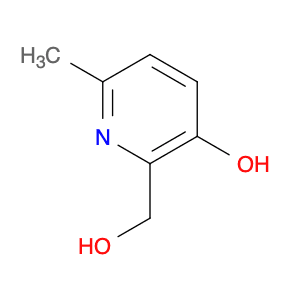
:3-Hidroxi-6-metil-2-piridinemetanol
- 2,6-Lutidine-Alpha-2,3-Diol
- 2,6-Lutidine-α<sup>2</sup>,3-diol
- 2-(Hydroxymethyl)-3-hydroxy-6-methylpyridine
- 2-(Hydroxymethyl)-6-Methylpyridin-3-Ol
- 2-(Hydroxymethyl)-6-methyl-3-pyridinol
- 2-Pyridinemethanol, 3-hydroxy-6-methyl-
- 3-Hydroxy-2-Hydroxymethyl-6-Methylpyridine
- 3-Hydroxy-6-methyl-2-pyridinemethanol
- 6-Methyl-2-(hydroxymethyl)-3-hydroxypyridine
3-Hydroxy-6-methyl-2-pyridinemethanol
CAS:Fórmula:C7H9NO2Pureza:98%Forma y color:SolidPeso molecular:139.15192-(hydroxymethyl)-6-methylpyridin-3-ol
CAS:2-(hydroxymethyl)-6-methylpyridin-3-olPureza:95%Peso molecular:139.15g/mol3-Hydroxy-2-hydroxymethyl-6-methylpyridine
CAS:3-Hydroxy-2-hydroxymethyl-6-methylpyridine is an intermediate in the synthesis of a variety of organic compounds. It can be prepared by the cross-coupling reaction of 3,4-dihydroquinoline with aniline, which is catalyzed by copper (II) chloride. This compound has a chlorine atom and a hydroxyl group that are both trisubstituted with alkyl groups and it can be oxidized to produce different oxidation products. 3-Hydroxy-2-hydroxymethyl-6-methylpyridine also reacts with halides and triflates to form enolates, which are activated for nucleophilic substitution reactions. The molecular ion [M+H]+, which corresponds to the neutral molecule, can be observed by mass spectrometry when this compound is ionized in the gas phase. The chemical formula is C8H5NClO2.
Fórmula:C7H9NO2Pureza:Min. 95%Forma y color:SolidPeso molecular:139.15 g/mol