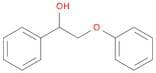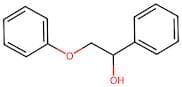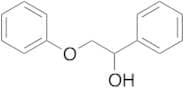
CAS 4249-72-3
:Bencenometanol, a-(fenoximetil)-
Descripción:
Bencenometanol, a-(fenoximetil)-, también conocido por su número CAS 4249-72-3, es un compuesto orgánico caracterizado por la presencia de un anillo bencénico y una estructura fenólica. Este compuesto presenta un grupo fenoximetílico unido a un marco de alcohol bencílico, lo que contribuye a sus propiedades químicas únicas. Típicamente es un líquido incoloro a amarillo pálido con un punto de ebullición moderado y es soluble en disolventes orgánicos. La presencia del grupo hidroxilo (-OH) en la parte del alcohol bencílico le confiere algunas características polares, mientras que los anillos aromáticos proporcionan propiedades hidrofóbicas. Este compuesto puede exhibir varios comportamientos funcionales, incluyendo actuar como un posible intermedio en la síntesis orgánica o como un reactivo en reacciones químicas. Su reactividad puede verse influenciada por los sustituyentes en los anillos aromáticos, lo que lo hace útil en diversas aplicaciones, incluyendo productos farmacéuticos y ciencia de materiales. Se deben consultar los datos de seguridad para el manejo y almacenamiento, como con cualquier sustancia química.
Fórmula:C14H14O2
Ordenar por
Pureza (%)
0
100
|
0
|
50
|
90
|
95
|
100
Encontrado 5 productos.
BenzeneMethanol, α-(phenoxyMethyl)-
CAS:Fórmula:C14H14O2Pureza:96%Forma y color:SolidPeso molecular:214.25982-Phenoxy-1-phenylethanol
CAS:2-Phenoxy-1-phenylethanol is a hydroxylated phenolic compound that has been used in the study of the mechanism of organic reactions. This chemical was first synthesized by reacting 3-mercaptopropionic acid with benzoic anhydride and then heating it to give 2,2'-diphenoxypropane. It is also possible to synthesize this chemical by reacting diphosphine with benzoate in the presence of a homogeneous catalyst. A reaction product can be formed when 2-phenoxyethanol reacts with activated chlorine in high salt solution. The reaction mechanism for this chemical involves the release of hydrogen from the hydroxyl group, which leads to intramolecular hydrogen transfer to form 3-mercaptopropionic acid. This process is reversible, so the reaction can be driven towards either product (2-phenoxyethanol or 3-mercaptopropionic acid).Fórmula:C14H14O2Pureza:Min. 95%Forma y color:PowderPeso molecular:214.26 g/mol2-Phenoxy-1-phenylethanol
CAS:Producto controladoFórmula:C14H14O2Forma y color:Off-WhitePeso molecular:214.25