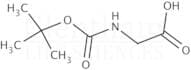
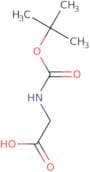
CAS 4530-20-5
:N-(terc-butiloxicarbonil)glicina
- (tert-Butoxycarbonyl)aminoacetic acid
- (tert-Butoxycarbonyl)glycine
- 2-(tert-Butoxycarbonylamino)acetic acid
- 2-[(2-Methylpropan-2-yl)oxycarbonylamino]acetic acid
- Boc-<span class="text-smallcaps">L</span>-glycine
- Boc-Gly-OH
- Boc-Gly-OH~N-(tert-Butoxycarbonyl)glycine
- Glycine, N-[(1,1-dimethylethoxy)carbonyl]-
- Glycine, N-carboxy-, N-tert-butyl ester
- N-(terc-butoxicarbonil)glicina
- N-(tert-Butoxycarbonyl)glycin
- N-(tert-Butoxycarbonyl)glycine
- N-Boc-glycine
- N-[(1,1-Dimethylethoxy)carbonyl]glycine
- N-[(tert-Butyloxy)carbonyl]glycine
- N-[[(1,1-Dimethylethyl)oxy]carbonyl]glycine
- N-t-Butyloxycarbonylglycine
- N-tert-Butoxycarbonyl-2-aminoacetic acid
- N-tert-Butoxycarbonylglycine
- N<sup>α</sup>-tert-Butyloxycarbonylglycine
- Nsc 127669
- NtertButoxycarbonylglycine
- Nα-tert-Butyloxycarbonylglycine
- [(Tert-Butoxycarbonyl)Amino]Acetate
- t-Butyloxycarbonylglycine
- Ver más sinónimos
N-(tert-Butoxycarbonyl)glycine
CAS:Fórmula:C7H13NO4Pureza:>98.0%(T)Forma y color:White to Almost white powder to crystalPeso molecular:175.18N-Boc-glycine, 98+%
CAS:This Thermo Scientific Chemicals brand product was originally part of the Alfa Aesar product portfolio. Some documentation and label information may refer to the legacy brand. The original Alfa Aesar product / item code or SKU reference has not changed as a part of the brand transition to Thermo SciFórmula:C7H13NO4Pureza:98+%Forma y color:Crystals or powder or crystalline powder, WhitePeso molecular:175.18Boc-Gly-OH
CAS:M03287 - Boc-Gly-OH
Fórmula:C7H13NO4Pureza:97%Forma y color:Solid, Powder or Crystalline PowderPeso molecular:175.184Boc-Gly-OH
CAS:Bachem ID: 4001229.
Fórmula:C7H13NO4Pureza:> 99%Forma y color:WhitePeso molecular:175.19[(t-Butoxycarbonyl)amino]acetic acid
CAS:[(t-Butoxycarbonyl)amino]acetic acidFórmula:C7H13NO4Pureza:97%Forma y color: white solidPeso molecular:175.18241g/molBOC-Glycine extrapure, 99%
CAS:Fórmula:C7H13NO4Pureza:min. 99%Forma y color:White, Crystalline powderPeso molecular:175.20N-Boc-glycine
CAS:Producto controladoApplications Used in the composition of drugs containing Ketoprofen, and Sodium hyaluronate as antiinflammatory agents.
References Bajusz, S., et al.: J. Med. Chem., 33, 1729 (1990), Dahlgren, A., et al.: Bioorg. Med. Chem., 10, 1829 (2002),Fórmula:C7H13NO4Forma y color:NeatPeso molecular:175.18Boc-Gly-OH
CAS:Boc-Gly-OH is a cyclic peptide with a fatty acid acyl chain. It is synthesized by reacting the amino acid glycine with sodium carbonate in the presence of trifluoroacetic acid to form the intermediate Boc-Gly-OSu. The product is then reacted with allyl bromide in a second step to produce Boc-Gly-OCH2CH2Br and then reacted with calcium chloride to yield the final product. Boc-Gly-OH has been used as an HIV inhibitor, which may be due to its ability to bind to both CD4 and gp120 proteins on the surface of HIV. This binding inhibits viral entry into host cells by blocking protease activity and fusion of viral envelope with host cell membrane, leading to inhibition of HIV infection.
Fórmula:C7H13NO4Pureza:Min. 95%Peso molecular:175.18 g/molN-Boc-glycine
CAS:N-Boc-glycine is a chemical compound used in the synthesis of cyclic peptides. N-Boc-glycine is synthesized by the reaction of glycine with methanol and hydrochloric acid in the presence of an activated form of carbon monoxide. The pharmacokinetic properties of N-Boc-glycine are similar to those for human immunoglobulin, and it can be used as a reference compound for preparative high performance liquid chromatography (HPLC). It has been shown that the nitrogen atoms in N-Boc-glycine are chemically stable, which makes it suitable for asymmetric synthesis. N-Boc-glycine also has potent antagonist effects on biochemical properties such as calcium channel blockade, inhibition of platelet aggregation, and inhibition of neutrophil chemotaxis.Fórmula:C7H13NO4Pureza:Min. 95%Forma y color:White PowderPeso molecular:175.18 g/mol



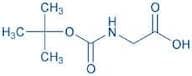

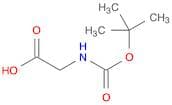

![[(t-Butoxycarbonyl)amino]acetic acid](/_next/image/?url=https%3A%2Fstatic.cymitquimica.com%2Fproducts%2F54%2Fthumb%2FOR323299.jpg&w=3840&q=75)