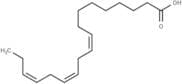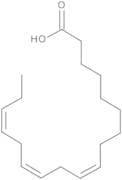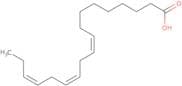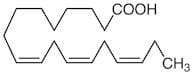
CAS 463-40-1
:Ácido linolénico
Descripción:
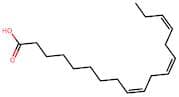
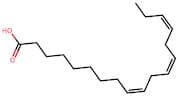
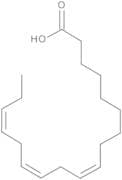
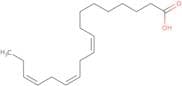
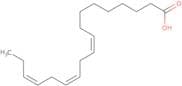
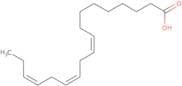
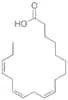
Ácido linolénico, con el número CAS 463-40-1, es un ácido graso poliinsaturado que pertenece a la familia omega-3. Se encuentra principalmente en aceites vegetales, particularmente en el aceite de linaza, semillas de chía y aceite de cáñamo. Este ácido graso se caracteriza por su larga cadena de carbono, que contiene 18 átomos de carbono y tres enlaces dobles, que están posicionados en el 9º, 12º y 15º átomos de carbono desde el extremo metílico de la molécula. Ácido linolénico es un ácido graso esencial, lo que significa que no puede ser sintetizado por el cuerpo humano y debe ser obtenido a través de la dieta. Juega un papel crucial en varios procesos fisiológicos, incluida la regulación de la inflamación y el mantenimiento de la integridad de la membrana celular. Además, Ácido linolénico es conocido por sus posibles beneficios para la salud, como el apoyo a la salud cardiovascular y la contribución a la función cerebral. Su estructura química le permite participar en diversas vías bioquímicas, lo que lo convierte en un componente importante en la nutrición y la salud.
Fórmula:C18H30O2
InChI:InChI=1S/C18H30O2/c1-2-3-4-5-6-7-8-9-10-11-12-13-14-15-16-17-18(19)20/h3-4,6-7,9-10H,2,5,8,11-17H2,1H3,(H,19,20)/b4-3-,7-6-,10-9-
Clave InChI:InChIKey=DTOSIQBPPRVQHS-PDBXOOCHSA-N
SMILES:C(C/C=C\C/C=C\C/C=C\CC)CCCCCC(O)=O
Sinónimos:- (9Z,12Z,15Z)-9,12,15-Octadecatrienoic acid
- (9Z,12Z,15Z)-octadeca-9,12,15-trienoic acid
- (Z,Z,Z)-9,12,15-Octadecatrienoic acid
- (Z,Z,Z)-Octadeca-9,12,15-trienoic acid
- (all-Z)-9,12,15-Octadecatrienoic acid
- 18:3N-3
- 9,12,15-Octadecatrienoic acid, (9Z,12Z,15Z)-
- 9,12,15-Octadecatrienoic acid, (Z,Z,Z)-
- 9,12,15-all-cis-Octadecatrienoic acid
- 9-cis,12-cis,15-cis-Octadecatrienoic acid
- 9Z,12Z,15Z-Octadecatrienoic acid
- A-Linolenic Acid
- Acide linolenique
- Acido Linolenico, Bruto
- Brd-K33396764
- Linolenic acid
- Linolensaeure
- Linolensaure
- Octadeca-9,12,15-Trienoic Acid, (Z,Z,Z)-
- all cis-Delta-9,12,15-octadecatrienoate
- all-cis-9,12,15-Octadecatrienoic acid
- cis,cis,cis-9,12,15-Octadecatrienoic acid
- cis-9,cis-12,cis-15-Octadecatrienoic acid
- cis-Δ9,12,15-Octadecatrienoic acid
- Ver más sinónimos
Ordenar por
Pureza (%)
0
100
|
0
|
50
|
90
|
95
|
100
Encontrado 18 productos.
Linolenic acid
CAS:Fórmula:C18H30O2Pureza:≥ 70.0%Forma y color:Clear, light-yellow to yellow or yellow-brown liquidPeso molecular:278.43Linolenic Acid
CAS:Linolenic AcidFórmula:C18H30O2Pureza:80%Forma y color: clear. almost colourless to faint yellow. viscous liquidPeso molecular:278.43g/mol9(Z),12(Z),15(Z)-Octadecatrienoic acid 75%
CAS:Fórmula:C18H30O2Pureza:>99%Forma y color:Colorless Oil LiquidPeso molecular:278.439(Z),12(Z),15(Z)-Octadecatrienoic acid
CAS:Fórmula:C18H30O2Pureza:>99%Forma y color:LiquidPeso molecular:278.43α-Linolenic acid
CAS:α-Linolenic Acid (ALA) is an essential fatty acid. α-Linolenic acid improves memory, inhibits thrombosis, and lowers blood lipids. Cost-effective and quality-assured.Fórmula:C18H30O2Pureza:97.05% - 99.81%Forma y color:Physical Description Clear Colorless Liquid (Ntp 1992)Peso molecular:278.43Linolenic acid - 70%
CAS:Linolenic acid is a polyunsaturated fatty acid that belongs to the omega-6 family. It has been shown to have apoptosis-inducing effects in various experimental models and has anti-oxidant properties. Linolenic acid also protects against UV radiation and skin cancer. In addition, linolenic acid may be beneficial for eye disorders such as dry eye syndrome and age-related macular degeneration. Clinical studies have shown that linolenic acid may help with weight loss, improve body mass index, and reduce inflammation.Fórmula:C18H30O2Pureza:Min. 95%Forma y color:Brown Slightly Yellow Red Clear LiquidPeso molecular:278.43 g/molLinolenic Acid
CAS:Fórmula:C18H30O2Pureza:>70.0%(GC)Forma y color:Colorless to Light orange to Yellow clear liquidPeso molecular:278.44Linolenic acid, 98.5%
CAS:Linolenic acid is a polyunsaturated fatty acid that is an essential component of human nutrition. Linolenic acid has apoptosis-inducing properties and has been shown to induce the mitochondrial membrane potential in neuronal cells and induce neuronal death by decreasing the levels of pge2. Linolenic acid also participates in energy metabolism, as it can be converted into arachidonic acid, which is a precursor for prostaglandins. Linolenic acid has been shown to have physiological effects on humans, such as improving eye disorders and congestive heart failure. It does not seem to be linked with any toxicity or adverse effects.Fórmula:C18H30O2Pureza:Min. 95%Forma y color:Colorless Clear LiquidPeso molecular:278.43 g/molLinolenic acid - 98%
CAS:Linolenic acid is a polyunsaturated fatty acid that is essential for human health. It is a precursor of prostaglandin E2 (PGE2), which has been implicated in the regulation of cell death and inflammation. Linolenic acid has been shown to induce apoptosis in vitro by inhibiting the mitochondrial membrane potential and activating caspases 3 and 9, thereby inducing neuronal death. In vivo, linolenic acid has been shown to have beneficial effects on cardiovascular function, including lowering cholesterol levels and improving blood flow to the heart. Linolenic acid also has antioxidant properties, which may be due to its ability to inhibit lipid peroxidation and scavenge free radicals.Fórmula:C18H30O2Pureza:Min. 95%Forma y color:PowderPeso molecular:278.43 g/molLinolenic acid - 85%
CAS:Linolenic acid is a polyunsaturated fatty acid that is found in plants, animals, and human cells. Linolenic acid has been shown to suppress the growth of cancer cells by inhibiting the production of linoleic acid, which can stimulate the growth of cancer cells. Linolenic acid has also been shown to cause skin reactions such as erythema and pruritus when applied topically or taken orally. Linolenic acid may be used for the treatment of ovarian follicles. In addition, linolenic acid has been shown to have an allergic response in humans when it is injected into the vein. It is important to note that linolenic acid can inhibit T-cell proliferation and cytokine production in a dose-dependent manner. Furthermore, linolenic acid inhibits lipopolysaccharide-induced acute lung injury in mice by reducing inflammatory cell infiltration and neutrophil activation.Fórmula:C18H30O2Pureza:Min. 95%Peso molecular:278.43 g/mol