CAS 487-52-5
:Buteína
Descripción:
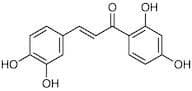
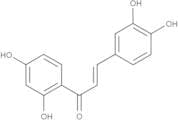
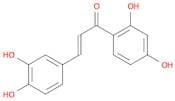
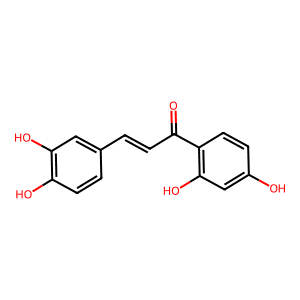
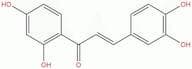
Buteína, también conocido como Buteína o 4-hidroxi-3-metoxi-2-butenilbenceno, es un compuesto orgánico clasificado como un flavonoide. Se caracteriza por su color amarillento y se encuentra principalmente en varias plantas, particularmente en la corteza del árbol butea. Buteína exhibe propiedades antioxidantes, que contribuyen a sus posibles beneficios para la salud, incluidos efectos antiinflamatorios y anticancerígenos. El compuesto tiene una fórmula molecular que refleja su estructura, conteniendo múltiples grupos hidroxilo que mejoran su reactividad y solubilidad en disolventes polares. Buteína también es conocido por su capacidad para quelar iones metálicos, lo que puede desempeñar un papel en su actividad biológica. En términos de aplicaciones, Buteína se estudia por su posible uso en suplementos dietéticos y productos de salud natural, aunque se necesita más investigación para comprender completamente su eficacia y seguridad en la salud humana. Al igual que muchos flavonoides, las propiedades de Buteína lo convierten en un tema de interés tanto en la ciencia nutricional como en la farmacología.
Fórmula:C15H12O5
InChI:InChI=1S/C15H12O5/c16-10-3-4-11(14(19)8-10)12(17)5-1-9-2-6-13(18)15(20)7-9/h1-8,16,18-20H/b5-1+
Clave InChI:InChIKey=AYMYWHCQALZEGT-ORCRQEGFSA-N
SMILES:C(/C=C/C1=CC(O)=C(O)C=C1)(=O)C2=C(O)C=C(O)C=C2
Sinónimos:- (2E)-1-(2,4-Dihydroxyphenyl)-3-(3,4-dihydroxyphenyl)-2-propen-1-one
- (2E)-1-(2,4-dihydroxyphenyl)-3-(3,4-dihydroxyphenyl)prop-2-en-1-one
- (E)-1-(2,4-Dihydroxyphenyl)-3-(3,4-hydroxyphenyl)prop-2-en-1-one
- 2-Propen-1-one, 1-(2,4-dihydroxyphenyl)-3-(3,4-dihydroxyphenyl)-, (2E)-
- 2-Propen-1-one, 1-(2,4-dihydroxyphenyl)-3-(3,4-dihydroxyphenyl)-, (E)-
- 3,4,2',4'-Tetrahydroxychalcone
- Butein
- Chalcone, 2′,3,4,4′-tetrahydroxy-
Ordenar por
Pureza (%)
0
100
|
0
|
50
|
90
|
95
|
100
Encontrado 11 productos.
Butein
CAS:Fórmula:C15H12O5Pureza:>98.0%(HPLC)Forma y color:Light yellow to Brown powder to crystalPeso molecular:272.26Butein
CAS:Butein analytical standard provided with w/w absolute assay, to be used for quantitative titration.Fórmula:C15H12O5Pureza:(HPLC) ≥99%Forma y color:PowderPeso molecular:272.27Butein
CAS:ButeinFórmula:C15H12O5Pureza:98%Forma y color: yellow to brown solidPeso molecular:272.25g/molButein
CAS:Fórmula:C15H12O5Pureza:≥ 98.0%Forma y color:Light-yellow to orange powderPeso molecular:272.25Butein
CAS:Butein is a cAMP-specific PDE inhibitor, protein tyrosine kinase inhibitor, and SIRT1 activator.Cost-effective and quality-assured.Fórmula:C15H12O5Pureza:98.76% - >99.99%Forma y color:SolidPeso molecular:272.25Ref: TM-T6427
1mg40,00€2mg52,00€5mg84,00€10mg101,00€25mg202,00€50mg326,00€100mg520,00€1mL*10mM (DMSO)82,00€Butein
CAS:Applications Butrin, isobutrin, and butein from medicinal plant Butea monosperma selectively inhibit nuclear factor-κB in activated human mast cells: suppression of tumor necrosis factor-α, interleukin (IL)-6, and IL-8. Anti-inflammatory agent.
References Woolley, D., et al.: Arthritis Res., 2, 65 (2000), Huang, D., et al.: J. Agric. Food Chem., 50, 4437 (2002), Lee, D., et al.: Science, 297, 1689 (2002),Fórmula:C15H12O5Forma y color:YellowPeso molecular:272.25Butein
CAS:Butein is a chalcone compound, which is a naturally occurring flavonoid found primarily in plants such as Rhus verniciflua and other members of the Anacardiaceae family. It is characterized by its notable biological activities, particularly due to its antioxidant and anti-inflammatory properties. Butein exerts its effects through various modes of action, including the inhibition of specific enzyme activities like tyrosinase and cyclooxygenase, as well as the downregulation of pro-inflammatory cytokines.Fórmula:C15H12O5Pureza:Min. 98 Area-%Forma y color:PowderPeso molecular:272.25 g/mol