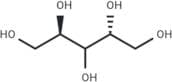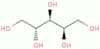
CAS 488-82-4
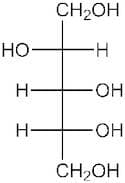
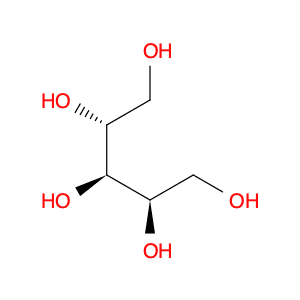
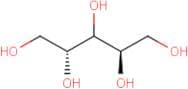
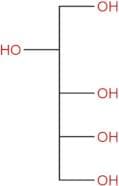
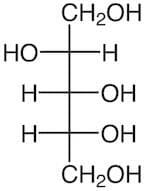
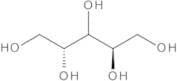
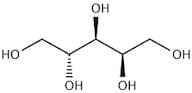
:D-Arabitol
- (+)-Arabitol
- <span class="text-smallcaps">D</span>-(+)-Arabitol
- <span class="text-smallcaps">D</span>-Arabinitol
- <span class="text-smallcaps">D</span>-Lyxitol
- <span class="text-smallcaps">D</span>-arabino-Pentitol
- <span class="text-smallcaps">D</span>-lyxo-Pentitol
- Arabinitol, <span class="text-smallcaps">D</span>-
- D-(+)-Arabitol
- D-threo-pentitol
- Nsc 25288
- Arabinitol, D-
- Ver más sinónimos
D-(+)-Arabitol, 99%
CAS:It can be employed as a sugar in the production of xylitol via biotransformation process. It is a substrate used to identify, differentiate and characterize enzyme such as the gluconobacter oxydans dehydrogenase(s), Gox2181, hyperthermophilic D-arabitol dehydrogenase from Thermotoga maritime and NAFórmula:C5H12O5Pureza:99%Forma y color:White to pale cream, Crystals or powder or crystalline powderPeso molecular:152.15D-(+)-Arabitol
CAS:Fórmula:C5H12O5Pureza:≥ 99.0%Forma y color:White to almost white powder or crystalsPeso molecular:152.15D-Arabitol
CAS:D-ArabitolFórmula:C5H12O5Pureza:97%Forma y color: white powderPeso molecular:152.15g/molD-(+)-Arabitol
CAS:Fórmula:C5H12O5Pureza:>98.0%(GC)Forma y color:White to Almost white powder to crystalPeso molecular:152.15D-Arabitol
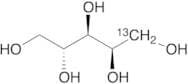
CAS:D-Arabitol, a sugar alcohol and polyol, is linked to the PPP and found in body fluids as a human metabolic end-product.Fórmula:C5H12O5Pureza:99.24% - 99.90%Forma y color:SolidPeso molecular:152.15D-Arabinitol-1-13C
CAS:Producto controladoApplications Isotope labelled analogue of D-arabinitol, a sugar alcohol. D-arabinitol was used as a diagnostic tool for the detection of fungal infections in neutropenic patients.
References Salonen, J.H., et al.: Eur. J. Clin. Microbiol. Infect. Dis., 20, 179 (2001);Fórmula:C413CH12O5Forma y color:NeatPeso molecular:153.14D-Arabitol
CAS:Substrate for arabitol dehydrogenase enzymeFórmula:C5H12O5Pureza:Min. 98 Area-%Forma y color:White Off-White PowderPeso molecular:152.15 g/molD-Arabitol
CAS:D-Arabitol (or D-Arabinitol) is the reduced alcohol form of Arabinose. Arabitol is a commonly used food supplement, it is comparably sweet to sucrose but the oral flora cannot metabolize Arabitol, and hence protects from caries. Arabitol plays also an important role in energy controlled diets since it is absorbed slowly by the human digestive tract and has a low caloric content. The differential metabolism of the Arabitol D- and L-forms suggested its use in microbiological diagnostics (Bernard, E.M. et al. 1981) and became a routine urine laboratory test: L-Arabitol is metabolized by a variety of different bacteria and fungi utilizing an arabitol dehydrogenase enzyme. Therefore, it serves as a biomarker for, e.g., invasive candidiasis, since an infection results in an elevated urine D-Arabitol/L-Arabitol (DA/LA) ratio. Cymit Quimica offers both isomers in research grade: D-Arabitol (A-8270) and L-Arabitol (A-8280).Fórmula:C5H12O5Pureza:Min. 99.0 Area-%Peso molecular:152.15 g/molRef: 3D-A-8270
-Unit-kgkgA consultar1kgA consultar10gA consultar250gA consultar500gA consultar2500gA consultarD(+)Arabitol (D-Arabinitol) extrapure 99%
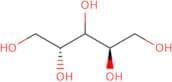
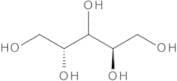
CAS:Fórmula:C5H12O5Pureza:min. 99%Forma y color:Off-white to faint beige, Powder, ClearPeso molecular:152.15D-Arabinitol
CAS:Producto controladoApplications D-Arabinitol, can be used as a diagnostic tool for the detection of fungal infections in neutropenic patients.
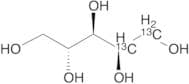
References Salonen, J.H., et al.: Eur. J. Clin. Microbiol. Infect. Dis., 20, 179 (2001);Fórmula:C5H12O5Forma y color:NeatPeso molecular:152.15D-Arabinitol-1,2-13C2
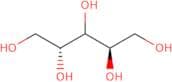
CAS:Producto controladoApplications Isotope labelled analogue of D-arabinitol, a sugar alcohol. D-arabinitol was used as a diagnostic tool for the detection of fungal infections in neutropenic patients.
References Salonen, J.H., et al.: Eur. J. Clin. Microbiol. Infect. Dis., 20, 179 (2001);Fórmula:C2C3H12O5Forma y color:NeatPeso molecular:154.131D-Arabinitol-13C5
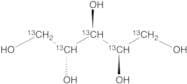
CAS:Producto controladoApplications Isotope labelled analogue of D-arabinitol, a sugar alcohol. D-arabinitol was used as a diagnostic tool for the detection of fungal infections in neutropenic patients.
References Salonen, J.H., et al.: Eur. J. Clin. Microbiol. Infect. Dis., 20, 179 (2001);Fórmula:C5H12O5Forma y color:NeatPeso molecular:157.11