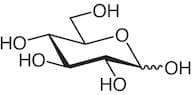
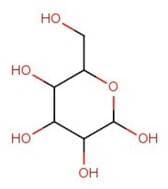
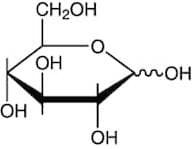
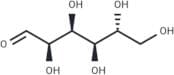
CAS 50-99-7
:Glucosa
- (.+-.)-Glucose
- <span class="text-smallcaps">D</span>(+)-Glucose
- Anhydrous dextrose
- Brake (pH-encapsulated glucose)
- C*Dry GL 01934
- CPC hydrate
- Cartose
- Cerelose
- Cerelose 2001
- Chemical diabetes
- Clearsweet 95
- Clintose L
- Corn sugar
- D 50W
- D(+)-Glucose
- D-Glucose Anhydrous Granular
- DL-Glucose
- Dextropur
- Dextrose
- Dextrose anhydrous
- Dextrosol
- FeedBead
- Glucodin
- Glucolin
- Glucopyranose
- Glucosa
- Glucose Powder
- Glucose anhydrous
- Glucose intolerance
- Glucose, Anhydrous Dextrose
- Glucose, D-
- Glucose, D-, Anhydrous
- Glucosoft
- Glucosteril
- Goldsugar
- Grape sugar
- Hi-Fructo M
- Hi-Mesh
- Impaired glucose tolerance
- Latent diabetes
- Malabsorption of glucose
- Maxim Energy Gel
- Meritose
- Meritose 200
- NSC 287045
- Roclys C 30725
- Roferose ST
- Staleydex 111
- Staleydex 130
- Staleydex 333
- Staleydex 95M
- Sugar, grape
- Tabfine 097(HS)
- Tackidex 30L75
- Tda-C
- Tda-Cj
- Tda-S
- Toleran G
- Vadex
- Ver más sinónimos
D-(+)-Glucose
CAS:Fórmula:C6H12O6Pureza:>98.0%(GC)Forma y color:White powder to crystalPeso molecular:180.16D-(+)-Glucose, anhydrous, 99%
CAS:D-Glucose is used in various metabolic processes including enzymic synthesis of cyclohexyl-alpha and beta -D-glucosides. It is involved in the detection of type 2 diabetes mellitus and the most widely used aldohexose in living organisms. Its availability influences psychological processes since itFórmula:C6H12O6Pureza:99%Forma y color:Powder, WhitePeso molecular:180.16D-(+)-Glucose, 1M aq. soln., sterile-filtered
CAS:D-(+)-Glucose used as a ideal in culture media component. Also used in foods and medicines and as a source of certain amino acids by fermentation. This Thermo Scientific Chemicals brand product was originally part of the Alfa Aesar product portfolio. Some documentation and label information may refeFórmula:C6H12O6Peso molecular:180.16D-(+)-Glucose
CAS:D-(+)-Glucose analytical standardFórmula:C6H12O6Pureza:(HPLC) ≥95%Forma y color:PowderPeso molecular:180.17Dextrose
CAS:Glucose (dextrose)Fórmula:C6H12O6Forma y color:Colorless White Crystalline Powder GranularPeso molecular:180.2D-Glucose
CAS:D-Glucose (Glucopyranose) is a monosaccharide, a sweetener. D-Glucose is the main functional substance of living organisms. Cost-effective and quality-assured.Fórmula:C6H12O6Pureza:99.64% - >99.99%Forma y color:Colorless Crystals Or White Granular Powder With Water (Uscg 1999)Peso molecular:180.16Ref: IN-DA0039F8
100gA consultar500g20,00€1000g26,00€250kgA consultar5000g61,00€10000g113,00€25000g158,00€D-(+)-Glucose, anhydrous
CAS:D-(+)-Glucose, anhydrousFórmula:C6H12O6Pureza:>99%Forma y color: white powderPeso molecular:180.15588g/molD-(+)-Glucose, anhydrous
CAS:Fórmula:C6H12O6Pureza:≥ 99.5% (dried basis)Forma y color:White powderPeso molecular:180.16D-(+)-Glucose, anhydrous, Ph. Eur., USP grade
CAS:Fórmula:C6H12O6Pureza:97.5 - 102.0 % (as C6H12O6)Forma y color:White crystalline powderPeso molecular:180.16D-(+)-Glucose
CAS:Fórmula:C6H12O6Pureza:96%Forma y color:Crystalline Powder,PowderPeso molecular:180.156D-Glucose
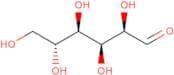
CAS:Applications D-Glucose is a simple sugar that is present in plants. A monosaccharide that may exist in open chain or cyclic conformation if in solution. It plays a vital role in photosynthesis and fuels the energy required for cellular respiration. D-Glucose is used in various metabolic processes including enzymic synthesis of cyclohexyl-α and β-D-glucosides. Can also be used as a diagnostic tool in detection of type 2 diabetes mellitus and potentially Huntington's disease through analysis of blood-glucose in type 1 diabetes mellitus.
References Wang, R., et al.: J. Mol. Catal. B. Enz., 56, 131 (2009); Springhorn, C. et al.: J. Clin. Endocrinol. Metab., 97, 4640 (2012); Hashimoto, K. et al.: J. Clin. Endocrinol. Metab., 97, 3016 (2012); Avelange, M. et al.: Plant. Phys., 94, 1157 (1990); Cramer, C. et al.: J. Chem. Soc., 115, 5745 (1993);Fórmula:C6H12O6Forma y color:NeatPeso molecular:180.16D-Glucose-2,3,4,5,6-13C5
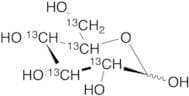
CAS:Producto controladoApplications Labelled D-Glucose is a simple sugar that is present in plants. A monosaccharide that may exist in open chain or cyclic conformation if in solution. It plays a vital role in photosynthesis and fuels the energy required for cellular respiration. D-Glucose is used in various metabolic processes including enzymic synthesis of cyclohexyl-α and β-D-glucosides. Can also be used as a diagnostic tool in detection of type 2 diabetes mellitus and potentially Huntington's disease through analysis of blood-glucose in type 1 diabetes mellitus.
References Wang, R., et al.: J. Mol. Catal. B. Enz., 56, 131 (2009); Springhorn, C. et al.: J. Clin. Endocrinol. Metab., 97, 4640 (2012); Hashimoto, K. et al.: J. Clin. Endocrinol. Metab., 97, 3016 (2012); Avelange, M. et al.: Plant. Phys., 94, 1157 (1990); Cramer, C. et al.: J. Chem. Soc., 115, 5745 (1993);Fórmula:C5CH12O6Forma y color:NeatPeso molecular:185.119D-Glucose - anhydrous
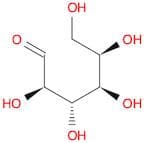
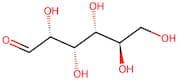
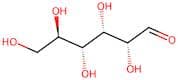
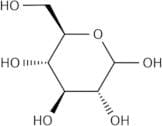
CAS:Glucose (Glu) is the most common carbohydrate on the planet, found in all living organisms and is the major source of metabolic energy for plants and animals. Glucose is a building block in numerous oligosaccharides and polysaccharides. It is present in blood and milk, in gangliosides and in N- and O-linked glycans (Collins, 2006). Glucose is wrongly called a simple sugar because in solution it exists in five forms: two six membered rings (α/β), two five membered rings (α/β) and a straight chain form, a system known as mutarotation (Robyt, 2012). The proportions of different glucose forms are dictated by temperature and pH. D-Glucose is optically active (dextrorotary) and L-Glucose is its enantiomer (Levorotary). Its hydroxyl groups are all equatorial, providing maximum stability, according to Hudsons rules (Hudson, 1948).Fórmula:C6H12O6Pureza:Min. 96 Area-%Forma y color:White PowderPeso molecular:180.16 g/mol