CAS 503-74-2
:Ácido isovalérico
Descripción:
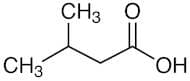
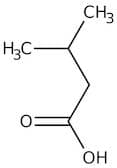
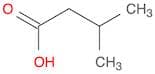
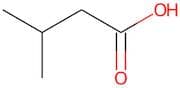
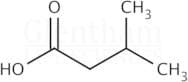
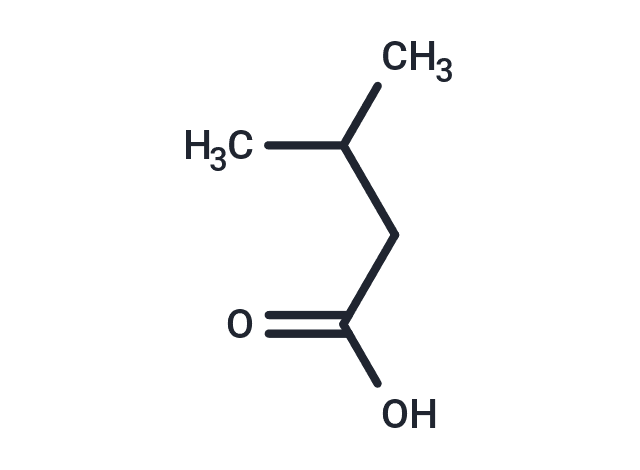
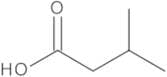
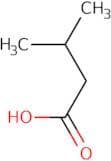
Ácido isovalérico, también conocido como ácido 3-metilbutanoico, es un ácido graso de cadena ramificada con la fórmula molecular C5H10O2. Se caracteriza por un olor penetrante que recuerda a pies sudorosos o queso, lo que se atribuye a su presencia en ciertos procesos de fermentación y como un subproducto del metabolismo de proteínas. Ácido isovalérico es un líquido incoloro a temperatura ambiente y es soluble en agua, alcohol y éter. Su estructura presenta un grupo funcional ácido carboxílico (-COOH) unido a una cadena de cinco carbonos, específicamente en el segundo carbono, lo que contribuye a sus propiedades únicas. Este compuesto se utiliza en diversas aplicaciones, incluidos agentes saborizantes, fragancias y como intermediario en la síntesis orgánica. Además, Ácido isovalérico juega un papel en la biosíntesis de ciertos aminoácidos y está involucrado en vías metabólicas. Las consideraciones de seguridad incluyen sus posibles efectos irritantes en la piel y las membranas mucosas, lo que requiere protocolos adecuados de manejo y almacenamiento en entornos de laboratorio e industriales.
Fórmula:C5H10O2
InChI:InChI=1S/C5H10O2/c1-4(2)3-5(6)7/h4H,3H2,1-2H3,(H,6,7)
Clave InChI:InChIKey=GWYFCOCPABKNJV-UHFFFAOYSA-N
SMILES:C(C(C)C)C(O)=O
Sinónimos:- 3-Methyl Butylic Acid
- 3-Methyl-1-butanoic acid
- 3-Methyl-n-butyric acid
- 3-Methylbutanoate
- 3-Methylbutanoic acid
- 3-Methylbutyrate
- 3-Methylbutyric acid
- Acetic acid, isopropyl-
- Acide isovalerique
- Acido Isovalerico
- Butanoic acid, 3-methyl-
- Delphinic acid
- Isopentanoic acid
- Isopropylacetic acid
- Isovalerianic acid
- Isovaleriansaure
- Natural 3-methylbutyric acid
- Natural Isovaleric Acid
- Nsc 62783
- Valerianic-Iso Acid
- iso-Valeric acid
- β-Methylbutyric acid
- Ver más sinónimos
Ordenar por
Pureza (%)
0
100
|
0
|
50
|
90
|
95
|
100
Encontrado 11 productos.
Isovaleric Acid
CAS:Fórmula:C5H10O2Pureza:>99.0%(GC)Forma y color:Colorless clear liquidPeso molecular:102.13Isovaleric acid, 98%
CAS:A molecular entity capable of donating a hydron to an acceptor (Bronsted base). It is a favorable carbon source for cell growth. Moreover, it is a promising odor indicator. This Thermo Scientific Chemicals brand product was originally part of the Alfa Aesar product portfolio. Some documentation andFórmula:C5H10O2Pureza:98%Forma y color:Clear colorless, LiquidPeso molecular:102.13Isovaleric acid
CAS:Fórmula:C5H10O2Pureza:≥ 99.0%Forma y color:Clear, colourless liquidPeso molecular:102.13Isovaleric acid
CAS:Isovaleric acid (Delphinic acid) is a naturally occurring aroma compound found in Bartlett pear brandies, vanilla beans, rape-honey, and banana.Fórmula:C5H10O2Pureza:97.89%Forma y color:Colourless Clear LiquidPeso molecular:102.13Isovaleric Acid
CAS:Producto controladoApplications Isovaleric Acid (I917570) is a naturally occurring aroma compound found in Bartlett pear brandies, vanilla beans, rape-honey and banana.
Not a dangerous good if item is equal to or less than 1g/ml and there is less than 100g/ml in the package
References Blasioli S., et al.: J. Agr. Food Chem., 62, 337 (2014); Willner, B., et al.: J. Agr. Food. Chem., 61, 9583 (2013); Zhang, S., & Mueller, C.: J. Agr. Food. Chem., 60, 10433 (2012); Pino, J., & Febles, Y.: Food Chem., 141, 795 (2013)Fórmula:C5H10O2Forma y color:ColourlessPeso molecular:102.133-Methylbutanoic acid
CAS:3-Methylbutanoic acid is an antimicrobial agent that belongs to the group of isovaleric acids. It is a product of β-oxidation and has been shown to inhibit the growth of bacteria by reacting with their surface. 3-Methylbutanoic acid inhibits bacterial growth by binding to the pyrazole ring in DNA and altering its conformation, preventing DNA replication. This reaction occurs at a rate comparable to that of other fluoroquinolones, such as ciprofloxacin, levofloxacin, and norfloxacin. 3-Methylbutanoic acid has been shown to have antibacterial activity against both Gram-positive and Gram-negative bacteria, particularly those that are resistant to erythromycin or lincomycin.Fórmula:C5H10O2Pureza:Min. 95%Forma y color:PowderPeso molecular:102.13 g/mol