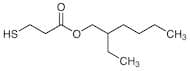
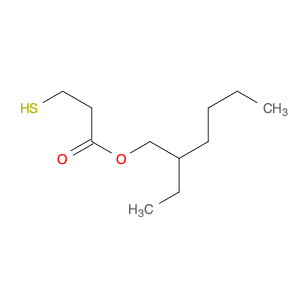
CAS 50448-95-8
:3-mercaptopropionato de 2-etilhexilo
- Propanoic acid, 3-mercapto-, 2-ethylhexyl ester
- 2-Ethylhexyl 3-mercaptopropionate
- β-Mercaptopropionic acid 2-ethylhexyl ester
- 3-Mercaptopropionic acid 2-ethylhexyl ester
- 2-Ethylhexyl β-mercaptopropionate
2-Ethylhexyl 3-Mercaptopropionate
CAS:Fórmula:C11H22O2SPureza:>98.0%(GC)Forma y color:Colorless to Almost colorless clear liquidPeso molecular:218.362-Ethylhexyl 3-mercaptopropanoate
CAS:Fórmula:C11H22O2SPureza:97%Forma y color:LiquidPeso molecular:218.35622-Ethylhexyl 3-Mercaptopropanoate
CAS:2-Ethylhexyl 3-MercaptopropanoatePureza:98%Peso molecular:218.36g/mol2-Ethylhexyl 3-mercaptopropionate
CAS:2-Ethylhexyl 3-mercaptopropionate is a monomer that can polymerize with other molecules to form polymers. This compound has been shown to be effective in treating many diseases such as diabetes, cancer, and Alzheimer’s disease. 2-Ethylhexyl 3-mercaptopropionate is also a hydrophobic molecule that can form monolayers on the surface of water to prevent the penetration of water molecules into the material below. Monomers are polymerized by adding an oxidant such as peroxides or argon gas to initiate the polymerization process. This strategy yields high yields of polymerized molecules with only small amounts of residual monomers. These reactions are often carried out using ethanol solutions in aqueous media, which are more easily accessible than organic solvents.
2-Ethylhexyl 3-mercaptopropionate has been shown to have antimicrobial properties when it interacts with mammalian cells by inhibFórmula:C11H22O2SPureza:Min. 98 Area-%Forma y color:Colorless Clear LiquidPeso molecular:218.36 g/mol2-Ethylhexyl 3-Mercaptopropionate
CAS:Fórmula:C11H22O2SPureza:97%Forma y color:LiquidPeso molecular:218.36