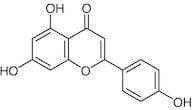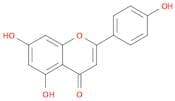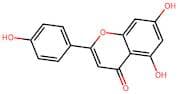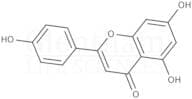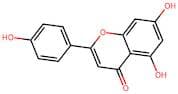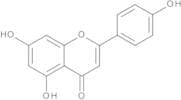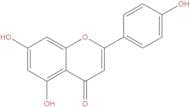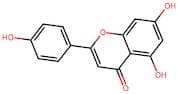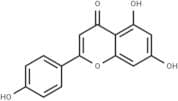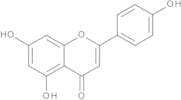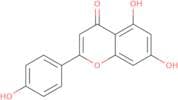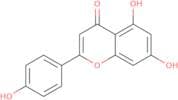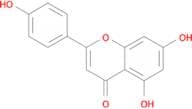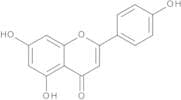
CAS 520-36-5
:Apigenina
- 4',5,7-Trihydroxyflavone
- 4′,5,7-Trihydroxyflavone
- 5,7,4'-Trihydroxyflavone
- 5,7-Dihidroxi-2-(4-Hidroxifenil)-4-Benzopirona
- 5,7-Dihydroxy-2-(4-Hydroxyphenyl)-4-Benzopyrone
- 5,7-Dihydroxy-2-(4-Hydroxyphenyl)chromen-4-one
- 5,7-Dihydroxy-2-(4-hydroxyphenyl)-4-benzopyron
- 5,7-Dihydroxy-2-(4-hydroxyphenyl)-4H-1-benzopyran-4-one
- 5,7-Dihydroxy-2-p-hydroxyphenyl-4-chromenone
- Apegenin
- Apigenin
- Apigenine
- Apigenol
- Chamomile
- Flavone, 4',5,7-trihydroxy-
- Flavone, 4′,5,7-trihydroxy-
- Ly 080400
- Nsc 83244
- Pelargidenon 1449
- St 056301
- Uccf 031
- Versulin
- 75580
- 4H-1-Benzopyran-4-one, 5,7-dihydroxy-2-(4-hydroxyphenyl)-
- 5,7-dihydroxy-2-(4-hydroxyphenyl)-4H-chromen-4-one
- C.I. Natural Yellow 1
- Ver más sinónimos
Apigenin
CAS:Fórmula:C15H10O5Pureza:>98.0%(HPLC)Forma y color:Light yellow to Brown powder to crystalPeso molecular:270.244',5,7-Trihydroxyflavone, 97%
CAS:4',5,7-Trihydroxyflavone is a nonmutagenic flavonoid shown to inhibit cell proliferation, angiogenesis and protein kinase. Also induces apoptosis in breast cancer cells. It inhibit topoisomerase I-catalyzed DNA re-ligation and enhance gap junctional intercellular communication. This Thermo ScientifFórmula:C15H10O5Pureza:97%Forma y color:Cream to yellow to brown, PowderPeso molecular:270.24Apigenin
CAS:Apigenin analytical standard provided with w/w absolute assay, to be used for quantitative titration.Fórmula:C15H10O5Pureza:(HPLC) ≥99%Forma y color:PowderPeso molecular:270.25Apigenin (5,7-Dihydroxy-2-(4-hydroxyphenyl)-4-benzopyrone)
CAS:Aromatic heterocyclic compounds with oxygen hetero-atom(s) only, nesoiFórmula:C15H10O5Forma y color:Off-White Light Brown Yellow PowderPeso molecular:270.05282Apigenin
CAS:ApigeninFórmula:C15H10O5Pureza:97%Forma y color: light beige solidPeso molecular:270.24g/molApigenin
CAS:Fórmula:C15H10O5Pureza:≥ 98.0% (anhydrous basis)Forma y color:Yellow or brown powderPeso molecular:270.24Apigenin
CAS:Apigenin, a naturally occurring plant flavone (4', 5, 7,-trihydroxyflavone) abundantly present in common fruits and vegetables including parsley, onions, oranges, tea, chamomile, wheat sprouts and some seasonings, has been shown to possess remarkable anti-inflammatory, antioxidant and anti-carcinogenic properties.Fórmula:C15H10O5Pureza:95%~99%Forma y color:Yellow powderPeso molecular:270.24Apigenin
CAS:ApigeninFórmula:C15H10O5Pureza:97%Forma y color: faint beige powderPeso molecular:270.24g/molApigenin
CAS:Apigenin (NSC 83244) is an aromatic oil extracted from the flowers or leaves of the daisy-like plants.Fórmula:C15H10O5Pureza:97.64% - 99.66%Forma y color:Yellow Needles From Aqueous Pyridine SolidPeso molecular:270.24Apigenin
CAS:Oxygen-heterocyclic compoundFórmula:C15H10O5Pureza:≥ 95.0 % (HPLC)Forma y color:PowderPeso molecular:270.24Apigenin
CAS:Producto controladoApplications Induces the reversion of transformed phenotypes of v-H-ras-transformed NIH 3T3 cells at low concentration (12.5 uM) by inhibiting MAP kinase activity. Also inhibits the proliferation of malignant tumor cells by G2/M arrest and induces morphological differentiation. Apigenin has also been reported to enhance the gap juntion intracellular communication in liver cells.uv(max)ethanol: 269, 340 nm (e= 18,800, 20,900) moderately sol. in hot alcohol
References Chaumontet, C., et al.: Carcinogenesis, 15, 2325 (1994); Sato, F., et al.: Biochem. Biophys. Res. Commun., 204, 578 (1994); Kuo, M.L. et al.: Biochem. Biophys. Res. Commun., 212, 767 (1995);Fórmula:C15H10O5Forma y color:NeatPeso molecular:270.24Apigenin - 97%
CAS:Apigenin - 97% is a high-purity flavonoid compound, which is primarily derived from various plant sources such as parsley, chamomile, and celery. This compound is known for its significant presence in the plant kingdom, where it functions as a secondary metabolite contributing to plant defense.Fórmula:C15H10O5Pureza:Min. 97 Area-%Forma y color:PowderPeso molecular:270.24 g/molApigenin - 94%
CAS:Apigenin - 94% is a purified form of apigenin, which is a naturally occurring flavonoid. It is primarily sourced from various plant species, including parsley, celery, and chamomile, where it is a prominent active component. The mode of action of apigenin involves multiple biochemical pathways: it acts as an anti-inflammatory agent, modulates enzyme activities, and exhibits antioxidant properties by scavenging free radicals. Additionally, apigenin interacts with cellular signaling pathways, such as the MAPK and PI3K/Akt, which contribute to its protective effects against oxidative stress and its potential in promoting apoptosis in cancerous cells.
Fórmula:C15H10O5Pureza:Min. 95%Forma y color:PowderPeso molecular:270.24 g/mol4,5,7-Trihydroxyflavone
CAS:M01289 - 4,5,7-Trihydroxyflavone
Fórmula:C15H10O5Pureza:95%Forma y color:Solid, Light yellow powderPeso molecular:270.24Apigenin 100 µg/mL in Acetonitrile:Methanol
CAS:Producto controladoFórmula:C15H10O5Forma y color:Single SolutionPeso molecular:270.24