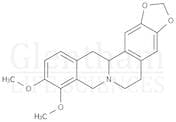
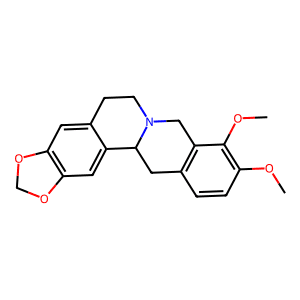
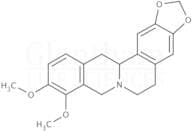
CAS 522-97-4
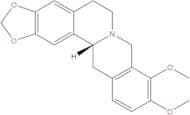
:(±)-Tetrahidroberberina
- (±)-Tetrahydroberberine
- 5,8,13,13a-Tetrahydro-9,10-dimethoxy-6H-benzo[g]-1,3-benzodioxolo[5,6-a]quinolizine
- 6H-Benzo[g]-1,3-benzodioxolo[5,6-a]quinolizine, 5,8,13,13a-tetrahydro-9,10-dimethoxy-
- Berberine, 9-deoxy-16,17-dihydro-
- Berberine, tetrahydro-
- Berbine, 9,10-dimethoxy-2,3-(methylenedioxy)-
- Canadine
- NSC 36351
- NSC 94918
- Tetrahydroberineper
- Tetrahydroumbellatine
- Xanthopuccine
- dl-Canadine
- Ver más sinónimos
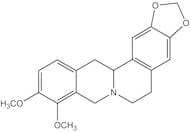
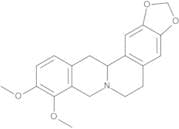
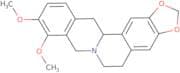
6H-Benzo[g]-1,3-benzodioxolo[5,6-a]quinolizine,5,8,13,13a-tetrahydro-9,10-dimethoxy-
CAS:Fórmula:C20H21NO4Pureza:98%Forma y color:SolidPeso molecular:339.3850Tetrahydroberberine
CAS:Tetrahydroberberine (Canadine) is an isoquinoline alkaloid isolated from corydalis tuber, has a micromolar affinity for dopamine D(2) receptors.Fórmula:C20H21NO4Pureza:99.38% - 99.85%Forma y color:SolidPeso molecular:339.39Canadine
CAS:Natural alkaloidFórmula:C20H21NO4Pureza:≥ 98.0 % (HPLC)Forma y color:PowderPeso molecular:339.39Canadine
CAS:Producto controladoApplications Canadine is a protoberberine alkaloid which potently block functional KATP channels natively expressed on midbrain dopamine neurons. Canadine is used for treatment of degenerative diseases or conditions associated with KATP channel signaling.
References Duchowicz, P., et al.: Bioorg. Med. Chem., 14, 5876 (2006), Sun., et al.: Br. J. Pharmcol., 158, 1302 (2009), Deeb, O., et al.: Chem. Biol. Drug Des., 76, 255 (2010),Fórmula:C20H21NO4Forma y color:NeatPeso molecular:339.38Canadine
CAS:Canadine is a natural compound that may have therapeutic potential for metabolic disorders and oral pathogens. Canadine has been shown to inhibit the production of malonic acid, which is a key metabolite in the citric acid cycle. Canadine also inhibits oxidative injury by preventing lipid peroxidation, and it has been shown to reduce hepatic steatosis in experimental models. Canadine can be used as an anti-inflammatory agent and has also been shown to suppress protein synthesis. Canadine may also be useful as a drug interaction controller because it protects against oxidative injury caused by other drugs. Canadine is not toxic to animals at doses up to 10 mg/kg body weight when administered orally.
CADINE: A natural compound that may have therapeutic potential for metabolic disorders and oral pathogens. CADINE has been shown to inhibit the production of malonic acid, which is a key metabolite in the citric acid cycle. CADINE also inhibits oxidative injury by preventing lipid peroxidation, and itFórmula:C20H21NO4Pureza:Min. 98 Area-%Forma y color:Slightly Yellow PowderPeso molecular:339.39 g/mol
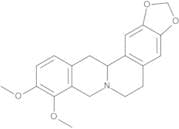

![6H-Benzo[g]-1,3-benzodioxolo[5,6-a]quinolizine,5,8,13,13a-tetrahydro-9,10-dimethoxy-](/_next/image/?url=https%3A%2Fstatic.cymitquimica.com%2Fproducts%2FIN%2Fthumb%2FDA019FSV.jpg&w=3840&q=75)