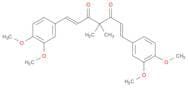
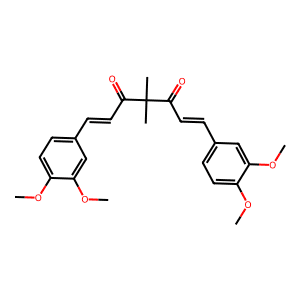
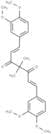
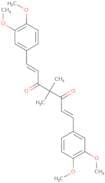
CAS 52328-97-9
:FLLL31
Descripción:
FLLL31, con el número CAS 52328-97-9, es un compuesto químico que ha despertado interés en el campo de la química medicinal, particularmente por su papel como un inhibidor selectivo de ciertas quinasas proteicas. Este compuesto se caracteriza por su capacidad para modular las vías de señalización celular, lo que puede tener implicaciones en la investigación y tratamiento del cáncer. Se sabe que FLLL31 exhibe una afinidad específica por sus quinasas objetivo, lo que puede llevar a una reducción de la proliferación celular y un aumento de la apoptosis en células cancerosas. Su estructura molecular incluye típicamente grupos funcionales que mejoran sus propiedades de unión y biodisponibilidad. Además, se ha estudiado FLLL31 por sus propiedades farmacocinéticas, que son cruciales para determinar su eficacia y perfil de seguridad en aplicaciones terapéuticas. Al igual que muchos compuestos en esta categoría, la investigación en curso tiene como objetivo elucidar su mecanismo de acción completo, optimizar sus propiedades farmacológicas y evaluar sus posibles efectos secundarios en entornos clínicos.
Ordenar por
Pureza (%)
0
100
|
0
|
50
|
90
|
95
|
100
Encontrado 6 productos.
Tetramethylcurcumin
CAS:Tetramethylcurcumin is a novel curcumin analog, is an effective inhibitors of STAT3 phosphorylation, DNA binding activity, and transactivation in vitro.it alsoFórmula:C25H28O6Pureza:97.69% - 99.94%Forma y color:SolidPeso molecular:424.49FLLL31
CAS:FLLL31 is a growth factor that regulates the proliferation of cells. It is a molecule that has been shown to have chemotherapeutic properties. FLLL31 binds to the surface of cells, where it activates polymerase chain reactions and induces cell death by signaling apoptosis. This molecule has been demonstrated to be involved in chemotherapeutic treatment for autoimmune diseases and inflammatory conditions. FLLL31 can also inhibit the growth of viruses, such as HIV and Epstein-Barr virus, and tumor cells in humans. The mechanism for these activities is not well understood, but may involve its ability to bind IL-17a, a cytokine involved in the immune system's response to infection or injury. FLLL31 has also been shown to induce cell death in leukemia inhibitory factor (LIF) and epidermal growth factor receptor (EGFR) cancer cell lines with no significant toxicity on normal cell lines.Fórmula:C25H28O6Pureza:Min. 95%Peso molecular:424.49 g/mol