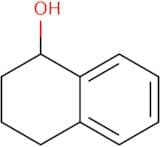
CAS 529-33-9
:1-Tetralol
Descripción:
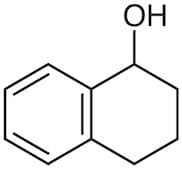
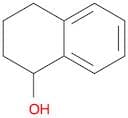
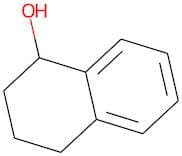
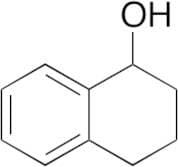
1-Tetralol, con el número CAS 529-33-9, es un compuesto orgánico que pertenece a la clase de los alcoholes. Se caracteriza por una estructura bicíclica, específicamente un marco de tetralina, que consiste en un anillo aromático de seis miembros fusionado a un anillo de cinco miembros. La presencia de un grupo hidroxilo (-OH) en el átomo de carbono adyacente al sistema de anillos fusionados define su clasificación como un alcohol. 1-Tetralol es típicamente un líquido incoloro a amarillo pálido con un olor característico. Es soluble en disolventes orgánicos y presenta una solubilidad limitada en agua debido a su estructura hidrocarbónica hidrofóbica. El compuesto es de interés en diversas aplicaciones químicas, incluyendo como un intermedio en la síntesis orgánica y en la producción de fragancias y productos farmacéuticos. Además, puede exhibir una actividad biológica leve, lo que lo convierte en un tema de estudio en química medicinal. Los datos de seguridad indican que, al igual que muchos disolventes orgánicos, debe manejarse con cuidado para evitar la inhalación o el contacto con la piel.
Fórmula:C10H12O
InChI:InChI=1/C10H12O/c11-10-7-3-5-8-4-1-2-6-9(8)10/h1-2,4,6,10-11H,3,5,7H2/t10-/m0/s1
Clave InChI:InChIKey=JAAJQSRLGAYGKZ-UHFFFAOYSA-N
SMILES:OC1C=2C(CCC1)=CC=CC2
Sinónimos:- (1S)-1,2,3,4-tetrahydronaphthalen-1-ol
- (RS)-1-Hydroxytetralin
- (±)-1-Tetralol
- (±)-α-Tetralol
- 1,2,3,4-Tetrahydro-1-naphthalenol
- 1,2,3,4-Tetrahydronaphthalen-1-Ol
- 1-Hydroxy-1,2,3,4-tetrahydronaphthalene
- 1-Hydroxytetralin
- 1-Naphthalenol, 1,2,3,4-tetrahydro-
- 1-Naphthol, 1,2,3,4-tetrahydro-
- NSC 5172
- alpha-Tetralol
- 1,2,3,4-tetrahydro-1-naphtho
- Tetrahydro-1-naphthol
- 1,2,3,4-tetrahydro-1-naphthaleno
- 1,2,3,4-tetrahydro-1-napthol
- 1,2,3,4-Tetrahydro-alpha-naphthol
- 1,2,3,4-Tetrahydro-a-naphthol
- 1,2,3,4-TETRAHYDRO-1-NAPHTHOL
- (R)-1-Hydroxy-1,2,3,4-tetrahydronaphthalene
- Tetralin-1-ol
- (1R)-Tetralin-1-ol
- (1R)-1,2,3,4-Tetrahydro-1-naphthol
- Ver más sinónimos
Ordenar por
Pureza (%)
0
100
|
0
|
50
|
90
|
95
|
100
Encontrado 7 productos.
1,2,3,4-Tetrahydro-1-naphthol
CAS:Fórmula:C10H12OPureza:>95.0%(GC)Forma y color:White or Colorless to Light yellow powder to lump to clear liquidPeso molecular:148.211,2,3,4-Tetrahydronaphthalen-1-ol
CAS:Fórmula:C10H12OPureza:97%Forma y color:LiquidPeso molecular:148.20171-Hydroxy-1,2,3,4-tetrahydronaphthalene
CAS:1-Hydroxy-1,2,3,4-tetrahydronaphthalene
Fórmula:C10H12OPureza:97%Forma y color: light yellow/orange low melting solidPeso molecular:148.20g/mol1,2,3,4-Tetrahydro-1-napthol
CAS:Producto controladoApplications 1,2,3,4-Tetrahydro-1-napthol is a chemical reagent used as a catalyst in hydrogenation reactions.
References Fujita, K. et al.: Org. Lett., 9, 109 (2007); Habibi, M. et al.: Tetrahedron Lett., 42, 2851 (2001); Ohkuma, T. et al.: J. Am. Chem. Soc., 117, 2675 (1995);Fórmula:C10H20OForma y color:NeatPeso molecular:148.2α-Tetralol
CAS:α-Tetralol is a fatty acid that is broken down by the body into butyric acid, which has been shown to have anti-depressive effects. α-Tetralol can be used in iontophoresis, where it is applied to the skin and reacts with water on the surface of the skin. This reaction causes a small electric current to flow from an anode to a cathode. The kinetic energy of this current produces a chemical reaction at the interface between α-tetralol and water. This reaction rate depends on the concentration of α-tetralol, temperature, and pH. It also depends on whether or not there are other molecules present in solution that can react with α-tetralol, such as naphthalene or fatty acid esters.Fórmula:C10H12OPureza:Min. 95%Forma y color:Clear LiquidPeso molecular:148.2 g/mol1,2,3,4-Tetrahydronaphthalen-1-ol
CAS:Fórmula:C10H12OPureza:97%Forma y color:Solid, CrystallinePeso molecular:148.205