CAS 536-69-6
:Ácido fusárico
Descripción:
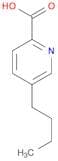
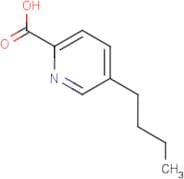
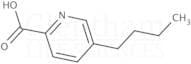
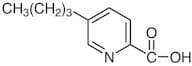
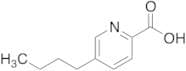
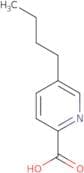
Ácido fusárico, con el número CAS 536-69-6, es un compuesto orgánico que se encuentra de forma natural y se clasifica como un ácido carboxílico. Se produce principalmente por ciertas especies de hongos, particularmente aquellos del género Fusarium. La estructura química de Ácido fusárico presenta un anillo de piridina, que contribuye a sus propiedades únicas. Este compuesto es conocido por sus potenciales actividades biológicas, incluyendo propiedades antifúngicas y antibacterianas, lo que lo hace de interés en la investigación agrícola y farmacéutica. Ácido fusárico ha sido estudiado por su papel en la patología vegetal, ya que puede influir en el crecimiento y desarrollo de las plantas, actuando a menudo como un fitotóxico. Además, se ha investigado por sus posibles aplicaciones terapéuticas, particularmente en el tratamiento de trastornos neurológicos, debido a su capacidad para modular los sistemas de neurotransmisores. En términos de propiedades físicas, Ácido fusárico es típicamente un sólido a temperatura ambiente y es soluble en disolventes polares. Su perfil de seguridad indica que debe ser manejado con cuidado, al igual que muchos ácidos orgánicos, debido a posibles efectos irritantes.
Fórmula:C10H13NO2
InChI:InChI=1S/C10H13NO2/c1-2-3-4-8-5-6-9(10(12)13)11-7-8/h5-7H,2-4H2,1H3,(H,12,13)
Clave InChI:InChIKey=DGMPVYSXXIOGJY-UHFFFAOYSA-N
SMILES:C(O)(=O)C1=CC=C(CCCC)C=N1
Sinónimos:- 2-Pyridinecarboxylic acid, 5-butyl-
- 5-Butyl-2-picolinic acid
- 5-Butyl-2-pyridinecarboxylic acid
- 5-Butylpicolinic acid
- 5-Butylpyridine-2-Carboxylate
- 5-Butylpyridine-2-Carboxylic Acid
- 5-n-Butylpyridine-2-carboxylic acid
- Butylpicolinic acid
- Fusaric Acid From Gibberella Fujikuroi
- NSC 135043
- NSC 19870
- Picolinic acid, 5-butyl-
- Ver más sinónimos
Ordenar por
Pureza (%)
0
100
|
0
|
50
|
90
|
95
|
100
Encontrado 7 productos.
5-Butylpyridine-2-carboxylic Acid
CAS:Fórmula:C10H13NO2Pureza:>98.0%(GC)Forma y color:White to Light yellow powder to crystalPeso molecular:179.22Fusaric Acid
CAS:Producto controladoApplications Fusaric Acid is a picolinic acid derivative isolated from the fungus Fusarium. Thought to contribute to the toxicoses developed from ingesting mold-infested feeds.
References Rofiat, A. et al.: Food Addit. Cont. Part A. Chem. Anal. Contr. Exp. Risk Asses., 32, 950 (2015); Crutcher, F. et al.: Microbiol., 161, 875 (2015);Fórmula:C10H13NO2Forma y color:NeatPeso molecular:179.22Fusaric acid
CAS:Fusaric acid is a metabolite of the natural product fusarin. It is formed by the enzymatic hydroxylation of dopamine and has been shown to inhibit the production of picolinic acid, which is involved in the synthesis of NAD. Fusaric acid also inhibits tetracycline resistance in colorectal adenocarcinoma cells, leading to cell death. Fusaric acid has also been found to be effective against squamous carcinoma cells and thermal expansion in titration calorimetry experiments. The structural analysis of this compound showed that it has a planar geometry with a number of hydrogen bonding interactions. FUSARIC ACID: Fusaric acid is an inhibitor of dopamine β-hydroxylase (DBH) that was first isolated from fusarin, a natural product produced by some fungi species. It binds reversibly to DBH and blocks its activity, preventing the conversion ofFórmula:C10H13NO2Forma y color:Off-White PowderPeso molecular:179.22 g/mol