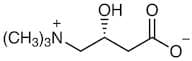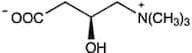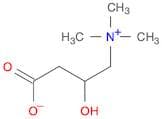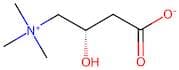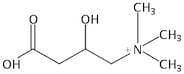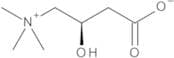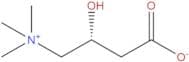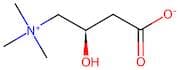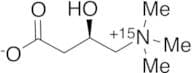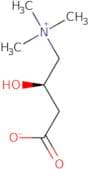
CAS 541-15-1
:(-)-Carnitina
Descripción:
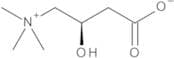
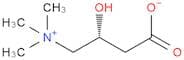
(-)-Carnitina, con el número CAS 541-15-1, es un compuesto de amonio cuaternario que juega un papel crucial en el metabolismo de los ácidos grasos. Es una sustancia que ocurre de forma natural, sintetizada en el cuerpo a partir de los aminoácidos lisina y metionina. Característicamente, (-)-Carnitina es un polvo blanco y cristalino que es soluble en agua y tiene un sabor ligeramente amargo. Existe como un zwitterión a pH fisiológico, poseyendo tanto una carga positiva como una carga negativa, lo que contribuye a su solubilidad y actividad biológica. Este compuesto es esencial para el transporte de ácidos grasos de cadena larga hacia las mitocondrias, donde se oxidan para la producción de energía. Además, se ha estudiado (-)-Carnitina por sus posibles beneficios en la mejora del rendimiento deportivo, el apoyo a la pérdida de peso y la mejora de la salud del corazón. A menudo está disponible como un suplemento dietético y se reconoce por su perfil de seguridad, aunque las personas deben consultar a profesionales de la salud antes de usarlo, especialmente aquellas con condiciones de salud subyacentes.
Fórmula:C7H15NO3
InChI:InChI=1S/C7H15NO3/c1-8(2,3)5-6(9)4-7(10)11/h6,9H,4-5H2,1-3H3/t6-/m1/s1
Clave InChI:InChIKey=PHIQHXFUZVPYII-ZCFIWIBFSA-N
SMILES:C([N+](C)(C)C)[C@@H](CC([O-])=O)O
Sinónimos:- (-)-<span class="text-smallcaps">L</span>-Carnitine
- (-)-Carnitine
- (3R)-3-Hydroxy-4-(trimethylazaniumyl)butanoate
- (D)L-Carnitine
- (R)-(3-Carboxy-2-hydroxypropyl)trimethylammoniumhydroxid
- (R)-(3-carboxy-2-hydroxypropyl)trimethylammonium hydroxide
- (R)-Carnitine
- 1-Butanaminium, 2,4-dihydroxy-N,N,N-trimethyl-4-oxo-, inner salt, (2R)-
- 1-Propanaminium, 3-carboxy-2-hydroxy-N,N,N-trimethyl-, hydroxide, inner salt, (R)-
- 1-Propanaminium, 3-carboxy-2-hydroxy-N,N,N-trimethyl-, inner salt, (2R)-
- 1-Propanaminium, 3-carboxy-2-hydroxy-N,N,N-trimethyl-, inner salt, (R)-
- 3-Hydroxy-4-(trimethylammonio)butanoate
- <span class="text-smallcaps">L</span>-Carnipure
- Aminocarnifarm
- Ammonium Hydroxide Inner Salt, 1-(3-Carboxy-2-Hydroxypropyl)Trimethyl-2R-
- Ammonium, (3-carboxy-2-hydroxypropyl)trimethyl-, hydroxide, inner salt, <span class="text-smallcaps">L</span>-
- Ammonium, (3-carboxy-2-hydroxypropyl)trimethyl-, hydroxide, inner salt, L-
- Carniking
- Carniking 50
- Carnil
- Carnilean
- Carnipass
- Carnipass 20
- Carnitene
- Carnitor
- Carnivit
- Coaxel
- L-Carnipure
- L-Carnitine Base
- Levocarnitine
- Levocarnitinep
- Natrulon RC
- St 198
- Vitamin B<sub>T</sub>
- Vitamin BT
- hidroxido de (R)-(3-carboxi-2-hidroxipropil)trimetilamonio
- Ver más sinónimos
Ordenar por
Pureza (%)
0
100
|
0
|
50
|
90
|
95
|
100
Encontrado 25 productos.
L-Carnitine
CAS:Fórmula:C7H15NO3Pureza:>98.0%(T)(HPLC)Forma y color:White to Almost white powder to crystalPeso molecular:161.20L-Carnitine, 98+%
CAS:<p>L-Carnitine is widely used as a nutritional supplement in food and beverage industries. It is used as a food additive. It acts as a cyanide antidote. It is also used in reversing and preventing hyperthyroid symptoms. It is a vitamin-like nutrient, which plays an important role in human metabolism. </p>Fórmula:C7H15NO3Pureza:98+%Forma y color:White, Crystals or powder or crystalline powderPeso molecular:161.20Levocarnitine
CAS:Quaternary ammonium salts and hydroxides, whether or not chemically defined, otherFórmula:C7H15NO3Forma y color:White PowderPeso molecular:161.10519(3R)-3-hydroxy-4-(trimethylazaniumyl)butanoate
CAS:Fórmula:C7H15NO3Pureza:%Forma y color:SolidPeso molecular:161.1989L-Carnitine
CAS:L-Carnitine aids fatty acid oxidation in mitochondria for energy, excluding the brain.Fórmula:C7H15NO3Pureza:99.29% - 99.94%Forma y color:White Crystalline Hygroscopic Powder SolidPeso molecular:161.20L-Carnitine, USP grade
CAS:Fórmula:C7H15NO3Pureza:D-carnitine: ≤ 0.2%Forma y color:White crystalline powderPeso molecular:161.20L-Carnitin 100 µg/mL in Acetonitrile
CAS:Fórmula:C7H15NO3Forma y color:Single SolutionPeso molecular:161.20Carnitine Chloride Impurity 6
CAS:Fórmula:C7H14ClN2·ClForma y color:White To Off-White SolidPeso molecular:161.65 35.45(3R)-(-)-3-Hydroxy-4-(trimethylammonio)butanoate
CAS:(3R)-(-)-3-Hydroxy-4-(trimethylammonio)butanoateFórmula:C7H15NO3Pureza:98%Forma y color: white solidPeso molecular:161.1989g/molL-Carnitine
CAS:<p>Stability Hygroscopic<br>Applications Essential cofactor of fatty acid metabolism; required for the transport of fatty acids through the inner mitochondrial membrane. Synthetized primarily in the liver and kidney; highest concentrations found in heart and skeletal muscle. Dietary sources include red meat, dairy products, beans, avocado.<br>References Mitchell, M.E., et al.: Am. J. Clin. Nutr., 31, 293 (1978), Lango, R., et al.: Cardiovasc. Res., 51, 21 (2001), Vaz, F.M., et al.: Biochem. J., et al.: 361, 417 (2002), Karlic, H., et al.: Nutrition, 20, 709 (2004),<br></p>Fórmula:C7H15NO3Forma y color:NeatPeso molecular:161.20Carnitine Methoxymethyl Ester Chloride Salt
CAS:Producto controlado<p>Applications Carnitine Methoxymethyl Ester Chloride Salt is an analog of Carnitine (C184110), an essential cofactor for the metabolism of fatty acids.<br></p>Fórmula:C9H20NO4·ClForma y color:NeatPeso molecular:241.7123-tert-Butyldimethylsilyloxyoleyl Carnitine Ester (Mixture of Chloride and Bromide Salts)
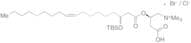
CAS:Producto controlado<p>Applications 3-tert-Butyldimethylsilyloxyoleyl Carnitine Ester (Mixture of Chloride and Bromide Salts) is an analog of Carnitine (C184110), an essential cofactor for the metabolism of fatty acids.<br></p>Fórmula:C31H62NO5SiBrorClForma y color:NeatPeso molecular:670.326923-tert-Butyldimethylsilyloxyoleyl O-(Methoxymethoxy)carnitine Ester Chloride Salt
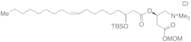
CAS:Producto controlado<p>Applications 3-tert-Butyldimethylsilyloxyoleyl O-(Methoxymethoxy)carnitine Ester Chloride Salt is an analog of Carnitine (C184110), an essential cofactor for the metabolism of fatty acids.<br></p>Fórmula:C33H66ClNO6SiForma y color:NeatPeso molecular:636.42L-Carnitine extrapure, 99%
CAS:Fórmula:C7H15NO3Pureza:min. 99%Forma y color:White, Crystalline compound, Clear, ColourlessPeso molecular:161.20L-Carnitine-15N
CAS:Producto controlado<p>Applications L-Carnitine-15N is an isotopically labelled analog of L-Carnitine (C184110), which is an essential cofactor of fatty acid metabolism; required for the transport of fatty acids through the inner mitochondrial membrane. Synthetized primarily in the liver and kidney; highest concentrations found in heart and skeletal muscle.<br>References Mitchell, M.E., et al.: Am. J. Clin. Nutr., 31, 293 (1978); Lango, R., et al.: Cardiovasc. Res., 51, 21 (2001);Vaz, F.M., et al.: Biochem. J., et al.: 361, 417 (2002);Karlic, H., et al.: Nutr. J., 20, 709 (2004)<br></p>Fórmula:C7H15NO3Forma y color:NeatPeso molecular:162.19L-Carnitine
CAS:<p>L-Carnitine is a naturally occurring amino acid that is involved in the metabolism of fatty acids. L-Carnitine has been shown to have antioxidant properties and can protect tissues against oxidative injury. It also plays an important role in energy metabolism, as well as the maintenance of mitochondrial functions. L-Carnitine has been used to treat atherosclerotic lesions in humans, kidney fibrosis, and blood sampling. L-Carnitine can be used to reduce the symptoms of hypoglycemia and has also been shown to inhibit the growth of infectious diseases such as Helicobacter pylori and Salmonella typhi, through scavenging of reactive oxygen radicals.</p>Fórmula:C7H15NO3Forma y color:White PowderPeso molecular:161.2 g/mol