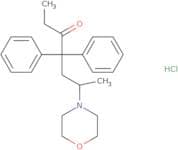
CAS 545-91-5
:3-Heptanona, 6-(4-morfolinil)-4,4-difenil-, clorhidrato (1:1)
- 3-Heptanone, 4,4-diphenyl-6-morpholino-, hydrochloride
- 3-Heptanone, 6-(4-morpholinyl)-4,4-diphenyl-, hydrochloride
- 3-Heptanone, 6-(4-morpholinyl)-4,4-diphenyl-, hydrochloride (1:1)
- 3-Heptanone, 6-(4-morpholinyl)-4,4-diphenyl-, hydrochloride (9CI)
- 3-Heptanone, 6-morpholino-4,4-diphenyl-, hydrochloride
- 3-Heptanone, 6-morpholino-4,4-diphenyl-, hydrochloride (8CI)
- 4,4-Diphenyl-6-morpholino-3-heptanone hydrochloride
- 6-(Morpholin-4-Yl)-4,4-Diphenylheptan-3-One Hydrochloride (1:1)
- 6-(N-Morpholino)-4,4-diphenyl-3-heptanone hydrochloride
- 6-Tetrahydrooxazine-4,4-diphenyl-3-heptanone hydrochloride
- Cb 11
- Hepagin
- Heptalgin
- Heptalin
- Heptazone hydrochloride
- Heptone
- Hoechst 10600
- Morphodone hydrochloride
- Phenadoxone HCl
- Ver más sinónimos
Phenadoxone hydrochloride
CAS:Producto controladoPhenadoxone hydrochloride is a synthetic opioid drug with excitatory effects that is structurally related to meperidine. It has been used as an analgesic and antitussive, but is now rarely prescribed due to the high risk of addiction. Phenadoxone hydrochloride is a haloalkyl drug, which means it contains one or more halogen atoms in its chemical structure. These compounds are known to cause physical dependence and withdrawal symptoms when discontinued after prolonged use. Side effects may include nausea, vomiting, dizziness, headache, blurred vision, constipation, dry mouth and urinary retention. The most efficient method of synthesis involves the reaction of dimethylformamide with phenol and formaldehyde in a ring-opening reaction to form dipipanone. Dipipanone is then converted into phenadoxone hydrochloride by reacting with nitroethane and sodium hydroxide in the presence of hydrogen chloride gas.
Fórmula:C23H30ClNO2Pureza:Min. 95%Peso molecular:387.94 g/mol