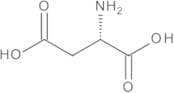
CAS 56-84-8
:Ácido L-aspártico
Descripción:
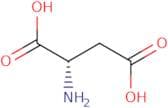
Ácido L-aspártico, con el número CAS 56-84-8, es un aminoácido no esencial que desempeña un papel crucial en la biosíntesis de proteínas. Se clasifica como un aminoácido polar e hidrofílico debido a sus grupos funcionales de ácido carboxílico, que pueden donar protones, haciéndolo cargado negativamente a pH fisiológico. Ácido L-aspártico está involucrado en varios procesos metabólicos, incluyendo el ciclo de la urea y la síntesis de otros aminoácidos y neurotransmisores. Se encuentra en muchas proteínas y es particularmente abundante en tejidos vegetales y animales. La sustancia es soluble en agua, lo que facilita su papel en los sistemas biológicos. Ácido L-aspártico puede existir en formas D y L, siendo la forma L el isómero biológicamente activo. Además, se utiliza en la industria alimentaria como potenciador del sabor y en suplementos dietéticos por su posible papel en la producción de energía y la función cognitiva. En general, Ácido L-aspártico es esencial para numerosas funciones fisiológicas y es un componente clave en la estructura de las proteínas.
Fórmula:C4H7NO4
InChI:InChI=1S/C4H7NO4/c5-2(4(8)9)1-3(6)7/h2H,1,5H2,(H,6,7)(H,8,9)/t2-/m0/s1
Clave InChI:InChIKey=CKLJMWTZIZZHCS-REOHCLBHSA-N
SMILES:[C@H](CC(O)=O)(C(O)=O)N
Sinónimos:- (+)-<span class="text-smallcaps">L</span>-Aspartic acid
- (+)-Aspartic acid
- (S)-2-Aminobutanedioic acid
- (S)-Aminobutanedioic acid
- (S)-Aspartic acid
- 2-Aminobutanedioic acid
- 75: PN: WO2005016244 PAGE: 71 claimed protein
- 7: PN: US20050014160 SEQID: 7 claimed protein
- <span class="text-smallcaps">L</span>-Aminosuccinic acid
- <span class="text-smallcaps">L</span>-Asparagic acid
- <span class="text-smallcaps">L</span>-Asparaginic acid
- Acide aspartique
- Acido Aspartico
- Asparagic acid
- Asparaginic acid
- Asparaginsaure
- Aspartic acid, <span class="text-smallcaps">L</span>-
- Aspartic acid, L-
- Butanedioic acid, amino-, (S)-
- H-Asp-OH
- L-2-Aminobutanedioic acid
- L-Aminosuccinic acid
- L-Aspantic acid
- L-Asparagic acid
- L-Asparaginic acid
- Nsc 3973
- Nsc 79553
- L-(+)-Aspartic acid
- L-Aspartic acid
- L-Aspartic acid
- Ver más sinónimos
Ordenar por
Pureza (%)
0
100
|
0
|
50
|
90
|
95
|
100
L-Aspartic acid
CAS:<p>L-Aspartic acid is an amino acid that plays a role in the biochemical reactions of energy metabolism. This amino acid is also important for the synthesis of proteins, such as enzymes and structural proteins. L-Aspartic acid is synthesized from oxaloacetate by transamination. It can also be synthesized from glutamate by the action of aspartate aminotransferase using pyridoxal phosphate as a cofactor. L-Aspartic acid has been shown to play a role in neuronal death, particularly in primary sclerosing cholangitis, and may have potential therapeutic use for this condition. L-Aspartic acid has been used as a model system to study polymerase chain reaction (PCR) methods and analytical methods in biochemistry research.</p>Fórmula:C4H7NO4Pureza:Min. 95%Forma y color:White Off-White PowderPeso molecular:133.1 g/molH-Asp-OH
CAS:<p>M03000 - H-Asp-OH</p>Fórmula:C4H7NO4Pureza:97%Forma y color:SolidPeso molecular:133.103L-Aspartic Acid ExiPlus, Multi-Compendial, 99%
CAS:Fórmula:C4H7NO4Pureza:min. 99%Forma y color:White, Crystalline powder, Clear, ColourlessPeso molecular:133.10L-Aspartic Acid PrimeDx, 99%
CAS:Fórmula:C4H7NO4Pureza:min. 99.0%Forma y color:White to off-white, Crystalline powder, Clear, Colourless to plae yellowPeso molecular:133.10L-Aspartic Acid extrapure CHR, 99%
CAS:Fórmula:C4H7NO4Pureza:min. 99%Forma y color:White, Crystalline powder, Clear, ColourlessPeso molecular:133.10L-Aspartic acid
CAS:<p>L-Aspartic acid is an amino acid that plays a crucial role in protein synthesis and DNA repair. It has been shown to activate the TRPV1 receptor, which is involved in pain sensation and thermoregulation. L-Aspartic acid has also been studied for its potential therapeutic effects on Alzheimer's disease, as it may inhibit the formation of amyloid beta plaques in the brain. Additionally, L-Aspartic acid has been used as a substrate for DNA ligase, an enzyme that joins together two strands of DNA. This amino acid is also found in plants such as broccoli and Brussels sprouts, where it contributes to the formation of glucosinolates. Studies have shown that L-Aspartic acid can enhance neuronal imaging and improve cognitive function when combined with compounds such as capsaicin or cycloastragenol. Furthermore, polygodial, a compound found in certain plants, has been shown to interact with L-Aspartic acid</p>Fórmula:C4H7NO4Peso molecular:133.11 g/mol