


CAS 57-48-7
:Fructosa
Descripción:
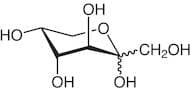
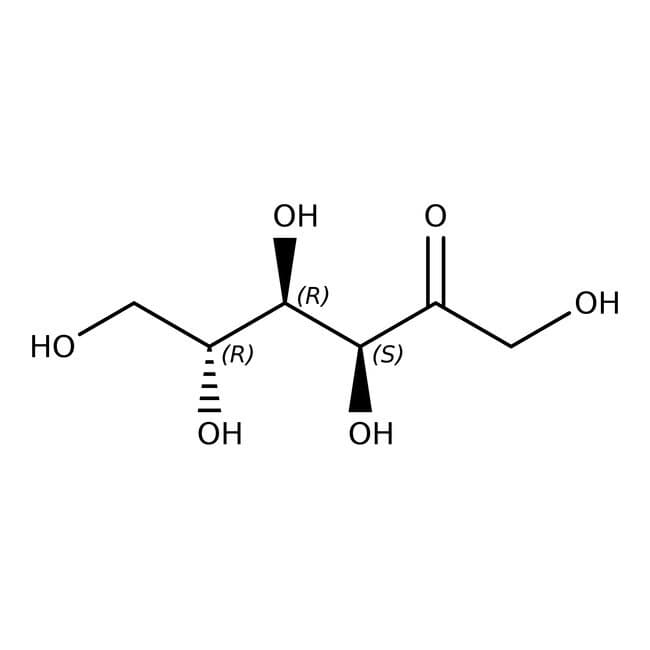
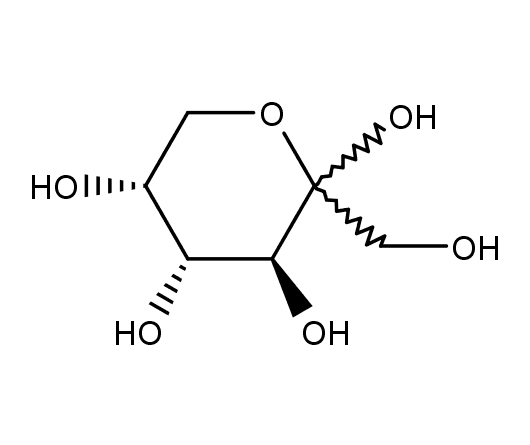
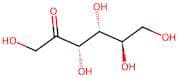
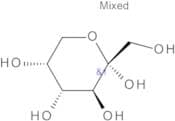
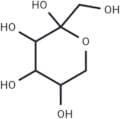
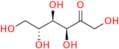
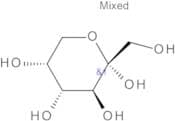
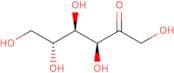
Fructosa, con el número CAS 57-48-7, es un azúcar simple, o monosacárido, que se encuentra de forma natural en muchas frutas, miel y verduras de raíz. Tiene la fórmula molecular C6H12O6 y es conocido por su sabor dulce, que a menudo es más dulce que la glucosa y la sacarosa. Fructosa es un componente clave de la sacarosa, que es un disacárido compuesto de glucosa y Fructosa. En su forma pura, Fructosa es un polvo blanco y cristalino que es altamente soluble en agua. Se clasifica como un hexosa debido a sus seis átomos de carbono y puede existir en formas lineales y cíclicas, siendo la forma cíclica más prevalente en solución. Fructosa se metaboliza de manera diferente a la glucosa, principalmente en el hígado, y puede convertirse en glucosa o almacenarse como grasa. Aunque es un azúcar natural, el consumo excesivo de Fructosa, particularmente de fuentes procesadas como el jarabe de maíz alto en Fructosa, se ha relacionado con varios problemas de salud, incluyendo la obesidad y trastornos metabólicos.
Fórmula:C6H12O6
InChI:InChI=1/C6H12O6/c7-1-3-4(9)5(10)6(11,2-8)12-3/h3-5,7-11H,1-2H2/t3-,4-,5+,6?/m1/s1
Clave InChI:InChIKey=BJHIKXHVCXFQLS-UYFOZJQFSA-N
SMILES:[C@H]([C@@H](C(CO)=O)O)([C@@H](CO)O)O
Sinónimos:- <span class="text-smallcaps">D</span>-(-)-Fructose
- <span class="text-smallcaps">D</span>-(-)-Levulose
- <span class="text-smallcaps">D</span>-arabino-2-Hexulose
- Advantose FS 95
- Arabino-hexulose
- D-(-)-Fructose for analysis
- D-Levulose
- D-arabino-2-Hexulose
- D-fructofuranose
- Fructopyranose
- Fructosa, Pura
- Fructose
- Fructose, <span class="text-smallcaps">D</span>-
- Fructose, D-
- Fructose, Pure
- Fruit sugar
- Fujifructo L 95
- Furucton
- HPC
- Hfd 95
- Hi-Fructo 970
- Hi-Fructo F
- Hi-Fructo M 75
- Krystar
- Krystar 300
- Levulose
- Nevulose
- Nf 55
- Sugar, fruit
- b-D-Fructose (1.04007)
- beta-D-fructopyranose
- D-Fructose
- β-D-Fructopyranose
- D(-)-FRUCTOSE, FOR BIOTECHNOLOGICAL PURP OSES
- D-FRUCTOSE, 99+%
- LAEVULOSE
- LAEVOSAN
- D-(-)-FRUCTOSE PLANT CELL CULTURE*TESTED
- d-fructos
- LAEVULOSUM FRUCTOSUM
- Levulosefruitsugar
- Ver más sinónimos
Ordenar por
Pureza (%)
0
100
|
0
|
50
|
90
|
95
|
100
Encontrado 26 productos.
D-(-)-Fructose
CAS:Fórmula:C6H12O6Pureza:>99.0%(HPLC)Forma y color:White powder to crystalPeso molecular:180.16D-Fructose, 99%
CAS:<p>Fructose is used commercially in foods and beverages. It increases starch viscosity more rapidly and achieves a higher final viscosity than sucrose. It has all the fiber squeezed out of it and so the fructose is easily absorbed into the bloodstream. High-fructose-corn syrup is used in frozen product</p>Fórmula:C6H12O6Pureza:99%Forma y color:White, Crystals or crystalline powderPeso molecular:180.16D-(-)-Fructose
CAS:D-(-)-Fructose analytical standardFórmula:C6H12O6Pureza:(HPLC) ≥95%Forma y color:PowderPeso molecular:180.17Fructose
CAS:Chemically pure fructose in solid formFórmula:C6H12O6Forma y color:White Colorless Crystalline PowderPeso molecular:180.06339D-(-)-Fructose
CAS:Fórmula:C6H12O6Pureza:92.0 - 102.0 % (dried basis)Forma y color:White, hygroscopic, crystalline powderPeso molecular:180.16D-Fructose
CAS:<p>D-Fructose (D-arabino-hexulose) , also known as D-(-)-Fructose or D-(-)-Levulose, is classified as a member of the Monosaccharides.</p>Fórmula:C6H12O6Pureza:99.94%Forma y color:White Crystals Or PowderPeso molecular:180.16D-Fructose
CAS:<p>Applications D-Fructose occurs naturally in a large number of fruits, honey, and plants. High intake and consumption of fructose has been hypothesized to increase occurrence of diabetes and insulin resistance.<br>References Elliott S. et al.: Am. J. Clin. Nutr., 76, 911 (2002); Isganaitis E. et al.: Arterioscler. Thromb. Vasc. Biol., 25, 2451 (2006);<br></p>Fórmula:C6H12O6Forma y color:White To Off-WhitePeso molecular:180.16D-Fructose-d7
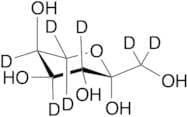
CAS:Producto controlado<p>Applications Isotope labelled D-Fructose (F792500), a monosaccharide that naturally occurs in large number of fruits and plants.<br>References Shum, M., et al.: Am. J. Physiol., 304, 197 (2013); Zeng, S.S., et al.: J. Pharma. Biomed. Anal., 76, 87 (2013);<br></p>Fórmula:C6D7H5O6Forma y color:NeatPeso molecular:187.199D-Fructose
CAS:<p>D-Fructose (Fru) is the most common reducing keto-hexose and is often known as levulose, arabino-hexulose, fruit sugar (Collins, 2006). In an aqueous solution, fructose exhibits mutarotation (approx., 70-75% β-pyranose, 20-23% β-furanose, 5% α-furanose, 2% α-pyranose, 0.7% open chain) (Angyal, 1984). Sucrose from sugar cane and sugar beet is made up of 50% fructose and is found in many fruits and vegetables; it is the predominant sugar in apples, grapes, oranges and watermelon, as well as comprising of up to half of the total sugars in honey. High fructose corn syrup (HFCS) containing around 50% fructose is an important food ingredient produced from glucose syrup by the action of the enzyme glucose isomerase (Hanover, 1993). However, dietary sugars including fructose, have long been implicated in the epidemic of obesity. Evidence to link the relation of foods and beverages containing fructose with overweight or obesity has recently been obtained (Zurbau, 2020).</p>Fórmula:C6H12O6Pureza:Min. 99 Area-%Forma y color:White PowderPeso molecular:180.16 g/molD-Fructose ExiPlus, Multi-Compendial, 98%
CAS:Fórmula:C6H12O6Pureza:min.98%Forma y color:White or almost white, Crystalline powder, Clear, Colourless, Passes testPeso molecular:180.16D-Fructose for tissue culture, 98%
CAS:Fórmula:C6H12O6Pureza:min. 98%Forma y color:White, Crystalline hygroscopic powder, Clear, ColourlessPeso molecular:180.16D-Fructose extrapure, 98%
CAS:Fórmula:C6H12O6Pureza:min. 98%Forma y color:White, Crystalline hygroscopic compound, Clear, ColourlessPeso molecular:180.16D-Fructose-1,2-13C2
CAS:Producto controlado<p>Applications Isotope labelled D-Fructose (F792500), a monosaccharide that naturally occurs in large number of fruits and plants.<br>References Shum, M., et al.: Am. J. Physiol., 304, 197 (2013); Zeng, S.S., et al.: J. Pharma. Biomed. Anal., 76, 87 (2013);<br></p>Fórmula:C2C4H12O6Forma y color:NeatPeso molecular:182.141D-Fructose-1,2,3-13C3
CAS:Producto controlado<p>Applications Isotope labelled D-Fructose (F792500), a monosaccharide that naturally occurs in large number of fruits and plants.<br>References Shum, M., et al.: Am. J. Physiol., 304, 197 (2013); Zeng, S.S., et al.: J. Pharma. Biomed. Anal., 76, 87 (2013);<br></p>Fórmula:C313C3H12O6Forma y color:NeatPeso molecular:183.13D-[4,5,6]-Fructose-13C3
CAS:<p>D-[4,5,6]-Fructose-13C3 is a potent inhibitor of the golgi alpha-mannosidases which are enzymes that catalyze the hydrolysis of mannose residues from glycoproteins. This compound has been shown to inhibit the synthesis of glycoproteins in vitro and in vivo. D-[4,5,6]-Fructose-13C3 also inhibits other chemical reactions by binding to fatty acids or proteins. In cell culture, this compound has been shown to synergistically interact with cytochalasin B, which disrupts Golgi membranes. D-[4,5,6]-Fructose-13C3 is lipophilic and can be easily detected by magnetic resonance spectroscopy (MRS). MRS can be used to monitor the inhibition of fatty acid synthesis in cells cultured with this agent.</p>Fórmula:C3C3H12O6Pureza:Min. 95%Peso molecular:183.13 g/mol

















![D-[4,5,6]-Fructose-13C3](/_next/image/?url=https%3A%2Fstatic.cymitquimica.com%2Fproducts%2F3D%2Fthumb%2FMF171832.jpg&w=3840&q=75)