CAS 577-85-5
:Flavonol
Descripción:
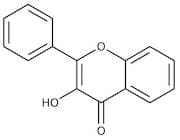
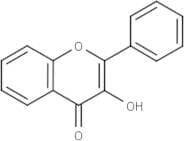
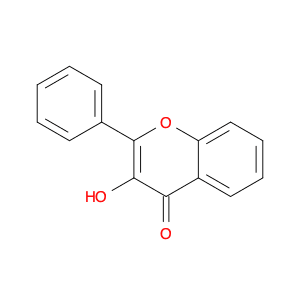
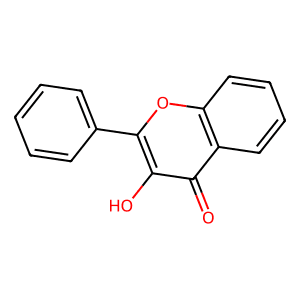
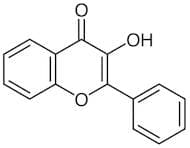
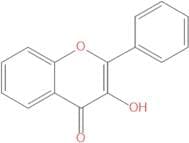
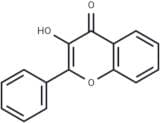
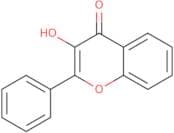
Flavonol, con el número CAS 577-85-5, es un tipo de flavonoide, que es una clase de compuestos polifenólicos ampliamente encontrados en las plantas. Característicamente, los Flavonols son conocidos por sus propiedades antioxidantes, que contribuyen a sus posibles beneficios para la salud, incluyendo efectos antiinflamatorios y anticancerígenos. Típicamente exhiben un color amarillo y son solubles en disolventes orgánicos, pero menos en agua. La estructura de los Flavonols presenta un esqueleto de 15 carbonos, que consiste en dos anillos aromáticos conectados por un puente de tres carbonos, con un grupo cetona y grupos hidroxilo que pueden variar en número y posición, influyendo en su actividad biológica y solubilidad. Ejemplos comunes de Flavonols incluyen quercetina y kaempferol, que son abundantes en frutas, verduras y bebidas como el té. Estos compuestos juegan un papel significativo en la pigmentación de las plantas y la protección UV, y también se estudian por sus posibles efectos terapéuticos en la salud humana, particularmente en relación con enfermedades cardiovasculares y trastornos metabólicos.
Fórmula:C15H10O3
InChI:InChI=1S/C15H10O3/c16-13-11-8-4-5-9-12(11)18-15(14(13)17)10-6-2-1-3-7-10/h1-9,17H
Clave InChI:InChIKey=HVQAJTFOCKOKIN-UHFFFAOYSA-N
SMILES:OC1=C(OC=2C(C1=O)=CC=CC2)C3=CC=CC=C3
Sinónimos:- 3-Hf
- 3-Hidroxiflavona
- 3-Hydroxy-2-phenyl-4H-1-benzopyran-4-one
- 3-Hydroxy-2-phenylchromen-4-one
- 3-Hydroxy-2-phenylchromone
- 3-Hydroxyflavon
- 3-hydroxy-2-phenyl-4H-chromen-4-one
- 3HF
- 4H-1-Benzopyran-4-one, 3-hydroxy-2-phenyl-
- Flavon-3-ol
- Flavone, 3-hydroxy-
- Flavonol
- Hsdb 7572
- Nsc 57653
- Nsc 58585
- Nsc 58586
- Nsc 58587
- Ver más sinónimos
Ordenar por
Pureza (%)
0
100
|
0
|
50
|
90
|
95
|
100
Encontrado 11 productos.
3-Hydroxy-2-phenyl-4H-chromen-4-one
CAS:Fórmula:C15H10O3Pureza:98%Forma y color:SolidPeso molecular:238.2423-Hydroxyflavone, 98+%
CAS:3-Hydroxyflavone is a reactant involved in studies of photochemically-induced dioxygenase-type CO-release reactivity; phase-transfer protection and deprotection of hydroxychromones; and O-methylation with di-Me carbonate. As a reactant it is involved in the synthesis of biologically active moleculesFórmula:C15H10O3Pureza:98+%Forma y color:White to yellow or pale cream, PowderPeso molecular:238.253-Hydroxyflavone
CAS:3-Hydroxyflavone analytical standard provided with chromatographic purity, to be used as reference material for qualitative determination.Fórmula:C15H10O3Pureza:(HPLC) ≥95%Forma y color:PowderPeso molecular:238.253-Hydroxyflavone
CAS:Fórmula:C15H10O3Pureza:>98.0%(T)(HPLC)Forma y color:White to Yellow powder to crystalPeso molecular:238.24Flavonol
CAS:Flavonol (3-Hydroxyflavone) is a member of the class of compounds known as flavonols. Flavonol can be found in a number of food items.Fórmula:C15H10O3Pureza:98.1% - 99.94%Forma y color:Yellow Needles Yellow Fluffy PowderPeso molecular:238.243-Hydroxyflavone
CAS:3-Hydroxyflavone is a naturally derived flavonoid compound found in various plants. As a member of the flavonoid family, it is synthesized through the phenylpropanoid pathway, starting from phenylalanine or tyrosine in plants. Its unique structure allows it to interact with a range of biological targets through its antioxidant, anti-inflammatory, and enzyme modulation properties. The mode of action primarily involves the scavenging of free radicals and reactive oxygen species, as well as the inhibition of specific enzymes such as cyclooxygenases and lipoxygenases. These actions contribute to its protective effects against oxidative stress and inflammation.Fórmula:C15H10O3Pureza:Min. 95%Forma y color:PowderPeso molecular:238.24 g/mol