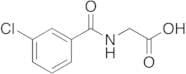
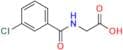
CAS 57728-59-3
:N-(3-Clorobenzoil)glicina
- (3-Chlorobenzoylamino)acetic acid
- 2-[(3-Chlorobenzoyl)amino]acetic acid
- 2-[(3-Chlorophenyl)formamido]acetic acid
- Glycine, N-(3-chlorobenzoyl)-
- Hippuric acid, m-chloro-
- M-Chlorohippurate
- N-(3-Chlorobenzoyl)glycine
- NSC 201882
- m-Chlorohippuric acid
(3-Chloro-benzoylamino)-acetic acid
CAS:Fórmula:C9H8ClNO3Pureza:%Forma y color:SolidPeso molecular:213.6177[(3-Chlorobenzoyl)amino]acetic acid
CAS:[(3-Chlorobenzoyl)amino]acetic acidPureza:95%Peso molecular:213.62g/molm-Chloro Hippuric Acid
CAS:Producto controladoApplications m-Chlorohippuric Acid is an N-benzoyl derivative with anticonvulsant and cardiotonic activity. m-Chlorohippuric Acid is a metabolite of Isoprophenamine and Ticlopidine (T438325).
References Kazaryan, S.A. et al.: Pharm. Chem. J., 35, 485 (2001); Tuong, A. et al.: Eur. J. Drug Metab. Pharmacokin., 6, 91 (1981); Tatsumi, K. et al.: Chem. Pharmac. Bull., 18, 1254 (1970);Fórmula:C9H8ClNO3Forma y color:NeatPeso molecular:213.62(3-Chloro-benzoylamino)-acetic acid
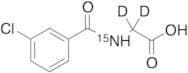
CAS:Fórmula:C9H8ClNO3Pureza:98%Forma y color:SolidPeso molecular:213.62m-Chloro Hippuric Acid-d2,15N
CAS:Producto controladoApplications Isotope labelled m-Chlorohippuric Acid is an N-benzoyl derivative with anticonvulsant and cardiotonic activity. m-Chlorohippuric Acid is a metabolite of Isoprophenamine and Ticlopidine (T438325).
References Kazaryan, S.A. et al.: Pharm. Chem. J., 35, 485 (2001); Tuong, A. et al.: Eur. J. Drug Metab. Pharmacokin., 6, 91 (1981); Tatsumi, K. et al.: Chem. Pharmac. Bull., 18, 1254 (1970);Fórmula:C9D2H6Cl15NO3Forma y color:NeatPeso molecular:216.6243-Chlorohippuric acid
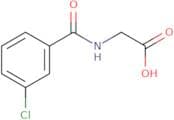
CAS:3-Chlorohippuric acid is a drug that inhibits the activity of human liver and pancreatic lipase. This compound has been shown to reduce oxidative injury in animal models. 3-Chlorohippuric acid is also used as an antidiabetic agent, which may be due to its ability to inhibit transcriptional regulation in the pancreas. 3-Chlorohippuric acid binds to siderophores, which are iron-binding molecules present in bacteria. The uptake of this drug into bacteria is mediated by siderophores and may be one mechanism for the bactericidal effect of 3-chlorohippurate.Fórmula:C9H8ClNO3Pureza:Min. 95%Peso molecular:213.62 g/mol
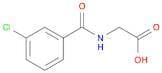

![[(3-Chlorobenzoyl)amino]acetic acid](/_next/image/?url=https%3A%2Fstatic.cymitquimica.com%2Fproducts%2F54%2Fthumb%2FOR1003102.jpg&w=3840&q=75)