CAS 58-86-6
:(+)-Xilosa
- (+)-Xylose
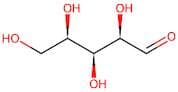
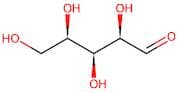
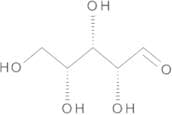
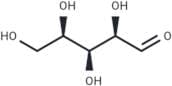
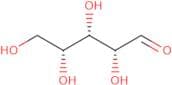
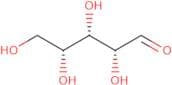
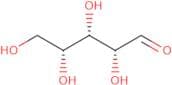
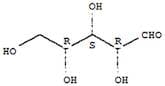
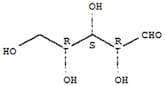
- (2R,3S,4R)-2,3,4,5-Tetrahydroxypentanal
- 2,3,4,5-Tetrahydroxypentanal
- <span class="text-smallcaps">D</span>-(+)-Xylose
- Brn 1562108
- Ccris 1899
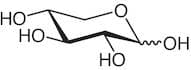
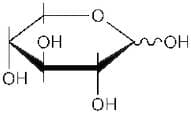
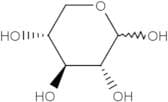
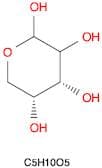
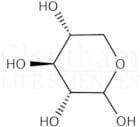
- D-xylopyranose
- FEMA No. 3606
- Holzzucker
- Hsdb 3273
- Unii-A1Ta934Ako
- Wood sugar
- Xilosa, Pura
- Xylose, <span class="text-smallcaps">D</span>-
- Xylose, D-
- alpha-D-xylopyranose
- beta-D-xylopyranose
- Ver más sinónimos
D-(+)-Xylose
CAS:Fórmula:C5H10O5Pureza:>98.0%(HPLC)Forma y color:White powder to crystalPeso molecular:150.13D-(+)-Xylose, 98+%
CAS:D-(+)-Xylose is used to prepare furfural by acid catalyzed degradation reaction, which acts as a solvent as well as a precursor to synthetic polymers. It is a useful animal medicine involved in the treatment of malabsorption. It finds application in the production of sugar substitute xylitol by subFórmula:C5H10O5Pureza:98+%Forma y color:White to pale cream, Crystals or powder or crystalline powderPeso molecular:150.13D-(+)-Xylose
CAS:D-(+)-Xylose analytical standardFórmula:C5H10O5Pureza:(HPLC) ≥95%Forma y color:PowderPeso molecular:150.14D-(+)-Xylose
CAS:D-(+)-XyloseFórmula:C5H10O5Pureza:98%Forma y color: white powderPeso molecular:150.1299g/molD-(+)-Xylose
CAS:Fórmula:C5H10O5Pureza:≥ 98.5%Forma y color:White to colourless crystalline powderPeso molecular:150.13D-(+)-Xylose
CAS:D-(+)-Xylose (Wood sugar) is an aldopentose. Xylose is also found in mucopolysaccharides of connective tissue and sometimes in the urine.Fórmula:C5H10O5Pureza:99.85%Forma y color:White Solid Crystalline PowderPeso molecular:150.13D-(+)-Xylose, USP grade
CAS:Fórmula:C5H10O5Pureza:To pass testForma y color:White crystalline powderPeso molecular:150.13D-Xylose
CAS:Applications D-Xylose is used in diagnostic malabsorption tests as well as in the production of Furfural.
References Ehrenpreis E.D. et al.: J. Acquir. Immune. Defic. Syndr., 5, 1047 (1992); Sérgio L. et al.: Cat. Comm., 9, 2144 (2008);Fórmula:C5H10O5Forma y color:NeatPeso molecular:150.13D-Xylose - Syrup
CAS:Xylose (Xyl) is an aldopentose also known as wood sugar (Collins, 2006). The main sources of xylose are hemicelluloses found in hardwood and perennial plants, such as, grasses, cereals, and herbs (Petzold-Welcke, 2014) and some algae. Xylose is used in the production of xylitol, a low calory sugar substitute. Xylose is used in glycosaminoglycan (GAG) biosynthesis, which is initiated by peptide O-xylosyltransferases, which transfer xylose onto selected serine residues in the core proteins. The first enzyme in the pathway, peptide O-xylosyltransferase, catalyzes the transfer of xylose from uridine diphosphate (UDP)-α-D-xylose onto serine and thus determines the site(s) of GAG attachment on the core protein (Briggs, 2018).Fórmula:C5H10O5Pureza:Min. 95%Peso molecular:150.13 g/molD-Xylose
CAS:Xylose (Xyl) is an aldopentose also known as wood sugar (Collins, 2006). The main sources of xylose are hemicelluloses found in hardwood and perennial plants, such as, grasses, cereals, and herbs (Petzold-Welcke, 2014) and some algae. Xylose is used in the production of xylitol, a low calory sugar substitute. Xylose is used in glycosaminoglycan (GAG) biosynthesis, which is initiated by peptide O-xylosyltransferases, which transfer xylose onto selected serine residues in the core proteins. The first enzyme in the pathway, peptide O-xylosyltransferase, catalyzes the transfer of xylose from uridine diphosphate (UDP)-α-D-xylose onto serine and thus determines the site(s) of GAG attachment on the core protein (Briggs, 2018).
Fórmula:C5H10O5Pureza:Min. 98.0 Area-%Forma y color:White PowderPeso molecular:150.13 g/molD-Xylose
CAS:Xylose (Xyl) is an aldopentose also known as wood sugar (Collins, 2006). The main sources of xylose are hemicelluloses found in hardwood and perennial plants, such as, grasses, cereals, and herbs (Petzold-Welcke, 2014) and some algae. Xylose is used in the production of xylitol, a low calory sugar substitute. Xylose is used in glycosaminoglycan (GAG) biosynthesis, which is initiated by peptide O-xylosyltransferases, which transfer xylose onto selected serine residues in the core proteins. The first enzyme in the pathway, peptide O-xylosyltransferase, catalyzes the transfer of xylose from uridine diphosphate (UDP)-α-D-xylose onto serine and thus determines the site(s) of GAG attachment on the core protein (Briggs, 2018).Fórmula:C5H10O5Pureza:Min. 99.0 Area-%Peso molecular:150.13 g/molD-(+)-Xylose extrapure
CAS:Fórmula:C5H10O5Forma y color:White to off-white, Crystalline powder, Clear, ColourlessPeso molecular:150.13D-(+)-Xylose ExiPlus, Multi-Compendial
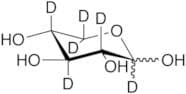
CAS:Fórmula:C5H10O5Forma y color:White to off-white, Crystalline powder, ClearPeso molecular:150.13D-Xylose-1,2,3,4,5,5'-C-d6
CAS:Producto controladoApplications D-Xylose-1,2,3,4,5,5'-C-d6 is a labeled analog of D-Xylose, which is used in diagnostic malabsorption tests as well as in the production of Furfural.
References Ehrenpreis E.D. et al.: J. Acquir. Immune. Defic. Syndr., 5, 1047 (1992); Sérgio L. et al.: Cat. Comm., 9, 2144 (2008);Fórmula:C5H4D6O5Forma y color:NeatPeso molecular:156.17