CAS 58888-87-2
:Ácido 3-etilpentanoico
Descripción:
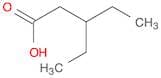
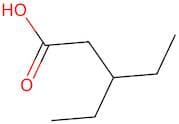
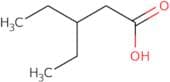
Ácido 3-etilpentanoico es un ácido carboxílico de cadena ramificada caracterizado por su esqueleto de cinco carbonos con un grupo etilo unido al tercer carbono. Este compuesto tiene la fórmula molecular C7H14O2 y presenta un grupo funcional carboxilo (-COOH), que le confiere propiedades ácidas. Típicamente es un líquido incoloro a amarillo pálido con un olor distintivo. La presencia del grupo etilo contribuye a sus características hidrofóbicas, mientras que el grupo ácido carboxílico permite la formación de enlaces de hidrógeno, influyendo en su solubilidad en disolventes polares. Ácido 3-etilpentanoico es conocido por sus aplicaciones en síntesis orgánica y como intermediario en la producción de varios compuestos químicos. Su punto de ebullición y punto de fusión están influenciados por la estructura molecular, y generalmente es estable en condiciones estándar. Al igual que muchos ácidos carboxílicos, puede sufrir reacciones típicas como la esterificación y la neutralización. Se deben tomar precauciones de seguridad al manipular esta sustancia, ya que puede causar irritación en la piel y los ojos.
Fórmula:C7H14O2
InChI:InChI=1S/C7H14O2/c1-3-6(4-2)5-7(8)9/h6H,3-5H2,1-2H3,(H,8,9)
Clave InChI:InChIKey=ATUUSOSLBXVJKL-UHFFFAOYSA-N
SMILES:C(CC(O)=O)(CC)CC
Sinónimos:- Pentanoic Acid, 3-Ethyl-
- 3-Ethylpentanoic acid
Ordenar por
Pureza (%)
0
100
|
0
|
50
|
90
|
95
|
100
Encontrado 5 productos.
3-Ethylpentanoic acid
CAS:<p>3-Ethylpentanoic acid is a fatty acid that is naturally found in the human body and can be synthesized by the body from other fatty acids. 3-Ethylpentanoic acid has been shown to inhibit histone deacetylase (HDAC) activity, which may be a possible mechanism for its antitumor effects. HDAC inhibitors are being studied as potential anticancer drugs. 3-Ethylpentanoic acid also inhibits the enzymatic activity of fatty acid synthase, thereby preventing the production of branched-chain fatty acids that are toxic to the liver. In addition, 3-ethylpentanoic acid has been shown to have pharmacokinetic properties in rats and mice with high levels of enzymes that convert it into a more hydrophobic form, which may lead to better absorption from the gastrointestinal tract and decreased metabolism by enzymes in the liver.</p>Fórmula:C7H14O2Pureza:Min. 95%Peso molecular:130.18 g/mol