CAS 608-66-2
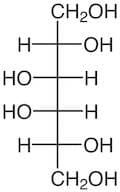
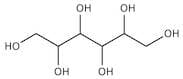
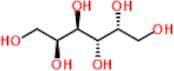
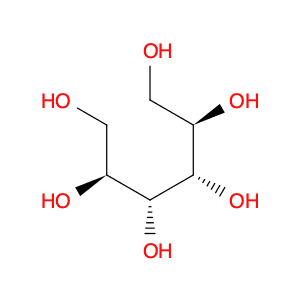
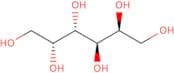
:Galactitol
- D-allitol
- D-galactitol
- Dulcite
- Dulcitol (1.03589)
- Dulcitol For Microbiology
- Dulcose
- Euonymit
- Galactitol
- Galaktit
- Melampyrin
- Melampyrit
- Nsc 1944
- Ver más sinónimos
Galactitol
CAS:Fórmula:C6H14O6Pureza:>98.0%(GC)Forma y color:White to Almost white powder to crystalPeso molecular:182.17Dulcitol, 97%
CAS:Dulcitol is important in studies related to cataract formation, hepatosplenly and mental retardation. It is used as a substrate to identify, differentiate and characterize galactitol dehydrogenase(s). It is also used as a reference compound in analytical procedures developed to analyze sugar alcoholFórmula:C6H14O6Pureza:97%Forma y color:White, Crystals or powder or crystalline powderPeso molecular:182.17Galactitol
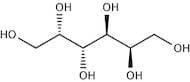
CAS:Acyclic polyhydric alcohols not elsewhere specified orFórmula:C6H14O6Forma y color:Colorless White Crystalline PowderPeso molecular:182.07904Dulcite
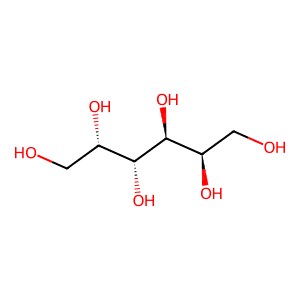
CAS:Dulcite (D-Galactitol) is a sugar alcohol that is a metabolic breakdown product of galactose.Fórmula:C6H14O6Pureza:99.59%Forma y color:SolidPeso molecular:182.17Dulcitol
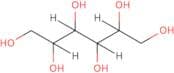
CAS:Fórmula:C6H14O6Pureza:≥ 98.0% (dried basis)Forma y color:White crystalline powderPeso molecular:182.17Dulcitol
CAS:Applications Dulcitol is the reduction product of Galactose. An increase in the level of Dulcitol is often a result of metabolism defect caused by a defect in galactose-1-phosphate uridylyltransferase (an autosomal recessive disorder). Dulcitol buildup can also lead to cataractogenesis.
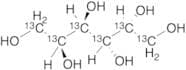
References Ning, C. et al.: Pediat. Res., 48, 211 (2000); Cheng, H. et al.: Exp. Eye Res., 51, 345 (1990); Wells, W.W. et al.: Galactosemia, 227 (1969);Fórmula:C6H14O6Forma y color:NeatPeso molecular:182.17Dulcitol-13C6
CAS:Producto controladoApplications Labelled Dulcitol, the reduction product of Galactose. An increase in the level of Dulcitol is often a result of metabolism defect caused by a defect in galactose-1-phosphate uridylyltransferase (an autosomal recessive disorder). Dulcitol buildup can also lead to cataractogenesis.
References Ning, C. et al.: Pediat. Res., 48, 211 (2000); Cheng, H. et al.: Exp. Eye Res., 51, 345 (1990); Wells, W.W. et al.: Galactosemia, 227 (1969);Fórmula:C6H14O6Forma y color:NeatPeso molecular:188.13Dulcitol
CAS:A metabotoxin, a neurotoxin, and a hepatotoxin at high levels
Fórmula:C6H14O6Pureza:Min. 98 Area-%Forma y color:White PowderPeso molecular:182.17 g/molDulcitol (D-Galactitol) extrapure, 99%
CAS:Fórmula:C6H14O6Pureza:min. 99 %Forma y color:White, Crystalline powderPeso molecular:182.18(2R,3S,4R,5S)-Hexane-1,2,3,4,5,6-hexaol
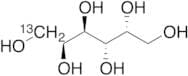
CAS:Fórmula:C6H14O6Pureza:98%Forma y color:White – Almost white powderPeso molecular:182.172D-Dulcitol-6-13C
CAS:Applications Isotope labelled dulcitol (D720500), is the reduction product of Galactose (G155250). An increase in the level of Dulcitol is often a result of metabolism defect caused by a defect in galactose-1-phosphate uridylyltransferase (an autosomal recessive disorder).
References Ning, C. et al.: Pediat. Res., 48, 211 (2000); Cheng, H. et al.: Exp. Eye Res., 51, 345 (1990); Wells, W.W. et al.: Galactosemia, 227 (1969);Fórmula:CC5H14O6Forma y color:NeatPeso molecular:183.164Dulcitol
CAS:Dulcitol is a sugar alcohol that is used in the food industry and as an alternative to sucrose. Dulcitol can be found in wastewater treatment and has been shown to be an inhibitor of wild-type strains of Escherichia coli and Bacteroides fragilis. It also inhibits the growth of Gram-positive bacteria, such as Staphylococcus aureus, by inhibiting their ability to synthesize DNA. Dulcitol is metabolized through a number of metabolic transformations, including hydrolysis by esterases or glucuronidases, oxidation by cytochrome P450 enzymes, reduction by glutathione reductase, or conjugation with glucuronic acid. Dulcitol can also inhibit the activity of certain enzymes such as protein kinase C (PKC).Fórmula:C6H14O6Pureza:Min. 99.0 Area-%Peso molecular:182.17 g/molRef: 3D-D-9500
-Unit-kgkgA consultar1kgA consultar5kgA consultar10kgA consultar25kgA consultar2500gA consultar