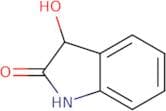
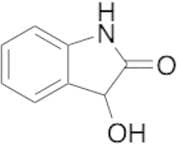
CAS 61-71-2
:Dioxindol
Descripción:
Dioxindol, con el número CAS 61-71-2, es un compuesto orgánico caracterizado por su estructura bicíclica, que incluye un indol fusionado y un moiety de dioxolano. Típicamente aparece como un sólido blanco a amarillo pálido y es conocido por sus propiedades aromáticas. Dioxindol es soluble en disolventes orgánicos como etanol y cloroformo, pero tiene una solubilidad limitada en agua. Este compuesto es de interés en varios campos, incluida la química medicinal, debido a sus posibles actividades biológicas, incluidos efectos antiinflamatorios y analgésicos. La presencia del anillo de dioxolano contribuye a su reactividad, permitiendo modificaciones químicas adicionales. Dioxindol puede participar en varias reacciones químicas, como sustituciones electrofílicas y cicloadiciones, lo que lo convierte en un intermediario versátil en la síntesis orgánica. Se deben tomar precauciones de seguridad al manipular este compuesto, ya que puede representar riesgos para la salud si se ingiere o inhala. En general, Dioxindol sirve como un bloque de construcción importante en la síntesis de moléculas orgánicas más complejas.
Fórmula:C8H7NO2
InChI:InChI=1S/C8H7NO2/c10-7-5-3-1-2-4-6(5)9-8(7)11/h1-4,7,10H,(H,9,11)
Clave InChI:InChIKey=SGZFJWQQBHYNNF-UHFFFAOYSA-N
SMILES:OC1C=2C(NC1=O)=CC=CC2
Sinónimos:- 1,3-Dihydro-3-hydroxy-2H-indol-2-one
- 2,3-Dihydro-3-hydroxy-2-oxo-1H-indole
- 2-Indolinone, 3-hydroxy-
- 2H-indol-2-one, 1,3-dihydro-3-hydroxy-
- 3-Hydroxy-1,3-dihydroindol-2-one
- 3-Hydroxy-2,3-dihydro-1H-indol-2-one
- 3-Hydroxy-2-indolinone
- 3-Hydroxyoxindole
- 61-71-2
- Dioxindole
- NSC 26319
- Oxindole, 3-hydroxy-
- Ver más sinónimos
Ordenar por
Pureza (%)
0
100
|
0
|
50
|
90
|
95
|
100
Encontrado 2 productos.
3-Hydroxy-2,3-dihydro-1H-indol-2-one
CAS:3-Hydroxy-2,3-dihydro-1H-indol-2-one (3HID) is a heterocyclic compound that contains a trifluoroacetate group. It is an intermediate in the synthesis of histamine, serotonin, and melatonin. 3HID is an inhibitor of the growth factor receptor, which inhibits the proliferation of human liver cells. 3HID also has a strong affinity for basic proteins such as albumin and hemoglobin. These interactions are thought to be important for its cytotoxic activity in cancer cells. 3HID can be synthesized by reacting acetyl chloride with 2-aminobutyric acid in the presence of potassium hydroxide or sodium hydroxide at room temperature, followed by hydrolysis with water. The reaction produces 3HID and acetic acid, which can be removed by distillation. The product can then be purified by recrystallization from methanol orFórmula:C8H7NO2Pureza:Min. 95%Forma y color:PowderPeso molecular:149.15 g/molDioxindole
CAS:Producto controladoApplications 3-Hydroxy-2,3-dihydro-1H-indol-2-one is a useful reagent for the distereoselective preparation of spiro[furo[3,4-c]chromene-1,3'-indoline]triones.
References Lei, C. W., et al.: Org. Biomol. Chem., 18, 845 (2020)Fórmula:C8H7NO2Forma y color:NeatPeso molecular:149.147