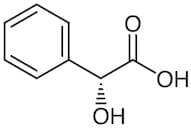
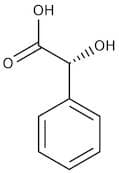
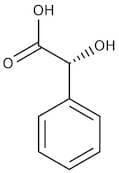
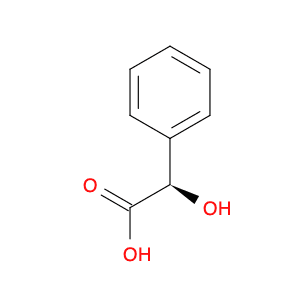
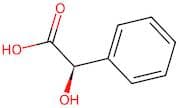
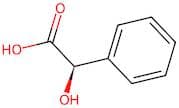
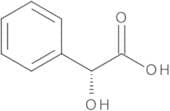
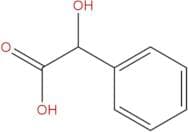
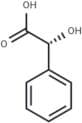
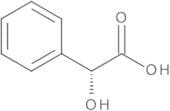
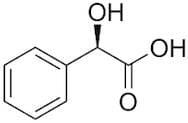
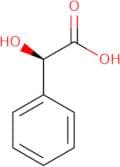
CAS 611-71-2
:Ácido mandélico (R)-(-)
- (-)-<span class="text-smallcaps">D</span>-Mandelic acid
- (-)-Mandelic acid
- (-)-α-Hydroxyphenylacetic acid
- (2R)-2-Hydroxy-2-phenylacetic acid
- (2R)-hydroxy(phenyl)ethanoate
- (R)-(-)-2-Mandelic Acid
- (R)-(-)-Amygdalic Acid
- (R)-(-)-Hydroxyphenylacetic acid
- (R)-(-)-Mandelic
- (R)-(-)-alpha-hydroxyphenylacetic acid
- (R)-2-Hydroxy-2-(phenyl)ethanoic acid
- (R)-2-Hydroxy-2-Phenylacetic Acid
- (R)-Hydroxy(phenyl)acetic acid
- (R)-Hydroxyphenylaceticacid
- (R)-α-Hydroxybenzeneacetic acid
- (R)-α-Hydroxyphenylacetic acid
- (αR)-α-Hydroxybenzeneacetic acid
- 2-[(1R)-1-hydroxyethyl]benzoic acid
- <span class="text-smallcaps">D</span>-2-Phenylglycolic acid
- Acide L-2-hydroxy-2-phenylacetique
- Benzeneacetic acid, α-hydroxy-, (-)-
- Benzeneacetic acid, α-hydroxy-, (R)-
- Benzeneacetic acid, α-hydroxy-, (αR)-
- D-2-Phenylglycolic acid
- D-Dl-Mandelic Acid
- D-Mandelic Acid
- D-Minus-Mandelic Acid Sigma Grade
- L-2-Hydroxy-2-phenylessigsaure
- L-2-hydroxy-2-phenylacetic acid
- Mandelic acid, <span class="text-smallcaps">D</span>-
- Mandelic acid, D-
- R-(-)-Dl-Mandelic Acid
- R-Mda
- R-Phenylglycolic acid
- Rarechem Al Bo 1446
- acido L-2-hidroxi-2-fenilacetico
- (r)-mandelic acid
- (R)-Mandelic acid
- R-mandelic acid
- r-(-)-mandelic acid
- D-2-HYDROXY-PHENYLACETIC ACID
- D-(-)-AMYGDALIC ACID
- ALPHAR-HYDROXY-BENZENEACETIC ACID
- D-A-HYDROXYPHENYLACETIC ACID
- D-ALPHA-HYDROXYPHENYLACETIC ACID
- D-AMYGDALIC ACID
- Ver más sinónimos
D-(-)-Mandelic Acid
CAS:Fórmula:C8H8O3Pureza:>99.0%(GC)(T)Forma y color:White to Light yellow powder to crystalPeso molecular:152.15(R)-(-)-Mandelic acid, ChiPros 99+%, ee 99+%
CAS:This Thermo Scientific Chemicals brand product was originally part of the Alfa Aesar product portfolio. Some documentation and label information may refer to the legacy brand. The original Alfa Aesar product / item code or SKU reference has not changed as a part of the brand transition to Thermo SciFórmula:C8H8O3Pureza:99+%Forma y color:White, Crystalline powderPeso molecular:152.15(R)-(-)-Mandelic acid, 98%
CAS:(R)-(-)-Mandelic acid, is used as a antiseptic ingredient particularly against urinary tract infections.Mandelic acid and its derivatives are used to apply the dual activities as an antibacterial agent and as an antiaging agent. It is used as an intermediate for the synthesis of target molecules forFórmula:C8H8O3Pureza:98%Forma y color:White, Crystals or powder or crystalline powder or flakesPeso molecular:152.15D-(-)-Mandelic acid
CAS:D-(-)-Mandelic acidFórmula:C8H8O3Pureza:98%Forma y color: white solidPeso molecular:152.15g/molSertraline EP Impurity E ((R)-Mandelic Acid)
CAS:Fórmula:C8H8O3Forma y color:White To Off-White SolidPeso molecular:152.15D-(-)-Mandelic acid
CAS:Fórmula:C8H8O3Pureza:≥ 99.0% (dried basis)Forma y color:White to almost white crystalline powder or crystalsPeso molecular:152.15(2R)-Hydroxyphenylacetic Acid ((R)-Mandelic Acid)
CAS:Fórmula:C8H8O3Forma y color:NeatPeso molecular:152.15D-(-)-Mandelic acid
CAS:D-(-)-Mandelic acid ((R)-(-)-Mandelic acid) has the function of killing sperm, inhibiting bacteria, anti-inflammation and enhancing vagina self-cleaning.Fórmula:C8H8O3Pureza:97.15%Forma y color:White CrystalsPeso molecular:152.15(R)-(-)-Mandelic Acid
CAS:Producto controladoImpurity Sertraline EP Impurity E
Applications (R)-(-)-Mandelic Acid (Sertraline EP Impurity E) is an antiseptic (urinary).
References Pessela, B., et al.: Enzyme Microb. Technol., 40, 310 (2007), Carrasco-Lopez, C., et al.: J. Biol. Chem., 284, 4365 (2009),Fórmula:C8H8O3Forma y color:White To Off-WhitePeso molecular:152.15(R)-(-)-Mandelic acid
CAS:Fórmula:C8H8O3Pureza:98%Forma y color:Solid, White solidPeso molecular:152.149R-(-)-Mandelic Acid extrapure, 99%
CAS:Fórmula:C8H8O3Pureza:min. 99%Forma y color:White, Crystalline powderPeso molecular:152.15(R)-(-)-Mandelic acid
CAS:Producto controladoMandelic acid is a type of organic acid that is produced by the oxidation of benzoic acid. It has an optimum concentration of 0.2 M and can be detected with electrochemical impedance spectroscopy (EIS). Mandelic acid has been shown to have a reaction mechanism that involves an electrophilic attack on the carbonyl group. This process leads to the production of hydrogen peroxide, which is responsible for its antibacterial properties. The Langmuir adsorption isotherm can be used to determine the surface methodology of mandelic acid. The wild-type strain and bacterial strain are both Group P2 bacteria, which have a pH optimum around 5, making this pH optimum range ideal for mandelic acid. Mandelic acid has been shown to react with hydrochloric acid to form an acyl chain, which can then be used in asymmetric synthesis processes such as amide formation.
Fórmula:C8H8O3Pureza:Min. 98 Area-%Forma y color:White PowderPeso molecular:152.15 g/molRef: 3D-FM25007
Producto descatalogado