CAS 616-23-9
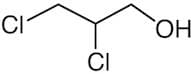
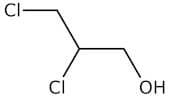
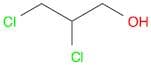
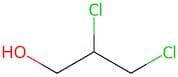
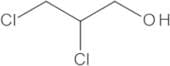
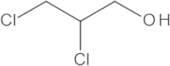
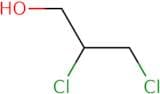
:(±)-2,3-Dicloropropanol-1
Descripción:
(±)-2,3-Dicloropropanol-1, con el número CAS 616-23-9, es un compuesto orgánico caracterizado por la presencia de dos átomos de cloro unidos al segundo y tercer átomo de carbono de una cadena de alcohol de tres carbonos. Este compuesto existe como una mezcla racémica, lo que significa que contiene partes iguales de ambos enantiómeros, que pueden exhibir diferentes propiedades en sistemas biológicos. Es un líquido incoloro a amarillo pálido con un olor distintivo y es soluble en agua debido a la presencia del grupo hidroxilo (-OH). La dicloración introduce una polaridad significativa, influyendo en su reactividad e interacciones con otras sustancias. (±)-2,3-Dicloropropanol-1 se utiliza principalmente en la síntesis química y como intermediario en la producción de varios productos farmacéuticos y agroquímicos. Sin embargo, es importante manejar este compuesto con cuidado, ya que puede presentar riesgos para la salud, incluyendo potencial toxicidad y peligros ambientales. Se deben observar las medidas de seguridad adecuadas al trabajar con esta sustancia en entornos de laboratorio o industriales.
Fórmula:C3H6Cl2O
InChI:InChI=1S/C3H6Cl2O/c4-1-3(5)2-6/h3,6H,1-2H2
Clave InChI:InChIKey=ZXCYIJGIGSDJQQ-UHFFFAOYSA-N
SMILES:C(CCl)(CO)Cl
Sinónimos:- (2R)-2,3-dichloropropan-1-ol
- (2S)-2,3-dichloropropan-1-ol
- (RS)-2,3-Dichloro-1-propanol
- 1,2-Dichloro-3-Propanol
- 1,2-Dichlorohydrin
- 1,2-Dichloropropanol-3
- 1-Propanol,2,3-Dichloro-
- 2,3-Dichloro-1-Propano
- 2,3-Dichlorohydrin
- 2,3-Dichloropropanol
- 2,3-Dichloropropyl Alcohol
- 2,3-dichloro-1-Propanol
- Alpha,Beta-Dichlorohydrin
- B-Dichlorohydrin
- Beta,Gamma-Dichlorohydrin
- Beta-Dichlorohydrin
- Glycerol 1,2-Dichlorohydrin
- Glycerol Alpha,Beta-Dichlorohydrin
- Glycerol α,β-dichlorohydrin
- α,β-Dichlorohydrin
- Ver más sinónimos
Ordenar por
Pureza (%)
0
100
|
0
|
50
|
90
|
95
|
100
Se han encontrado 9 productos.
2,3-Dichloro-1-propanol
CAS:Fórmula:C3H6Cl2OPureza:>98.0%(GC)Forma y color:Colorless to Almost colorless clear liquidPeso molecular:128.982,3-Dichloro-1-propanol, 97+%
CAS:This Thermo Scientific Chemicals brand product was originally part of the Alfa Aesar product portfolio. Some documentation and label information may refer to the legacy brand. The original Alfa Aesar product / item code or SKU reference has not changed as a part of the brand transition to Thermo SciFórmula:C3H6Cl2OPureza:97+%Forma y color:Clear colorless, LiquidPeso molecular:128.982,3-Dichloro-1-propanol
CAS:Producto controladoFórmula:C3H6Cl2OForma y color:NeatPeso molecular:128.992,3-Dichloro-1-propanol
CAS:Producto controladoFórmula:C3H6Cl2OForma y color:NeatPeso molecular:128.992,3-Dichloro-1-propanol
CAS:2,3-Dichloro-1-propanol is a metabolic byproduct of chlorinated solvents. It has been shown to be toxic to mitochondria and can cause mitochondrial membrane potential disruption in rat liver cells. The chemical reacts with fatty acids to form a reactive carbonyl group that can react with the hydrogen bond of membrane phospholipids. This reaction disrupts the structure of the lipid bilayer, leading to mitochondrial degeneration. 2,3-Dichloro-1-propanol also reacts with glutathione and carbonic anhydrase, which leads to the formation of reactive intermediates that react with DNA or proteins. These reactions are responsible for the observed toxicity effects in animals.Fórmula:C3H6Cl2OPureza:Min. 95%Forma y color:Clear LiquidPeso molecular:128.98 g/mol