CAS 6244-92-4
:Lauroil-CoA
Descripción:
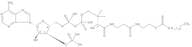
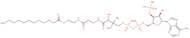
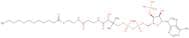
Lauroil-CoA, también conocido como coenzima A lauroil, es un derivado de acil-CoA que juega un papel crucial en el metabolismo y biosíntesis de lípidos. Se caracteriza por un ácido graso de cadena larga, específicamente el ácido láurico, que consta de 12 átomos de carbono. La estructura de Lauroil-CoA incluye un grupo de coenzima A que facilita su participación en varias reacciones bioquímicas, particularmente en la síntesis y degradación de ácidos grasos. Este compuesto se encuentra típicamente en compartimentos celulares como las mitocondrias y el citoplasma, donde participa en vías metabólicas, incluyendo la oxidación de ácidos grasos y la síntesis de lípidos complejos. Lauroil-CoA también es importante en la formación de lípidos de membrana y moléculas de señalización. Su actividad está regulada por varias enzimas, incluyendo acil-CoA sintetasas y aciltransferasas, que modulan su disponibilidad y función en procesos metabólicos. En general, Lauroil-CoA es esencial para mantener el equilibrio energético celular y la homeostasis lipídica.
Fórmula:C33H58N7O17P3S
InChI:InChI=1S/C33H58N7O17P3S/c1-4-5-6-7-8-9-10-11-12-13-24(42)61-17-16-35-23(41)14-15-36-31(45)28(44)33(2,3)19-54-60(51,52)57-59(49,50)53-18-22-27(56-58(46,47)48)26(43)32(55-22)40-21-39-25-29(34)37-20-38-30(25)40/h20-22,26-28,32,43-44H,4-19H2,1-3H3,(H,35,41)(H,36,45)(H,49,50)(H,51,52)(H2,34,37,38)(H2,46,47,48)/t22-,26-,27-,28+,32-/m1/s1
Clave InChI:InChIKey=YMCXGHLSVALICC-GMHMEAMDSA-N
SMILES:O[C@H]1[C@H](N2C=3C(N=C2)=C(N)N=CN3)O[C@H](COP(OP(OCC([C@H](C(NCCC(NCCSC(CCCCCCCCCCC)=O)=O)=O)O)(C)C)(=O)O)(=O)O)[C@H]1OP(=O)(O)O
Sinónimos:- Coenzyme A, S-dodecanoate
- Coenzyme A, S-laurate
- Coenzyme A, lauroyl-
- Dodecanethioic acid, S-ester with coenzyme A
- Dodecanoyl-coa
- Dodecanoyl-coenzyme A
- Lauroyl-coa
- Lauroyl-coenzyme A
- Lauryl coenzyme A
- Lauryl-CoA
- S-{(9R)-1-[(2R,3S,4R,5R)-5-(6-amino-9H-purin-9-yl)-4-hydroxy-3-(phosphonooxy)tetrahydrofuran-2-yl]-3,5,9-trihydroxy-8,8-dimethyl-3,5-dioxido-10,14-dioxo-2,4,6-trioxa-11,15-diaza-3lambda~5~,5lambda~5~-diphosphaheptadecan-17-yl} dodecanethioate (non-preferred name)
Ordenar por
Pureza (%)
0
100
|
0
|
50
|
90
|
95
|
100
Encontrado 5 productos.
Lauroyl-coenzyme A
CAS:Lauroyl-coenzyme A acts as an acyl carrier, involved in lipid metabolism, biosynthesis, and fatty acid transport.Fórmula:C33H58N7O17P3SForma y color:SolidPeso molecular:949.84Dodecanoyl Coenzyme A free acid
CAS:Fórmula:C33H58N7O17P3SPureza:>95%Forma y color:SolidPeso molecular:949.84Lauroyl coenzyme A potassium salt
CAS:Lauroyl coenzyme A potassium salt is a potent inhibitor of fatty acid synthase. It has the ability to inhibit the enzyme activity of fatty acid synthase in vitro, which belongs to the class of irreversible inhibitors. Lauroyl coenzyme A potassium salt inhibits the synthesis of fatty acids by inhibiting the enzyme activity of fatty acid synthase. This inhibitor also reversibly inhibits other enzymes with a similar mechanism, such as acetyl-coenzyme A carboxylase and phosphatidate phosphohydrolase. The reaction mechanism can be understood through titration calorimetry studies, demonstrating that lauroyl coenzyme A potassium salt binds to the active site of these enzymes and blocks access to substrates. The binding affinity is higher for wild type strains than for mutant strains, which may be due to differences in protein structure or other factors. Lauroyl coenzyme A potassium salt has been shown to have no effect on wild-type strains but inhibits polymerFórmula:C33H55N7O17P3SK3Pureza:Min. 95%Forma y color:PowderPeso molecular:1,064.11 g/molLauroyl coenzyme A
CAS:Lauroyl CoA is a body-fat molecule that can be formed from acetyl-coenzyme A, which is an intermediate in the metabolism of fatty acids. It is used in analysis as a standard for enzyme activities and as a substrate for reactions involving enzymes with coenzyme A. Reaction mechanisms are determined using titration calorimetry and structural analyses are performed using analytical methods such as infrared spectroscopy and nuclear magnetic resonance spectroscopy. Lauroyl CoA is also used to study the effects of the protein toll-like receptor 4 on hepatic steatosis. The wild-type strain of Escherichia coli was used to measure the activity of bacterial synthetases containing lauroyl CoA.
Fórmula:C33H58N7O17P3SPureza:Min. 95%Forma y color:PowderPeso molecular:949.84 g/molRef: 3D-NL47197
Producto descatalogado