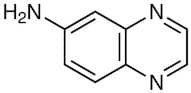
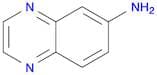
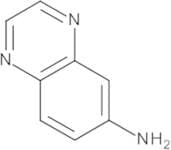
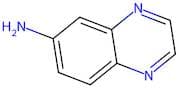
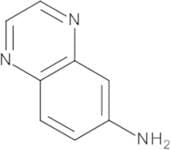
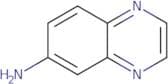
CAS 6298-37-9
:6-quinoxalinamina
- Quinoxalin-6-Amine
- 6-Amino Quinoxaline
- 6-Aminoquinoxaline
6-Aminoquinoxaline
CAS:Fórmula:C8H7N3Pureza:>98.0%(GC)(T)Forma y color:Light yellow to Brown powder to crystalPeso molecular:145.17Brimonidine EP Impurity C (6-Aminoquinoxaline)
CAS:Fórmula:C8H7N3Forma y color:Yellow SolidPeso molecular:145.176-Aminoquinoxaline
CAS:6-AminoquinoxalineFórmula:C8H7N3Pureza:98%Forma y color: yellow solidPeso molecular:145.16128g/mol6-Quinoxalinamine
CAS:Impurity Brimonidine EP Impurity C
Applications 6-Quinoxalinamine is used in the synthetic preparation and evaluation of novel nitroheterocyclic hypoxic markers for solid tumor.
References Zhu, W., et al.: Bioorg. Med. Chem., 16, 3255 (2008)Fórmula:C8H7N3Forma y color:Yellow SolidPeso molecular:145.166-Aminoquinoxaline
CAS:6-Aminoquinoxaline is a quinoxaline derivative that has been shown to be effective against the bacterium, Salmonella typhimurium. 6-Aminoquinoxaline has significant cytotoxicity and significant activity against the ryanodine receptor (RYR). This compound is also a dopamine analog which may have neuroprotective effects. It was also shown to have no adverse effects on skeletal development in rats. 6-Aminoquinoxaline is an analog of quinoxaline and it can undergo a thermal expansion reaction with other organic molecules. The biological properties of this compound are still being researched, but it has been shown to be toxic to cells in culture due to its ability to inhibit protein synthesis and DNA replication.
Fórmula:C8H7N3Pureza:Min. 95%Forma y color:Yellow PowderPeso molecular:145.16 g/mol