CAS 631-22-1
:1,3-Dietil 2,2-dibromopropanodioato
Descripción:
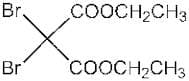
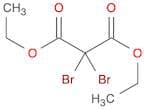
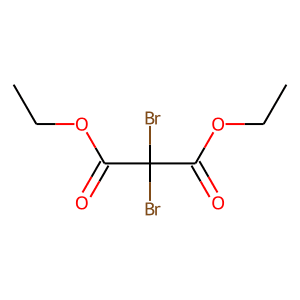
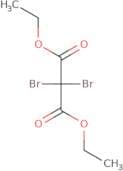
1,3-Dietil 2,2-dibromopropanodioato, con el número CAS 631-22-1, es un compuesto orgánico que pertenece a la clase de diésteres. Presenta una estructura de propanodioato con dos grupos etilo unidos al primer carbono y dos átomos de bromo en el segundo carbono. Este compuesto se caracteriza típicamente por su baja solubilidad en agua, debido a sus grupos etilo hidrofóbicos, pero es soluble en disolventes orgánicos como el etanol y el diclorometano. La presencia de átomos de bromo contribuye a su reactividad, haciéndolo útil en diversas aplicaciones sintéticas, incluyendo como un intermedio en la síntesis orgánica. Además, los grupos funcionales de diésteres confieren ciertas propiedades químicas, como la capacidad de sufrir reacciones de hidrólisis y transesterificación. El compuesto también puede exhibir toxicidad moderada, lo que requiere un manejo cuidadoso en entornos de laboratorio. En general, 1,3-Dietil 2,2-dibromopropanodioato es un químico versátil con aplicaciones en química orgánica y ciencia de materiales.
Fórmula:C7H10Br2O4
InChI:InChI=1S/C7H10Br2O4/c1-3-12-5(10)7(8,9)6(11)13-4-2/h3-4H2,1-2H3
Clave InChI:InChIKey=PFZYFZRUPFUEOB-UHFFFAOYSA-N
SMILES:C(C(OCC)=O)(C(OCC)=O)(Br)Br
Sinónimos:- 1,3-Diethyl 2,2-dibromopropanedioate
- 2,2-Dibromomalonic acid diethyl ester
- Bis(ethoxycarbonyl)dibromomethane
- Dibromomalonic acid diethyl ester
- Diethyl 2,2-dibromopropanedioate
- Diethyl Dibromopropanedioate
- Ethyl dibromomalonate
- Malonic acid, dibromo-, diethyl ester
- NSC 6759
- Propanedioic acid, 2,2-dibromo-, 1,3-diethyl ester
- Propanedioic acid, dibromo-, diethyl ester
- Ver más sinónimos
Ordenar por
Pureza (%)
0
100
|
0
|
50
|
90
|
95
|
100
Encontrado 5 productos.
Diethyl dibromomalonate, 96%
CAS:This Thermo Scientific Chemicals brand product was originally part of the Alfa Aesar product portfolio. Some documentation and label information may refer to the legacy brand. The original Alfa Aesar product / item code or SKU reference has not changed as a part of the brand transition to Thermo SciFórmula:C7H10Br2O4Pureza:96%Forma y color:Clear colorless to pale yellow, LiquidPeso molecular:317.96Diethyl 2,2-dibromomalonate
CAS:Diethyl 2,2-dibromomalonateFórmula:C7H10Br2O4Pureza:≥95%Forma y color: clear. light yellow liquidPeso molecular:317.96g/mol1,3-diethyl 2,2-dibromopropanedioate
CAS:1,3-diethyl 2,2-dibromopropanedioate is a hydrogen bond donor that is used as an anti-inflammatory compound. It has been shown to inhibit the proliferation of growth factors in vitro and to have antioxidant activity. The synthesis of 1,3-diethyl 2,2-dibromopropanedioate is initiated by the condensation of malonic acid with dimethyl fumarate in the presence of a solid catalyst. This reaction produces a mixture of 1,3-diethyl 2,2-dibromopropanedioate and its corresponding diethyl ester. The diethyl ester can be converted into 1,3-diethyl 2,2-dibromopropanedioate by heating it under vacuum for 24 hours at 250°C. This process also removes any water or other impurities that may be present. The asymmetric synthesis of 1,3-dFórmula:C7H10Br2O4Pureza:Min. 95%Peso molecular:317.96 g/mol