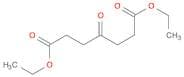
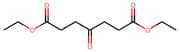
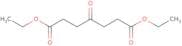
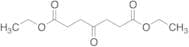
CAS 6317-49-3
:Ácido heptanodioico, 4-oxo-, 1,7-diéster etílico
- 1,7-Diethyl 4-oxoheptanedioate
- 4-Oxopimelic acid diethyl ester
- Diethyl 4-Oxoheptanedioate
- Diethyl 4-ketopimelate
- Diethyl γ-ketopimelate
- Diethyl γ-oxopimelate
- Heptanedioic acid, 4-oxo-, 1,7-diethyl ester
- Heptanedioic acid, 4-oxo-, diethyl ester
- NSC 39476
- γ-Oxopimelic acid diethyl ester
- Diethyl 4-oxoheptane-1,7-dioate
- 4-Oxoheptanedioic acid diethyl ester
- 4-Oxoheptanedioic acid diethyl est
- Aids-109813
- Diethyl gamma-ketopimelate
- 4-Oxoheptanedioc acid diethyl ester
- DIETHYL 4-OXOPIMELATE
- 4-Oxopimelic acid diethyl
- 4-OXOPIMELATE
- DIETHYL-GAMMA-OXOPIMELATE
- Diethyl 4-oxopimelato
- Diethyl 4-oxopiMelate 98%
- Aids109813
- Ver más sinónimos
Diethyl 4-oxoheptane-1,7-dioate
CAS:Diethyl 4-oxoheptane-1,7-dioateFórmula:C11H18O5Pureza:97%Forma y color: clear. yellow to brown liquidPeso molecular:230.26g/mol4-Diethyloxopimelate
CAS:4-Diethyloxopimelate is a synthetic compound that is used in the synthesis of other compounds. It has the ability to reversibly inhibit desymmetrization and asymmetric synthesis, which are processes that convert a symmetrical molecule into an asymmetrical one. The irreversible inhibition of desymmetrization by 4-diethyloxopimelate leads to an increase in the concentration of acyl halides. The reversible inhibition of asymmetric synthesis by 4-diethyloxopimelate leads to an accumulation of unsolvated acyl halides, which are more reactive than their solvated counterparts.
4-Diethyloxopimelate also has antiradical properties due to its ability to act as an electron donor and react with free radicals such as hydroxyl radicals, superoxide radicals, and hydrogen peroxide. This process results in the formation of alkyl radical products from the oxidative cleavageFórmula:C11H18O5Pureza:Min. 95%Forma y color:PowderPeso molecular:230.26 g/molDiethyl 4-oxopimelate
CAS:Producto controladoApplications Diethyl 4-oxopimelate
Fórmula:C11H18O5Forma y color:NeatPeso molecular:230.26